DAVV Suspends MBA and Law Semester Results Following Sharp Decline in Pass Percentage
In a significant academic development, Devi Ahilya Vishwavidyala (DAVV) in Indore has put the results of first semester MBA and law courses on hold after the pass percentage plummeted to nearly 30 percent. This unprecedented move has prompted the university administration to order a comprehensive fresh evaluation of answer scripts to ensure fairness and accuracy in the assessment process.
Widespread Impact on Student Community
The decision to withhold results has directly affected approximately 21,600 students across multiple programs. Detailed breakdown reveals that around 9,600 students appeared in BA LLB, BCom LLB and LLB first semester examinations, while approximately 12,000 students took the MBA core and MBA marketing examinations during the recent academic session.
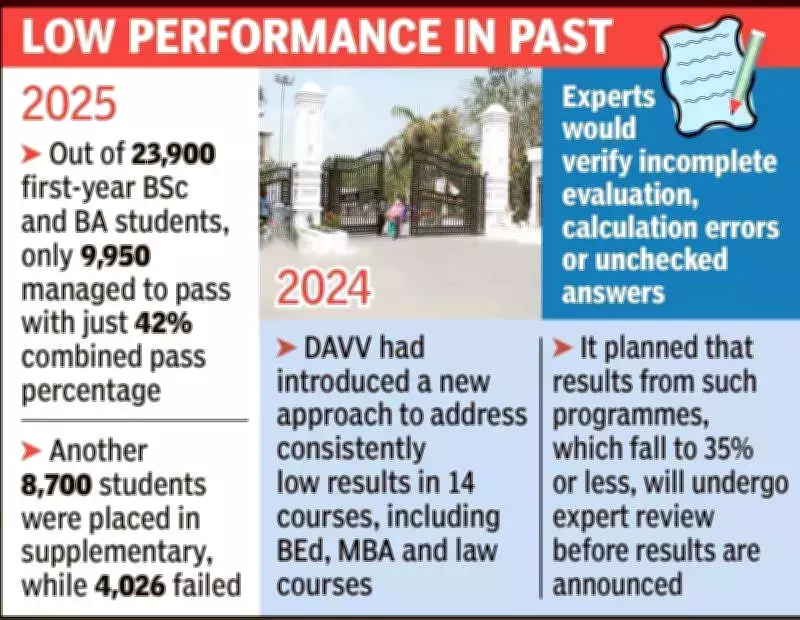
Initial tabulation and analysis conducted by university authorities revealed alarming statistics, with only 31 to 33 percent of students passing in several key subjects. This dramatic decline in academic performance has raised serious concerns about evaluation standards and teaching methodologies within the institution.

University Policy Triggers Review Mechanism
According to established university policy, any examination results falling below the 40 percent threshold automatically trigger a mandatory review process. Adhering strictly to this protocol, DAVV has dispatched answer scripts from eight problematic subjects to over 30 subject matter experts for thorough re-evaluation.
Examination Controller Ashesh Tiwari explained the university's position, stating, "The pass percentage in certain subjects was unusually low, which immediately raised red flags. In such exceptional circumstances, it becomes our institutional responsibility to meticulously review the entire evaluation process before making any results public."
Tiwari further elaborated, "We have initiated a second round of comprehensive assessment to guarantee absolute fairness in the grading system. Particular attention will be given to students who missed passing marks by narrow margins of just one or two points, as their cases will undergo careful scrutiny during this review period."
Educational Experts Call for Systemic Examination
Prominent educationists from Indore have emphasized the need for deeper examination of evaluation standards, especially when results demonstrate consistent decline over multiple academic cycles. Education specialist Mangal Mishra commented, "When a pattern of low results persists for three consecutive years, it necessitates a fundamental reassessment of both teaching methodologies and evaluation practices. Students should not be disadvantaged by narrow margins that might reflect systemic issues rather than individual academic capability."
Institutional Response and Future Measures
The university administration is implementing several corrective measures to address the current situation and prevent similar occurrences in future academic sessions. These strategic initiatives include:
- Appointing additional qualified evaluators to strengthen the assessment framework
- Instructing affiliated colleges to complete prescribed syllabi well before examination periods
- Organizing targeted remedial classes specifically for subjects demonstrating frequent student failures
- Establishing enhanced monitoring mechanisms for evaluation quality control
This comprehensive re-evaluation process is expected to delay the formal declaration of results by approximately three weeks, though university officials emphasize that this temporary inconvenience serves the greater purpose of ensuring academic integrity and fairness for all affected students.
The situation at DAVV highlights broader challenges in higher education assessment systems and underscores the importance of maintaining rigorous yet fair evaluation standards that accurately reflect student learning while identifying areas for institutional improvement.