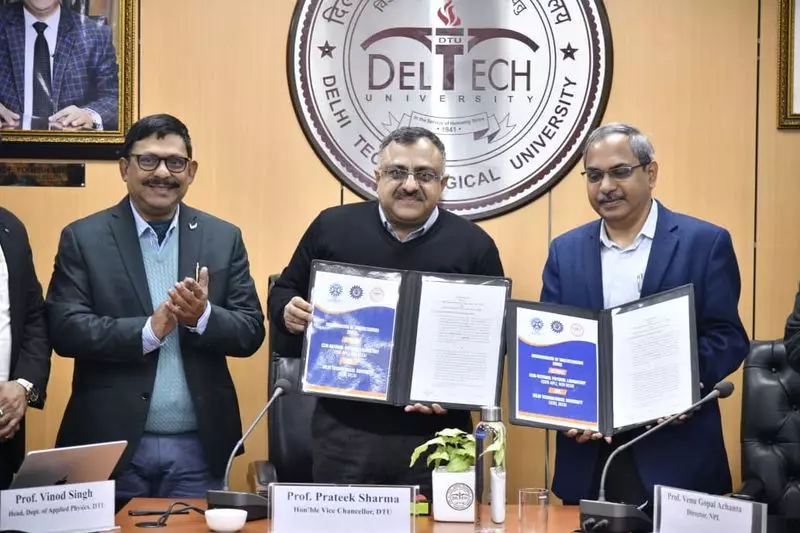
DTU and CSIR-NPL Join Forces to Strengthen Research Ties
Delhi Technological University and the CSIR-National Physical Laboratory have officially signed a memorandum of understanding. This pact aims to boost academic research collaboration between the two institutions.
Key Focus Areas of the Agreement
The agreement outlines several important areas for cooperation. Both DTU and CSIR-NPL will work together on joint research projects. They plan to share laboratory facilities and other resources. The collaboration will also include organizing workshops and seminars.
This partnership seeks to foster innovation in science and technology. It will provide students and researchers with enhanced opportunities. They can access advanced equipment and expertise from both sides.

Benefits for Academic and Research Communities
The MoU promises significant advantages for the academic community. Students at DTU will gain exposure to cutting-edge research at CSIR-NPL. Researchers from both institutions can collaborate on publications and patents.
The initiative aims to address real-world challenges through scientific inquiry. It will promote interdisciplinary studies and knowledge exchange. This move is expected to elevate the quality of research output in Delhi.
Future Prospects and Implementation
Officials from DTU and CSIR-NPL expressed optimism about the pact. They highlighted its potential to create a vibrant research ecosystem. The institutions will form joint committees to oversee the collaboration.
Regular meetings will ensure smooth implementation of the agreed activities. The partnership may expand to include more areas in the future. This step aligns with national goals to strengthen India's research capabilities.
In summary, the DTU-CSIR-NPL agreement marks a proactive effort to enhance academic research. It sets a positive example for other institutions to follow. The collaboration holds promise for advancing scientific knowledge and innovation in the region.