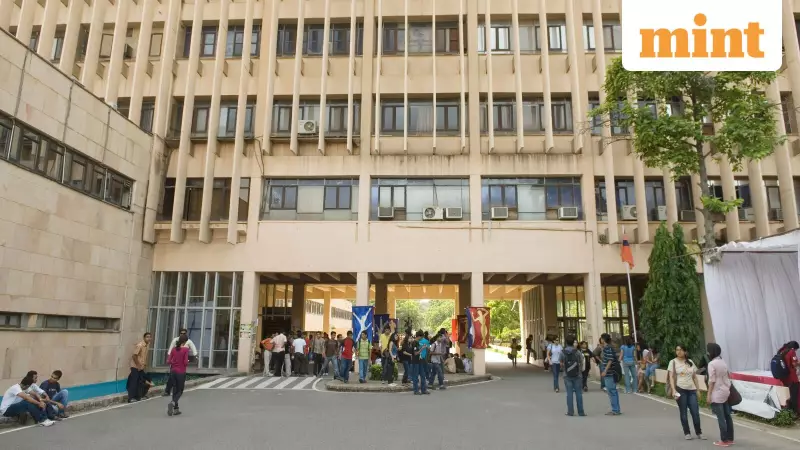
The annual placement season at the prestigious Indian Institutes of Technology (IITs) has kicked off with a familiar spectacle: eye-popping salary packages crossing the crore-rupee mark. However, for the class of 2025, these lucrative offers from Wall Street quant firms and global tech giants come with significant strings attached, designed to prevent new hires from jumping ship prematurely.
The Crore-Package Breakdown: Bonuses and Vesting Periods
As per a review of job profiles with placement cells, the compensation structures are complex. Samsara Inc is expected to offer up to ₹1.2 crore for software engineer roles, but this sum includes a performance bonus and equity valued at over £36,000, which vests over three years. Similarly, high-frequency trading firm NK Securities, a top recruiter, is offering packages around ₹80 lakh. This includes a ₹2 lakh joining bonus, a substantial fixed bonus of about ₹25 lakh, and other variable components.
This trend marks a shift. While joining bonuses have long been standard, startups and AI-focused companies have increasingly used stock options to compete for talent. Now, established players are refining their tactics with structured payouts and retention tools. Texas Instruments, for instance, is offering restricted stock units (RSUs) worth $10,000 with a four-year vesting period alongside a ₹40-43 lakh package.

Clawback Clauses: The Fine Print to Curb Attrition
The most notable feature of this year's offers is the explicit inclusion of clawback provisions. Companies are legally safeguarding their signing bonuses if a candidate leaves before a stipulated time. Automaker TVS Motor offers a ₹3 lakh joining bonus with a three-year clawback. Publicis Sapient defers cash payments, and IDFC First Bank has an explicit condition: an employee resigning before one year must repay ₹1 lakh towards training expenses.
Analytics firm EXL also implements clawbacks for its joining and anniversary bonuses. Rajesh S. Nandanwar, Senior VP for Talent Acquisition at EXL, stated that such mechanisms are now industry standard. "These are designed to reward and motivate those who are genuinely committed to an organization’s vision," he explained in an email, framing them as incentives for long-term engagement.
Narayanan Ramaswamy of KPMG India highlighted the challenge. "Retaining top-tier engineering talent... is increasingly tough," he said, citing young professionals' desire to explore options and rapidly changing job roles. Organizations are responding with sign-on bonuses, retention bonuses, and generous employee stock options (ESOPs) to keep their "intellectual flock" together.
A Diverse Recruiter Landscape and Variable Pay Focus
The placement season, which began on 1 December at older IITs like Delhi, Bombay, and Madras, sees a wide array of companies. The fray includes high-frequency trading firms like Quadeye and Graviton, tech behemoths such as Tesla, Apple, and NVIDIA, and aerospace leaders Airbus and Boeing.
Airbus, recruiting from IIT Bombay, Kanpur, Madras, and Kharagpur, stated that median salaries and bonuses remain consistent with prior cycles. Reliance Industries is offering a differentiated structure for IIT graduates: ₹9 lakh on joining and ₹10.55 lakh upon confirmation after a one-year training period, plus a deferred bonus for those staying beyond three years.
A September report by consulting firm Aon corroborates the shift towards variable pay. It found a growing preference for bonuses in offers to top graduates, with variable pay components typically ranging from 10% to 12%. The rise in total cost to company (CTC) for MBA and engineering graduates is now driven more by these variable elements and joining bonuses than by fixed pay increases.
This year's IIT placements, a barometer for India's campus recruitment landscape, underscore a new reality. While the financial rewards for India's brightest engineers continue to scale impressive heights, the path to fully realizing them is now lined with commitments designed to ensure companies see a return on their substantial investment.