LSE Deputy President Warns: 'Free Speech Tolerated Only When It Suits Those in Power'
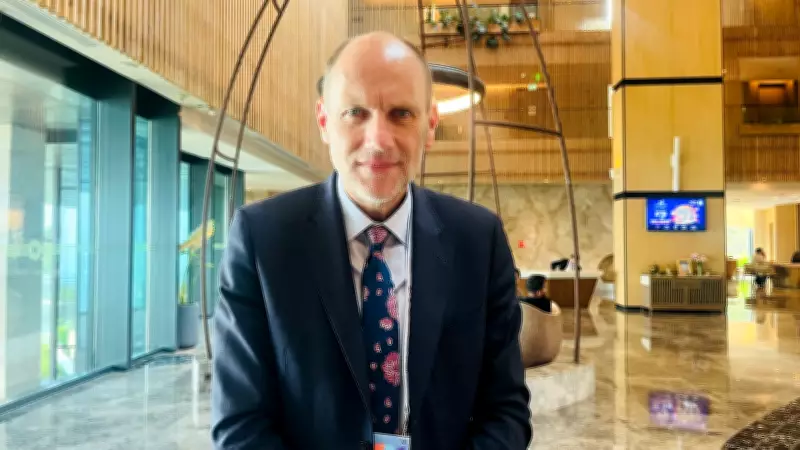
In a comprehensive interview with The Indian Express, Eric Neumayer, Deputy President and Vice-Chancellor of the prestigious London School of Economics, has issued a stark warning about the state of academic freedom globally. Speaking from his office in London, Neumayer addressed the ripple effects of recent campus crackdowns in the United States, the deepening financial crisis in British universities, and the increasingly central role of international students—particularly from India—in sustaining higher education systems.
The Financial Precariousness of UK Universities
British universities are facing what Neumayer describes as "death by a thousand cuts"—a gradual but relentless erosion of financial stability. The crisis stems from long-term structural issues rather than sudden shocks. Domestic undergraduate fees in England have remained frozen at £9,250 since 2017, losing more than 30% of their real value according to government data. Meanwhile, operational costs for universities have skyrocketed, creating what Neumayer calls "a widening structural gap."
"For many universities, home undergraduate students make up the largest share of enrolments," Neumayer explained. "When that segment is underfunded year after year, institutions are forced to look elsewhere to remain viable. That is why international students have become so important."

India's Pivotal Role in University Finances
The statistics reveal a dramatic shift in UK higher education demographics. Overseas students now account for approximately 24% of total enrolments, with India emerging as the single largest source country. In 2023 alone, over 100,000 Indian students chose UK universities, making them indispensable to institutional finances.
Neumayer emphasized that international students are absolutely central to sustaining research in the UK. "Research funding rarely covers the full cost of conducting research," he noted. "Universities rely on income from international students to cross-subsidise both research and the education of domestic students. Without this model, much of the UK's research output would be difficult to sustain."
The Post-Study Work Visa Dilemma
When asked about post-study work options for Indian students, Neumayer was unequivocal: "They are hugely important. For many Indian students, the opportunity to gain work experience after graduation is not an add-on; it is central to the value proposition of studying abroad."
He expressed disappointment at the reduction of the post-study work visa from two years to 18 months, warning that "if that window were shortened further, I think we would see a much sharper decline in demand."
US Campus Crackdowns and Global Implications
The conversation turned to recent developments in the United States, where universities have faced intense pressure over pro-Palestinian campus protests and foreign student policies. Neumayer offered a sobering assessment: "I think this approach will harm the United States in the long run. It is extremely short-sighted."
He continued with a powerful indictment: "The US has long portrayed itself as a champion of free speech. What we are seeing now suggests that free speech is tolerated only when it aligns with those in power. That is deeply worrying."
Neumayer warned that these actions create a dangerous global precedent: "It creates a playbook. Others who wish to suppress dissent can point to this and say: This is how you bring universities into line. Once that happens, institutional autonomy becomes fragile."
LSE's Approach to Campus Activism
Addressing how his own institution has handled campus protests, including pro-Palestinian demonstrations and encampments, Neumayer stated: "Protest is a normal part of life at LSE. We regularly see demonstrations on campus—pro-Palestinian, pro-Kurdish, and from Israeli student groups. That is entirely expected at a place like this."
He described LSE's balanced approach: "We made it clear that peaceful protest is welcome, but attempting to shut down university operations crosses a line. That distinction is crucial."

Comparative Autonomy: UK vs US Universities
Neumayer believes UK universities retain more autonomy than their US counterparts: "Compared to the US, UK universities have been able to maintain greater institutional autonomy. To the UK government's credit, it has not intervened in campus governance to the same extent. That difference matters."
The Rankings Conundrum for Specialized Institutions
On the subject of global university rankings, Neumayer revealed that LSE has begun taking them more seriously, though he criticized their inherent biases: "Rankings such as QS are systematically biased against a specialised social science university like LSE. That's because they work on the assumption that a university is a comprehensive university."
He pointed out the absurdity: "Simply put, if we had a really bad faculty of engineering and a really poor medical school, we would be ranked more highly, which makes no sense. All of our subject-level rankings are much higher than our university-wide ranking."
Accessibility and Equity Challenges
Addressing persistent criticism that elite institutions like LSE remain accessible mainly to wealthy students, Neumayer acknowledged: "It is a fair criticism, and one we take seriously. Expanding scholarships is one of our top fundraising priorities."
He contrasted the UK situation with the US: "US universities are far ahead in this regard because of decades of philanthropy. To reach a point where cost is not a barrier, we need sustained donor support."
Strategic Direction and Global Competition
When asked about UK universities opening campuses overseas, including in India, Neumayer was clear about LSE's position: "That is simply not our strategy."
He contrasted the UK's approach with China's strategic investments: "If you look at China, the contrast is striking. The Chinese government is investing heavily, billions, into its universities. That is a strategic choice about long-term economic growth, research capacity, and global influence. In the UK, the state is doing the opposite."
Neumayer concluded with a warning about the long-term consequences: "If you ask which of these approaches is more likely to produce globally competitive universities 10 or 20 years from now, the answer is fairly obvious."
The interview reveals a higher education sector at a critical juncture—financially strained, politically pressured, and increasingly dependent on international students while facing fundamental challenges to academic freedom that threaten the very foundations of scholarly inquiry worldwide.