Ohio State University Appoints Provost Ravi Bellamkonda as President Following Sudden Resignation of Walter Carter
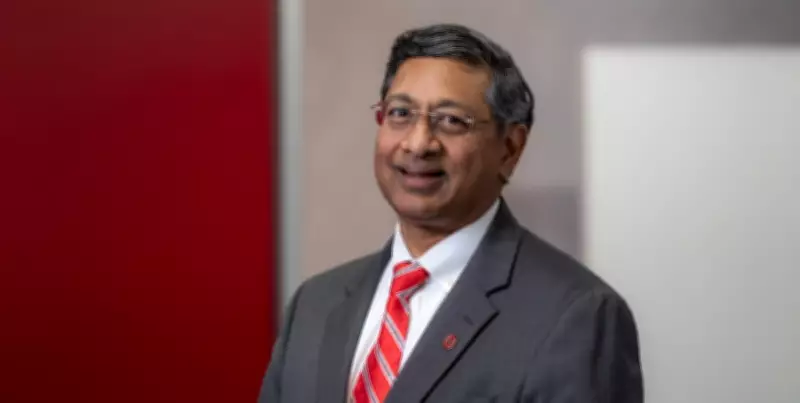
In a swift move to stabilize its leadership, Ohio State University's board of trustees has appointed Ravi Bellamkonda, the institution's Executive Vice President and Provost, as its next president. This decision comes just days after the abrupt resignation of former president Walter "Ted" Carter Jr., bypassing the traditional nationwide search process and placing the university's chief academic officer at the helm. Bellamkonda becomes the university's fourth president since 2020, signaling a focus on continuity during a period of unexpected transition.
Leadership Shift After Carter's Sudden Exit Over Inappropriate Relationship
The leadership change followed the resignation of Carter, a retired vice admiral in the United States Navy who had been serving as Ohio State's president since 2023. According to the Associated Press, Carter stepped down after acknowledging an "inappropriate relationship" with a woman connected to a podcast project aimed at military veterans. Less than a week before his resignation, the university's board confronted Carter about a tip received from outside the institution.
In a public statement, Carter said he had "made a mistake in allowing inappropriate access to Ohio State leadership." The board accepted his resignation soon after, with John Zeiger, chair of the board of trustees, expressing "surprise and disappointment." Carter had been just two years into a five-year contract under which he earned more than $1.1 million annually, along with performance bonuses and residence at the university's official president's home.

Bellamkonda: A Researcher and Administrator with Extensive Academic Background
Bellamkonda steps into the presidential role with a strong foundation in both academic and administrative experience. A bioengineer and neuroscientist, he joined Ohio State University in 2021 as Executive Vice President and Provost, serving as the university's chief academic officer. Before arriving in Columbus, he held leadership and academic positions at several major research universities, including Emory University, Duke University, Georgia Institute of Technology, and Case Western Reserve University in Cleveland.
His academic background is deeply rooted in biomedical research. Bellamkonda earned his Doctor of Philosophy in medical science and biomaterials from Brown University. His research has focused on neural engineering and regenerative medicine, fields that examine how damaged nerves and tissues can be repaired, bringing a scientific rigor to his administrative approach.
Questions Surround the Veterans Podcast Project Linked to Carter's Resignation
The investigation linked to Carter's resignation has drawn significant attention to a veterans-themed podcast project. According to the AP, JobsOhio, the state's privatized economic development office, stated that Carter's resignation was "possibly connected" to his relationship with Krisanthe Vlachos, host of a planned veterans podcast titled The Callout.
JobsOhio had agreed to fund the project as a four-episode pilot, paying $15,000 per episode. The office later said it would seek to recover the $60,000 already paid. In a statement cited by the AP, the office explained that Carter had recommended the podcast as a way to reach military and veteran audiences in Ohio and connect them with job opportunities in sectors such as aerospace, defense, and energy.
Investigators are also examining Vet Earn USA LLC, a business registered in Ohio by Vlachos in December, according to a university spokesperson. Additionally, JobsOhio had provided $10,000 to support a theater production for veterans titled Last Out: Elegy of a Green Beret, part of the organization's Hometown Heroes program that offers cultural events for military personnel, veterans, and their families.

Stabilizing Leadership Through Internal Appointment
For Ohio State University, the appointment of Bellamkonda represents a strategic attempt to quickly stabilize leadership after an unexpected resignation. By elevating its provost, the university has opted for continuity and internal expertise over a prolonged external search process. This move aims to maintain institutional momentum and address the challenges posed by the recent controversy, ensuring that academic and administrative operations proceed without significant disruption.