Panjab University Security Breach Exposes Critical Vulnerabilities After Campus Shooting
In a stark revelation of security lapses, Panjab University's extensive network of entry points has been exposed as largely unchecked following a brazen shooting incident on campus. The openness of the university's perimeter was demonstrated on Tuesday when gunmen entered the premises, fired at a student party leader near the botany department parking area, and escaped within minutes through an unmanned exit near the mandir-gurdwara complex.
Multiple Unsecured Entry Points Across Both Campuses
According to CCTV footage analysis, the three accused fled through the mandir area inside the campus that connects to the main road dividing PU's sectors 14 and 25 campuses. The entry points in this critical area remain largely unmanned, allowing easy movement without any security checks. This vulnerability extends across the entire university complex.
North Campus Security Gaps: The north side features three main gates where security checks are primarily limited to vehicles, and even those remain inconsistent at best. Pedestrians routinely walk in without scrutiny, while two-wheelers pass through without verification. Smaller gates and openings further weaken perimeter control, creating multiple access points for unauthorized entry.

South Campus Presents Even Greater Vulnerabilities
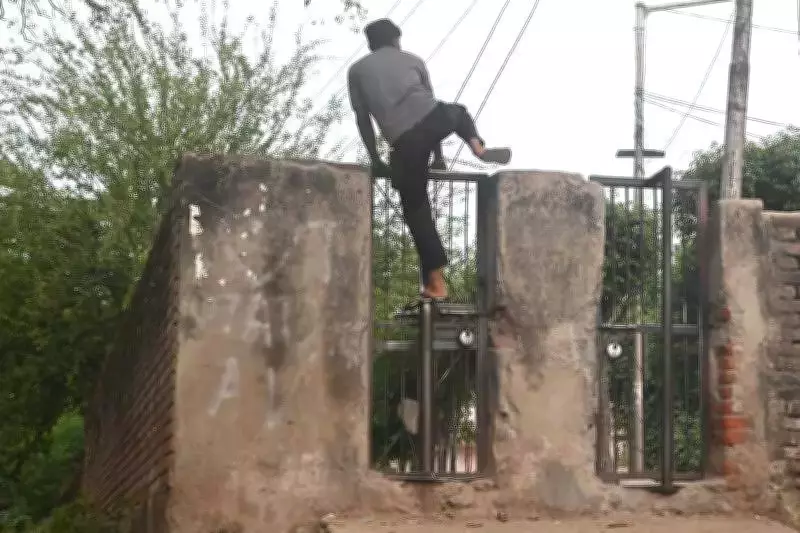
The situation becomes more alarming in the Sector 25 south campus, which houses four main gates where virtually no checking occurs, even for vehicles entering the premises. A fifth, smaller gate near a government school—specifically designed to regulate access—is frequently climbed over by individuals bypassing security protocols. Observers report that standing at this location for just a few minutes reveals people regularly jumping in or out of the campus.
Boundary walls compound the security problems significantly. In several stretches of the north campus, walls are low enough to be easily crossed by determined individuals. The south campus presents even greater challenges with large sections remaining poorly monitored, featuring limited surveillance coverage and patchy lighting that creates security blind spots during evening hours.
Structural Challenges and Inadequate Security Personnel
The campus's enormous size and mixed-use character present fundamental challenges to effective security regulation. Spread over hundreds of acres, the university houses academic departments, student hostels, commercial markets, administrative offices, and residential quarters—creating a complex environment difficult to secure comprehensively.
Vice-Chancellor Professor Renu Vig acknowledged these difficulties on Tuesday, stating that with such a large campus containing multiple residential and administrative areas, maintaining strict checks at all entry points presents significant operational challenges. Currently, Panjab University employs approximately 200 security personnel, a number far short of requirements for proper coverage of the vast campus area.
This inadequate staffing leaves security guards stretched thin across shifts and locations, unable to provide consistent monitoring at all vulnerable points. The personnel shortage means that even when security protocols exist on paper, practical implementation remains inconsistent at best.
Historical Context and Student Safety Concerns
Security concerns in the south campus had intensified last year following the tragic murder of UIET student Aditya Thakur, who was stabbed by an outsider on campus premises. However, the increased security measures implemented after that incident proved temporary, with strictness diminishing over time despite student protests demanding improved safety measures.
Students continue to flag routine safety issues that persist on campus. "When we go to UIET, there are boys sitting on the walls, facing inside. They pass comments at times. Nobody stops them, and there is hardly any security official present," reported a female student, highlighting the ongoing vulnerability felt by campus community members.

With multiple unmanned gates, unchecked pedestrian and two-wheeler access, and easily scalable boundary walls, Panjab University remains effectively open to unauthorized entry in practice. This security reality has been brought into sharp focus once again following Tuesday's shooting incident, raising urgent questions about campus safety protocols and perimeter security effectiveness.