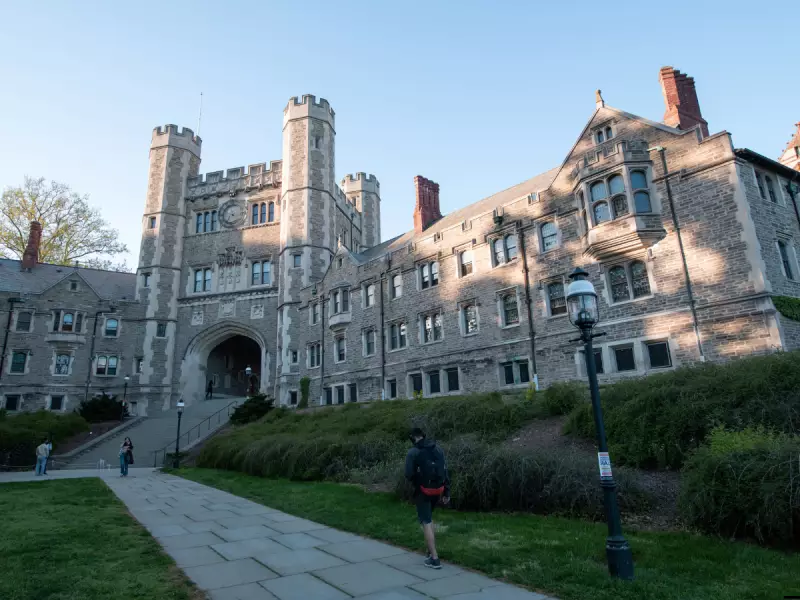
A staggering two-thirds of all undergraduate grades awarded at Princeton University during the 2024–25 academic year fell within the A-range, according to a recent internal report. This figure, which includes A-minus, A, and A-plus grades, marks a historic high and continues a two-decade-long trend of grade inflation at the elite Ivy League institution.
Record Highs and Pandemic Surge
The data, summarised by The Daily Princetonian and shared with faculty, shows a dramatic concentration of top marks. A full 45.5 percent of all grades given were either an A or an A-plus, the highest proportion recorded in the past 20 years. This represents a near 20-percentage-point increase from the figures seen in 2014.
The most significant jump occurred during the COVID-19 pandemic. Between 2019 and 2021, the share of A and A-plus grades surged by almost 10 percentage points, while the average GPA saw a modest 0.1-point rise. The trend has persisted post-pandemic, raising concerns among administrators about the diminishing value of high grades.

Compression Across Departments and Independent Work
Grade inflation was notably pronounced in introductory-level courses (100–200 level), where a broad distribution of grades might be expected. Here, 62.6 percent of students received A-range marks. While humanities and social science courses contributed heavily to the overall trend, the report noted that A-plus grades were actually more common in natural sciences and engineering departments.
The phenomenon of "grade compression" was most extreme in senior theses and independent projects. In 2025, 17 academic departments did not award a single thesis grade below a B. Among Princeton's ten largest departments, eight gave a B or higher to at least 94 percent of their majors, with only history and sociology being exceptions.
Administration Response and National Context
At a faculty meeting, Dean of the College Michael Gordin addressed the report, expressing particular concern over the rising number of A-plus grades. He reminded professors that, under university rules, an A-plus requires a formal statement justifying why the work is "truly outstanding" and should not be awarded based on a curve. "A-plus is an unusual grade at this University," Gordin stated, emphasising it must be reserved for extraordinary merit.
Princeton's situation mirrors a national debate in elite higher education. A recent Harvard faculty report criticised grading there as "failing to perform the key functions of grading," with 60 percent of undergraduate grades being As in 2025. Notably, Princeton itself had enforced a formal grade-deflation policy until 2014, which capped A-range grades at 35 percent for coursework and 55 percent for independent work. Those limits are no longer in effect.
Looking ahead, Dean Gordin has encouraged academic departments to seek guidance from his office on grading practices. The ongoing tension at Princeton and peer institutions centres on balancing the recognition of student achievement with maintaining meaningful academic standards.