Protest Ends as Panjab University Gets Election Green Light
After 26 days of continuous dharnas, shutdowns, and intense confrontations, Panjab University has finally received formal approval for its Senate election schedule from Chancellor and Vice-President CP Radhakrishnan. This crucial development on Thursday marks a significant breakthrough in resolving the agitation that had gripped the campus since early November.
The notification, issued by the Vice-President's Secretariat and formally conveyed to Vice-Chancellor Prof Renu Vig, confirms the election schedule that PU had proposed in its November 9 letter. This authorization now enables the university to commence preparations for elections that have been pending since the Senate term officially expired on October 31, 2024.
Campus Atmosphere Shifts from Tension to Celebration
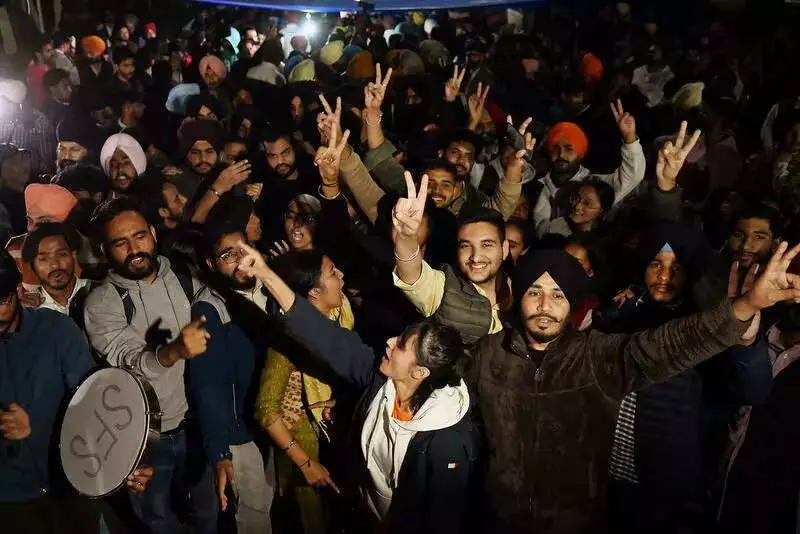
The immediate reaction on campus transformed from weeks of tension to joyous celebration. At the dharna site outside the Vice-Chancellor's office, where the PU Bachao Morcha had maintained its protest since the first week of November, sweets were distributed and victory slogans echoed through the air.

Several student leaders described the development as "historic" and stated that it validated their weeks-long mobilization efforts. During the celebrations, Vice-Chancellor Prof Renu Vig briefly emerged from her office to meet with the protesters and personally urged them to call off the dharna.
In her official statement, Prof Vig expressed: "Gratitude to the Hon'ble Chancellor for approving the Senate Elections of Panjab University. This decision marks an important step in the interest of a positive academic environment. The Panjab University administration is always with its students and teaching community."
Protest Continues Over Three Pending Demands
Despite the celebratory mood, the PU Bachao Morcha made it clear that their protest is not yet over. The student collective announced that the dharna would continue until they receive written assurance on three critical pending matters:
- Quashing of FIRs against 14 students booked during a previous Senate protest in 2024
- Rollback of recently introduced SOPs regulating elections and student activities
- Dissolution of the committee formed to review demands raised by Haryana students regarding representation and possible college re-affiliation
A meeting with university officials has been scheduled for Thursday to discuss these unresolved issues. A senior PU administrator confirmed that authorities will also hold separate discussions with Haryana students regarding their concerns.
Election Schedule and Security Concerns
The approved voting schedule spans from September 7 to October 4 next year, with different constituencies voting on specific dates. The detailed election calendar includes:
- Principals & staff of technical/professional colleges: Polling on September 7, 2026
- Professors and teaching staff: Polling on September 14, 2026
- Heads & teachers of affiliated Arts colleges: Polling on September 20, 2026
- Registered Graduates: Polling on September 20, 2026
- Various faculties: Polling & Counting on October 4, 2026
The development follows a tense fortnight during which examinations were postponed twice, university gates were blocked, and more than 300 security personnel from Chandigarh Police, Rapid Action Force, and Indo-Tibetan Border Police were deployed on campus.
The Morcha had earlier announced plans to escalate their agitation beyond campus, with gheraos of BJP offices in Chandigarh and Punjab planned for December 3. Student leaders stated that this plan remains in place, subject to progress in Friday's discussion with university authorities.
Why PU Needs 240 Days for Graduate Polls
The extensive 240-day preparation period for graduate constituency elections is necessary because this represents the largest and most scattered electorate. Panjab University must undertake several time-consuming processes including updating voter rolls, verifying addresses, dispatching voting information, and setting up polling booths across multiple states.

In the 2021 elections, the graduate constituency spanned five states with over 3.5 lakh voters. Since the voter list lacks automatic Aadhaar or digital verification mechanisms and many addresses are outdated, the process requires extensive postal communication and manual cross-checks.
Meanwhile, other constituencies including faculty, affiliated-college teachers, and principals require only 90 days for preparation since these electorates are already within institutional records and easier to verify.
With the election schedule now officially approved, the focus is expected to shift from street mobilization to operational work, including voter roll updates, constituency management, and polling logistics ahead of next year's electoral calendar.