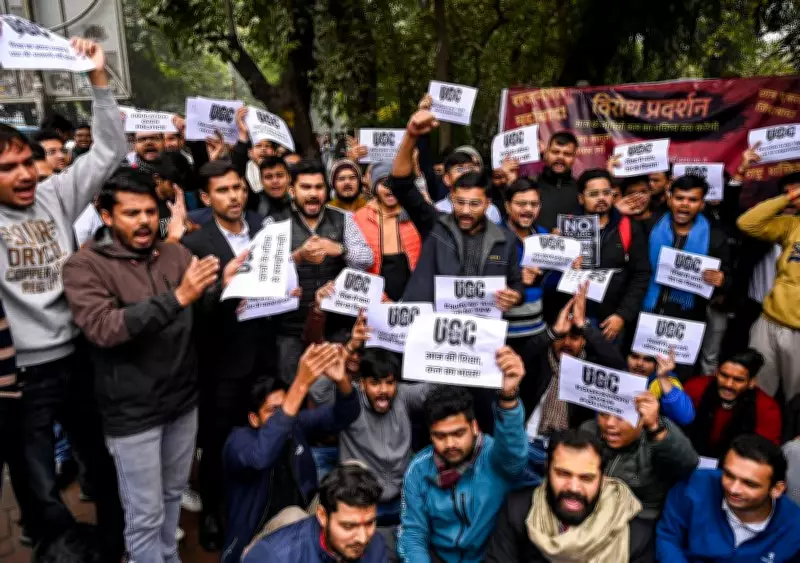
UGC Equity Regulations Ignite Major Controversy in Higher Education Sector
The University Grants Commission (UGC), India's apex higher education regulatory body, has recently introduced new equity regulations that have sparked significant controversy across academic institutions nationwide. These regulations, designed to promote fairness and transparency in university governance, have instead become a focal point for intense debate regarding institutional autonomy and practical implementation.
Core Provisions of the New Equity Framework
The UGC equity regulations establish comprehensive guidelines for ensuring equitable treatment across various aspects of university administration and operations. Key provisions include:
- Transparent admission processes with clearly defined criteria for student selection across all programs
- Equitable faculty recruitment policies that mandate fair representation and eliminate discriminatory practices
- Standardized fee structures designed to prevent arbitrary fee hikes and ensure accessibility
- Grievance redressal mechanisms for students, faculty, and staff to address concerns about unfair treatment
- Accountability measures requiring universities to regularly report on equity compliance
Major Points of Contention and Criticism
The controversy surrounding these regulations stems from several fundamental concerns raised by educational institutions, academic experts, and legal authorities:

Autonomy Concerns: Many universities argue that the regulations infringe upon their institutional autonomy, which is protected under various university acts and the Constitution. They contend that the UGC is overstepping its regulatory mandate by prescribing detailed operational guidelines that should fall within individual institutions' decision-making purview.
Implementation Challenges: Educational institutions across different states and with varying resources have expressed concerns about the practical difficulties in implementing uniform equity standards. Smaller universities and those in remote areas particularly highlight the financial and administrative burdens these regulations impose.
Legal Conflicts: Legal experts have pointed out potential conflicts between the UGC regulations and existing state university laws, as well as the special provisions for minority educational institutions under Article 30 of the Constitution. This has raised questions about the regulations' legal validity and enforceability.
Defense of the Regulatory Framework
Supporters of the UGC equity regulations present several compelling arguments in their favor:
- Standardization Benefits: Proponents argue that uniform equity standards will create a level playing field across India's diverse higher education landscape, ensuring that students receive fair treatment regardless of which institution they attend.
- Accountability Enhancement: The regulations are seen as necessary measures to increase transparency and accountability in university operations, particularly in light of past controversies involving admission irregularities and discriminatory practices.
- Quality Improvement: Advocates suggest that equitable practices will ultimately enhance educational quality by ensuring that institutions focus on merit-based processes rather than arbitrary decision-making.
Broader Implications for Indian Higher Education
This controversy reflects deeper tensions within India's higher education system regarding the balance between regulatory oversight and institutional independence. The outcome of this debate could significantly influence:
Future Regulatory Approaches: How the UGC and other regulatory bodies approach governance in higher education institutions moving forward.
University-State Relations: The relationship between central regulatory bodies and state-controlled universities, particularly regarding jurisdiction and authority.
Student Rights Protection: The mechanisms available to students for ensuring fair treatment and addressing grievances within educational institutions.

International Standing: How India's higher education system is perceived globally in terms of governance standards and institutional autonomy.
The ongoing debate surrounding the UGC equity regulations represents a critical juncture for Indian higher education policy. As stakeholders continue to negotiate these contentious issues, the resolution will likely shape the regulatory landscape for years to come, affecting millions of students, faculty members, and educational administrators across the country.