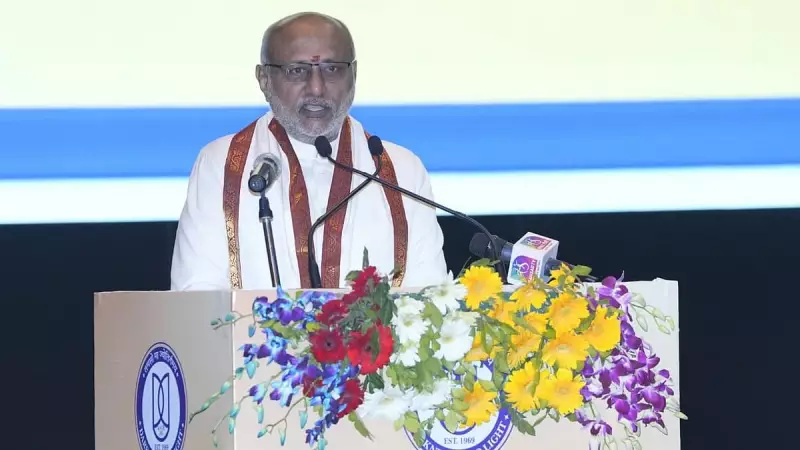
Vice President Jagdeep Dhankhar delivered a powerful address at Jawaharlal Nehru University (JNU), underscoring the foundational role of debate and dissent in sustaining a vibrant democracy. Speaking at the university's convocation ceremony, the Vice President framed these elements not as disruptions, but as essential nutrients for the nation's democratic health.
Convocation Call for Constructive Dialogue
The event, held on a significant day for the prestigious institution, saw Dhankhar addressing a gathering of graduating students, faculty, and dignitaries. In his speech, he articulated a vision for academic spaces as primary arenas for intellectual rigor and respectful disagreement. He urged the scholarly community to engage in debates that strengthen national discourse while adhering to constitutional morality and institutional decorum.
Dhankhar pointedly noted that while disagreement is a democratic right, it must be expressed within the framework of the law and with a commitment to truth. He emphasized that universities like JNU have a special responsibility to model this culture of reasoned argument, preparing students to contribute meaningfully to society.

Balancing Freedom with Responsibility
A key theme of the Vice President's message was the balance between freedom of expression and civic responsibility. He cautioned against letting dissent morph into disruption or disrespect for the nation's institutions. The sanctity of parliamentary procedures and judicial processes was highlighted as inviolable, even amidst the most vigorous democratic debates.
He reminded the audience that the Constitution of India provides the ultimate playbook for this balance, guaranteeing freedoms while also outlining the duties of every citizen. Dhankhar's remarks are seen as a nuanced contribution to the ongoing national conversation about the limits and liberties of expression in educational institutions.
JNU's Legacy and Future Role
In his address, the Vice President also acknowledged JNU's storied history as a hub of political and social thought. He expressed confidence that the university would continue to produce leaders and thinkers who drive the country forward. By championing informed dissent and dialogue, Dhankhar believes institutions like JNU can fortify India's democratic foundations against polarization and misinformation.
The convocation ceremony served as a platform for this significant philosophical statement, reaching thousands of students who stand at the threshold of their careers. The Vice President's words are likely to resonate widely, sparking discussions in academic and political circles about the practical application of these principles in today's complex social landscape.