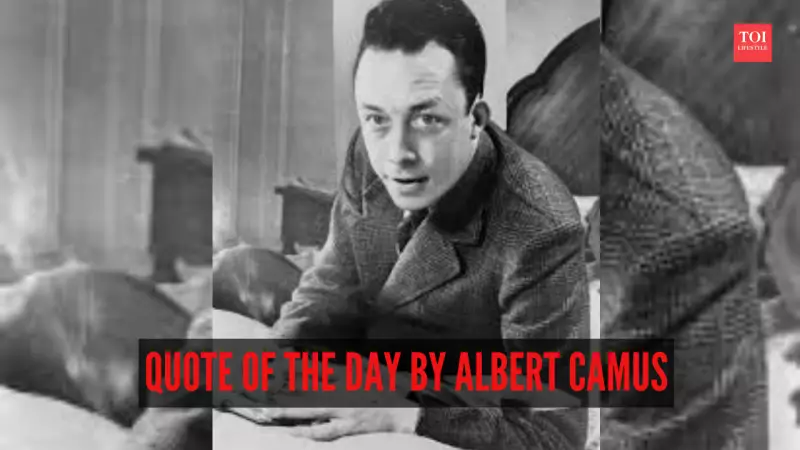
Albert Camus: The Voice of Human Struggle and Meaning
Albert Camus lived from 1913 to 1960. He stands as one of the twentieth century's most powerful thinkers and writers. Camus was born in Mondovi, Algeria. At that time, Algeria remained a French colony. His childhood unfolded in poverty. The harsh landscapes of North Africa shaped him deeply. Political tensions and social inequalities also left their mark on his young mind.
Overcoming Adversity to Find a Literary Voice
Camus faced serious health challenges as a youth. Tuberculosis plagued him particularly. Yet he rose above these difficulties. He emerged as a formidable literary voice. His works consistently addressed profound human themes. They spoke of existence, freedom, morality, and rebellion against meaninglessness.
Many people link Camus with existentialism. He himself rejected this label. Instead, he built his philosophy around the concept of the absurd. Camus defined the absurd as the conflict between humanity's search for meaning and the universe's silent indifference. He explored this idea across multiple formats.

A Nobel Recognition for Probing the Human Conscience
In 1957, Albert Camus received the Nobel Prize in Literature. The Swedish Academy honored him for illuminating the problems of the human conscience in modern times. This award cemented his status as a literary giant. It recognized his relentless examination of life's most pressing questions.
Masterpieces That Explore the Human Condition
Camus expressed his philosophical insights through an impressive range of literary genres. His novel The Stranger provides a stark look at emotional detachment. It questions the moral standards society imposes on individuals. The Plague stands as a powerful allegory. It examines human responses to collective suffering and crisis.
In his philosophical essay The Myth of Sisyphus, Camus presents his views on the absurd directly. He uses the Greek myth to discuss how one can find meaning in a seemingly meaningless world. His later work, The Rebel, shifts focus to political violence and moral limits. Camus firmly rejected ideologies that justified violence for abstract causes.
His plays, including Caligula and The Just Assassins, delve into complex moral conflicts. Throughout all his writings, Camus continuously probed themes of justice, human dignity, and the consequences of our choices.
A Defining Quote on the Creation of the Soul
A widely attributed quote captures Camus's perspective perfectly. "If there is a soul, it is a mistake to believe that it is given to us fully created. It is created here, throughout a whole life. And living is nothing else but that long and painful bringing forth." This statement reflects his core philosophical stance on human development, responsibility, and suffering.
Understanding Camus's Vision of Personal Growth
The quote suggests our identity or soul is not something we possess complete at birth. Instead, we shape it continuously through our life experiences and decisions. Living, therefore, is not about fulfilling a pre-determined destiny. It is about forging ourselves through how we respond to the circumstances we encounter.
When Camus describes life as a "long and painful bringing forth," he highlights a crucial truth. Personal growth often involves difficulty and discomfort. Pain, struggle, and doubt are not mere obstacles to overcome. They are integral parts of building character and depth. Through confronting life directly, people develop resilience and meaning.
This perspective offers a challenging yet hopeful vision. It acknowledges the hard truth that we are not born whole. Our satisfaction is not guaranteed. But within this realization lies tremendous possibility. If our souls are created through living, then every moment presents an opportunity for growth, integrity, and the creation of personal meaning.
Albert Camus's legacy endures because he confronted life's most difficult questions with honesty and courage. His works continue to inspire readers to examine their own existence, to rebel against meaninglessness, and to build a life of authentic purpose.