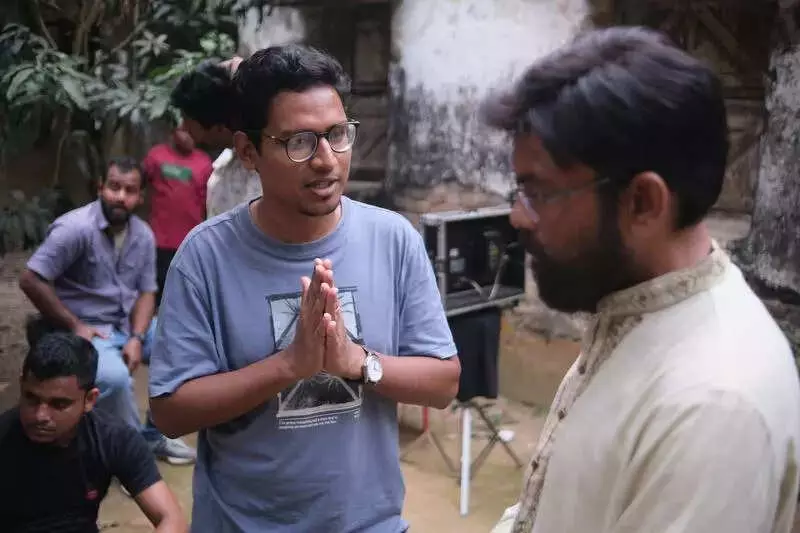
In a significant achievement for South Asian cinema, Bangladeshi director Rezwan Shahriar Sumit's feature film, 'Master', has been officially selected for the prestigious Big Screen Competition at the International Film Festival of Rotterdam (IFFR). This selection shines a global spotlight on a film born out of a turbulent and politically charged environment in its home country.
A Story of Power and Moral Compromise
The film narrates the journey of Jahir, a character who begins as an idealistic teacher, husband, and father, deeply content with his family and profession. His life takes a dramatic turn when he becomes the upa-zilla chairman of Mohoganj. Initially supported by local youth and entering office with noble intentions, Jahir gradually begins to compromise his core values under the immense pressure of expectations.
"My film is about Jahir's journey from a community hero to a feared authoritarian," explained Sumit. His once-positive vision for his community morphs into a relentless quest for personal power and control, mirroring a broader critique of systemic failures.

Filmmaking as a 'Political Thriller'
While Sumit's father was a Muktijoddha (freedom fighter) involved with the Awami League, the director clarified he holds no official party ties. However, he stated that the process of making 'Master' transformed his own life into a "political thriller" marked by "political persecutions." He detailed facing a barrage of challenges including lawsuits, physical attacks, threats, and being targeted with fabricated labels.
"It was not my goal to attack any specific person or political party," Sumit emphasized. "My objective was to point a finger at the systemic injustices plaguing our country for decades, issues perpetuated by both the bureaucracy and politicians. The guilty should be punished, and the innocent should live in peace—it's a simple equation. But in this country, it never works that way."
Confronting a Stifling Atmosphere
Sumit was candid about the intense personal and professional toll. "I've been leading a double life this past year. On one hand, I'm a filmmaker and on the other, I'm a shield for my family — dispelling false claims and exonerating loved ones facing fabricated charges," he revealed. He described the current atmosphere in Bangladesh as "stifling," alleging that various government bodies have been weaponized against him due to his family's political associations.
The film, starring Nasir Uddin Khan and Azmeri Haque Badhon, was shot during March-April 2024 under the current Awami League government. Its plot explores a forest community facing eviction without a proper rehabilitation plan, a theme Sumit uses to call for open dialogue. "If we truly want to fix policies that marginalize those on the fringes, we need open conversations and cooperation, no matter what someone's political beliefs are," he asserted.
The director also highlighted the risks faced by his crew, noting that many individuals from the Madhupur and Dhanbari areas involved in the production haven't seen their families for over a year due to safety concerns. "They aren't even safe in their own villages or markets," he added poignantly.
Despite the obstacles, filmmaking remains Sumit's lifeline. This international recognition for 'Master' follows the success of his previous work, 'Nonajoler Kabyo', which won an award at the Kolkata International Film Festival in 2021. The selection for IFFR not only celebrates cinematic artistry but also brings a powerful narrative of political transformation and systemic critique to a world stage.