The Dual Genius: Homi Bhabha's Scientific and Artistic Legacy
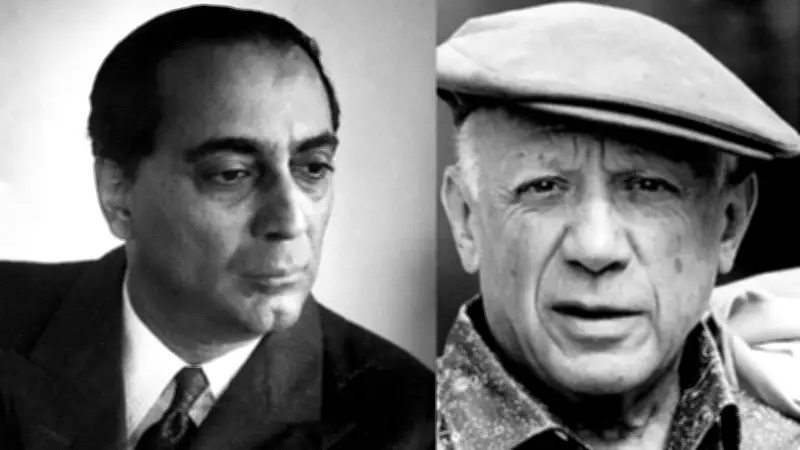
Dr. Homi Jehangir Bhabha stands as an iconic figure in India's scientific history, widely celebrated as the "father of the Indian nuclear program." His visionary leadership was instrumental in shaping the nation's atomic energy policy, establishing pivotal institutions like the Tata Institute of Fundamental Research (TIFR) and the Atomic Energy Establishment in Trombay, now renowned as the Bhabha Atomic Research Centre (BARC).
A Scientific Pioneer's Formative Years
Born in Bombay in 1909, Bhabha pursued his education at Cambridge University, initially studying engineering before his passion for physics led him to switch disciplines. His early career garnered international acclaim for contributions to quantum theory, cosmic rays, and particle physics. Returning to India prior to World War II, he joined the Indian Institute of Science in Bengaluru and founded TIFR in 1945.
Bhabha's scientific impact extended beyond theoretical research. He was a key architect of India's nuclear energy infrastructure, advocating for a three-stage program designed to harness the country's vast thorium reserves for electricity generation. As the first chairman of the Atomic Energy Commission of India, his leadership enabled the peaceful application of nuclear technology, earning him numerous accolades including the Padma Bhushan in 1954. His untimely death in a 1966 plane crash was a profound loss to the global scientific community.

The Artistic Soul of a Scientist
While Bhabha's scientific achievements are well-documented, his profound engagement with the arts remains a lesser-known yet fascinating aspect of his life. Far from being solely a physicist, Bhabha cultivated a rich cultural life, deeply immersed in music, painting, and the broader artistic milieu of post-independence India.
He was an avid connoisseur of Western classical music, taking violin and piano lessons and integrating musical appreciation into his daily routine. His artistic pursuits were not merely personal hobbies; they reflected a philosophical belief in the unity of artistic and scientific creativity.
Bridging Art and Science: The Picasso Connection
One of the most intriguing episodes in Bhabha's cultural endeavors was his attempt to foster international artistic dialogue by reaching out to Pablo Picasso, the legendary 20th-century artist. Historical accounts and correspondence suggest that Bhabha extended an invitation to Picasso, hoping the Spanish master would contribute to the cultural environment surrounding India's scientific institutions.
This effort underscores Bhabha's conviction that art and science are complementary domains, both essential for exploring human curiosity and enriching society. Although the direct collaboration with Picasso may not have materialized, the attempt itself highlights Bhabha's expansive vision and his refusal to compartmentalize intellectual pursuits.
Patronage and Impact on Indian Modern Art
Bhabha's influence on the arts was tangible and transformative. In the 1950s, he played a crucial role in assembling a significant collection of Indian modern art for TIFR, acquiring works by eminent painters such as:
- K.H. Ara
- V.S. Gaitonde
- M.F. Husain
His patronage provided vital support to progressive Indian artists during a formative period, helping elevate the modern art movement. Bhabha actively encouraged artistic expression, fostering an environment where art and science could coexist and mutually inspire. This interdisciplinary approach was part of a broader post-independence cultural scene in India, where collaboration among artists, scientists, and thinkers helped shape the nation's intellectual and cultural identity.
The Enduring Legacy of a Multifaceted Visionary
Dr. Homi Bhabha's legacy transcends his monumental contributions to physics and nuclear strategy. His life exemplifies how a scientific mind can harmoniously embrace artistic sensitivity and cultural leadership. Through his efforts to engage global figures like Picasso, his support for Indian modern artists, and his personal artistic practices, Bhabha demonstrated a profound appreciation for diverse forms of human expression.

Today, while he is rightly remembered as a pioneering scientist who laid the foundations of India's nuclear program, his artistic engagements remain an integral and inspiring part of his heritage. This multifaceted legacy continues to resonate, offering a powerful model for integrating creativity across disciplines and inspiring future generations of artists, scientists, and cultural enthusiasts alike.