From Failing Chemistry to Nobel Prize: Tomas Lindahl's Unconventional Journey
Great scientific careers rarely follow predictable paths. They are molded not just by talent and determination, but also by institutions—and the people who run them. The story of Tomas Robert Lindahl begins with a stark reminder of this reality: failure.
A Teacher's Dislike and an Ironic Failure
"I had a teacher who didn't like me and I didn't like him. At the end of the year he decided to fail me," Lindahl recalled in a social media post. This familiar, almost mundane scenario highlights how personality conflicts can influence academic assessment, turning objective evaluation into subjective judgment.
What makes Lindahl's recollection particularly poignant is the irony he himself noted. His post continued, "The ironic thing is that the topic was chemistry. I have the distinction of being the only chemistry laureate who failed the topic in high school!"

Education Systems and Human Bias
In today's education landscape, where extraordinary emphasis is placed on early sorting through grades, rankings, and entrance tests, Lindahl's experience serves as a significant counterpoint. Schools are often perceived as neutral filters of ability, but in practice, they are human systems shaped by:
- Personal biases
- Institutional friction
- Potential misjudgment
These systems frequently reward conformity as much as curiosity, creating environments where early setbacks don't necessarily predict future success.
From Classroom Failure to Scientific Transformation
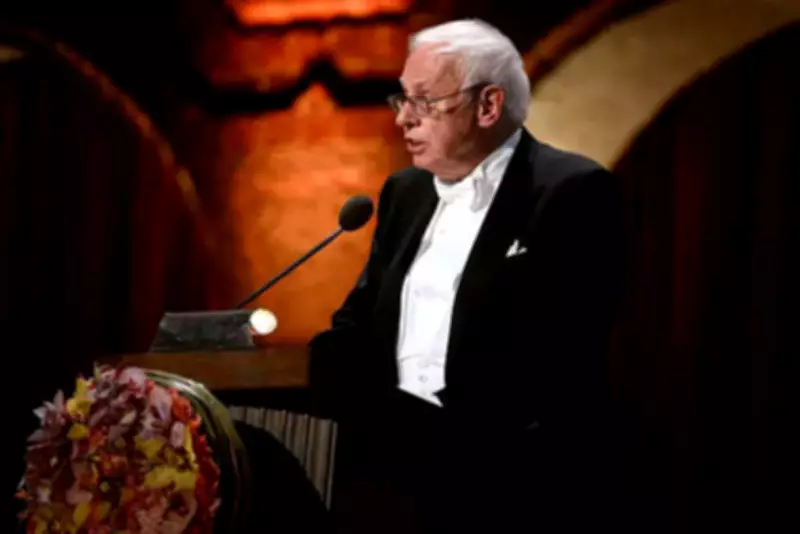
The true arc of Lindahl's story extends far beyond that classroom disappointment. These words come from a scientist whose later work would fundamentally transform the very field he once failed. In 2015, Lindahl received the Nobel Prize in Chemistry for his groundbreaking research on how cells repair damaged DNA—work that reshaped modern understanding of cancer and cellular aging.
The contrast is both understated and striking: a student once failed in chemistry eventually redefined the discipline through his pioneering contributions.
From Stockholm Classrooms to Global Laboratories
Born on January 28, 1938, in Kungsholmen, Stockholm, Lindahl grew up far from the international scientific spotlight. His academic journey gained momentum at the Karolinska Institutet, where he earned his PhD in 1967 and an MD qualification in 1970.
What followed was a period of intensive global training. Lindahl pursued postdoctoral research at prestigious institutions including Princeton University and Rockefeller University, honing his focus on molecular biology. In the late 1970s, he established himself as a professor of medical chemistry at the University of Gothenburg, launching a career that would span chemistry, medicine, and genetics.
His move to the United Kingdom in 1981 marked a crucial turning point. Joining the Imperial Cancer Research Fund (now Cancer Research UK), Lindahl entered a phase of sustained discovery. From 1986 to 2005, he served as the first Director of Cancer Research UK's Clare Hall Laboratories in Hertfordshire, later part of the Francis Crick Institute, while continuing active research until 2009.
Over decades, he authored and contributed to an extensive body of work on DNA repair and cancer genetics, research that helped explain how cells survive constant molecular damage and what occurs when those repair systems malfunction.
Decoding DNA Repair and Transforming Cancer Science
Lindahl's central contribution revealed that DNA is far less stable than previously believed and that living cells depend on sophisticated repair mechanisms to survive. His groundbreaking achievements include:

- Being the first to isolate a mammalian DNA ligase
- Identifying previously unknown DNA glycosylases involved in excision repair
- Discovering methyltransferase enzymes that help cells respond to DNA damage
- Clarifying genetic defects underlying Bloom syndrome
These discoveries did more than advance basic science—they opened pathways toward more precise cancer treatments by explaining how genetic damage accumulates and how it might be countered. His work also illuminated viral transformation in immune cells, deepening understanding of diseases associated with the Epstein-Barr virus.
In recognition of these breakthroughs, Lindahl shared the 2015 Nobel Prize in Chemistry with Paul L. Modrich and Aziz Sancar for their mechanistic studies of DNA repair, research the Nobel committee described as foundational to modern medicine.
Recognition That Followed Persistence
Long before the Nobel honor, Lindahl's peers had already acknowledged his profound impact. He was elected Fellow of the Royal Society in 1988 and later received its Royal Medal in 2007 for his original and lasting contributions to DNA repair. The Copley Medal followed in 2010, alongside memberships in leading scientific academies across Europe and the United States.
Yet his journey remains most powerful for students not because of medals, but because of its humble starting point—a failed chemistry class that didn't define his future.
The Long View: Education as Accumulation
Lindahl's story carries an important message for educational systems worldwide, but it's not the typical inspirational slogan. It serves as a correction to how we interpret early academic performance. A failing grade in chemistry didn't prevent him from transforming the field; it simply didn't predict what would follow.
For students navigating educational pressures or career uncertainty, his experience offers a more realistic form of reassurance. Achievement isn't always immediate or linear. Sometimes it arrives later, shaped by:
- Sustained hard work
- Favorable circumstances
- The determination to continue when systems issue early judgments
Placed side by side, a failed high school chemistry class and a Nobel Prize in Chemistry make the point with remarkable clarity: education is not a single moment or result. It's a prolonged process of accumulation—skills, interests, discipline, confidence—unfolding over years. Within that process, failure isn't always an endpoint. Occasionally, it's simply the first data point in a much larger trajectory of success.