Nobel Prizes: More Than Just Golden Medals
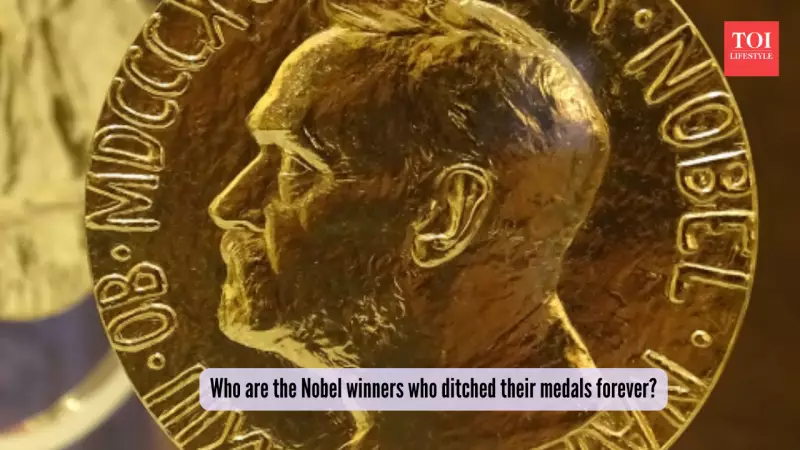
Nobel Prizes stand as powerful symbols of human achievement. They recognize the relentless efforts and exceptional contributions people make throughout their lives. Each year, these prestigious awards celebrate groundbreaking work in science, peace, literature, and other fields. But what happens when winners decide to part with their physical gold medals? The stories behind these decisions reveal much about the laureates and their causes.
Machado's Controversial Gift to Trump
Venezuelan opposition leader Maria Corina Machado created a significant stir recently. She met President Donald Trump at the White House on January 15, 2026. During this meeting, she handed over her Nobel Peace Prize medal to him. Machado received this honor in 2025 for her contributions to promoting peace in Venezuela.
She called the gesture "a recognition for his unique commitment with our freedom." Machado linked it directly to Trump's support against Nicolás Maduro's regime. The Nobel Committee responded immediately. They stated clearly that the prize cannot be transferred officially. The honor remains permanently with the laureate. However, physically, the medal itself can be given away, according to the Norwegian Nobel Institute.

Historical Precedents of Medal Giving
History shows several notable incidents where Nobel recipients have parted with their medals. These actions often serve bigger causes, whether for charity or ideology.
Muratov's Record-Breaking Auction
Russian journalist Dmitry Muratov shared the 2021 Peace Prize with Maria Ressa. They won for defending free speech. In 2022, after Russia's invasion of Ukraine, Muratov took a dramatic step. He auctioned his Nobel medal for an astounding $103.5 million. He donated all proceeds to UNICEF specifically for Ukrainian child refugees. This act shattered previous auction records. It demonstrated how these prizes can become a powerful force for humanitarian aid.
Scientific Medals for War Relief
Danish physicist Niels Bohr made a similar move decades earlier. He sold his 1922 Chemistry medal in 1940. The funds went to Finnish War Relief following the Soviet invasion. His colleague August Krogh followed the same path. Krogh sold his 1920 Physiology prize medal for the same cause. Both medals eventually found homes in Danish museums, preserving their historical significance.
Bohr's son Aage continued this tradition indirectly. Aage Bohr won the 1975 Physics prize with Ben Mottelson and James Rainwater. His medal was auctioned twice, in 2011 and 2019. The proceeds supported various science funds, continuing the family's legacy of using the prize for broader benefit.
Literature and Ideology
Norwegian writer Knut Hamsun took a different path. He won the 1920 Literature prize. During World War II, he gave his medal to Nazi propagandist Joseph Goebbels as a gesture of sympathy. Hamsun was a vocal admirer of Hitler. His action shocked his literary colleagues and stained his legacy permanently. After the war, Norway convicted him of treason. Despite this, he retained his Nobel title, highlighting the complex separation between honor and action.
Modern Sales for Research and Trusts
James Watson, co-winner of the 1962 Medicine prize for DNA structure, sold his medal in 2014. He aimed to support conservation and research efforts. Interestingly, the buyer, Alisher Usmanov, later returned the medal. Usmanov stated that Watson "deserved" to keep it, showing respect for the scientific achievement.
John Nash's 1994 Economics medal fetched $735,000 at a Christie's auction in 2019. Nash won for his groundbreaking work in game theory. The sale funded a trust established in his name, ensuring his legacy continues to support future endeavors.
The Enduring Nature of Nobel Honors
These stories illustrate a fascinating dynamic. The Nobel Foundation maintains that the honor belongs to the laureate forever. Yet the physical medal can travel, serve charitable purposes, or even become a political statement. From Maria Corina Machado's recent gift to historical figures like Niels Bohr and Knut Hamsun, the journey of these golden medals continues to captivate public imagination. They remind us that symbols of achievement can take on new meanings long after the initial celebration.