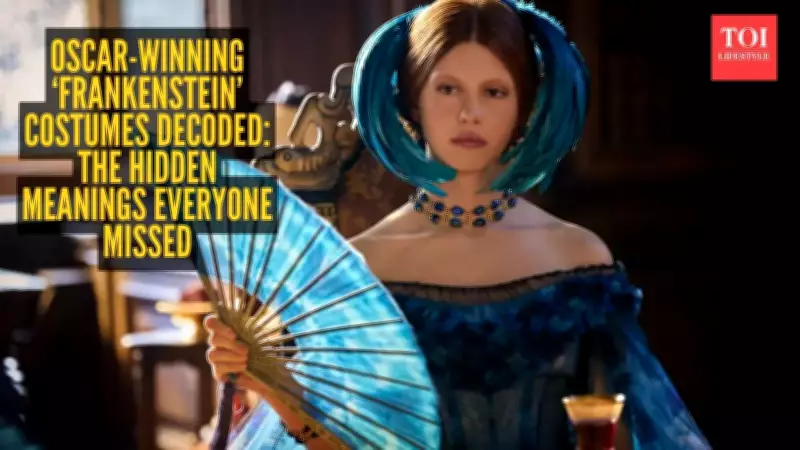
Oscar-Winning Costume Design: How Frankenstein's Wardrobe Stole the Show
If you have been browsing social media feeds since the conclusion of the 98th Academy Awards, you are undoubtedly aware that Guillermo del Toro's Frankenstein has captivated global attention. The 2026 Oscar ceremony was dominated by this dark cinematic masterpiece, which swept multiple categories. Beyond the film's powerful performances, one element has sparked intense discussion across the internet: the extraordinary costume design.
Kate Hawley's Well-Deserved Oscar Victory
New Zealand costume designer Kate Hawley secured the Oscar for Best Costume Design, a triumph that followed her recent BAFTA win for the same film. This recognition is profoundly deserved, as Hawley's work transcends mere aesthetics. She approached the movie's script as her definitive guide, meticulously integrating psychological states, character development, and thematic foreshadowing directly into the fabric of each garment. Her designs do not simply dress the actors; they embody the narrative's soul.
Victor Frankenstein's Visual Descent into Madness
Portrayed by Oscar Isaac, Victor Frankenstein begins the film as a meticulously groomed dandy, his sharp tailoring reflecting a controlled exterior that masks inner turmoil. As his obsession with reanimating the dead intensifies, his wardrobe deteriorates dramatically. The precise suits give way to disheveled, ruined attire, serving as a tangible representation of his escalating paranoia and mental collapse.

The strategic use of color further deepens this characterization. Red permeates Victor's environment, appearing on his gloves, cape, and bedsheets. This is not a random aesthetic choice but a deliberate symbolic link to his core trauma: the devastating loss of his mother during childbirth, which fuels his godlike ambitions.
Dual Roles: Omen and Grounding Force
Mia Goth delivers a compelling performance in dual roles, each enhanced by Hawley's insightful costuming. As Claire, Victor's mother, Goth wears a magnificent blood-red gown paired with a veil that flows like water, creating a visual omen of her tragic death. This event directly catalyzes Victor's descent into his monstrous experiments.
Conversely, as Elizabeth, the story's moral anchor, Goth is adorned primarily in rich green hues. These colors evoke enlightenment, empathy, and a deep connection to nature, granting her a calming, almost ethereal screen presence. Her shimmering aesthetic occasionally mirrors an iridescent beetle, while her ivory wedding dress features sleeves designed to resemble bandages—a haunting detail that visually ties her compassion to the Creature's wrapped form.
The Creature: A Patchwork of Scavenged Identity
Jacob Elordi's portrayal of the Creature is complemented by costumes that mirror his pieced-together existence. Just as his body is assembled from discarded parts, his clothing consists of cobbled-together scraps scavenged from his surroundings. By the film's poignant conclusion, the Creature dons a heavy fur cloak stained with subtle blood shades, appearing rugged and primal. Hawley designed the fur to catch sunlight, symbolizing his emotional journey toward a new, albeit tragic, dawn.
A Legacy of Narrative Wardrobe
Kate Hawley's Oscar win is a testament to her genius in costume design. She did not merely create clothing for characters; she wove their very souls into the wardrobe, using fabric as a language to articulate psychological depth and thematic resonance. Her work in Frankenstein sets a new standard for how costumes can drive storytelling in cinema.