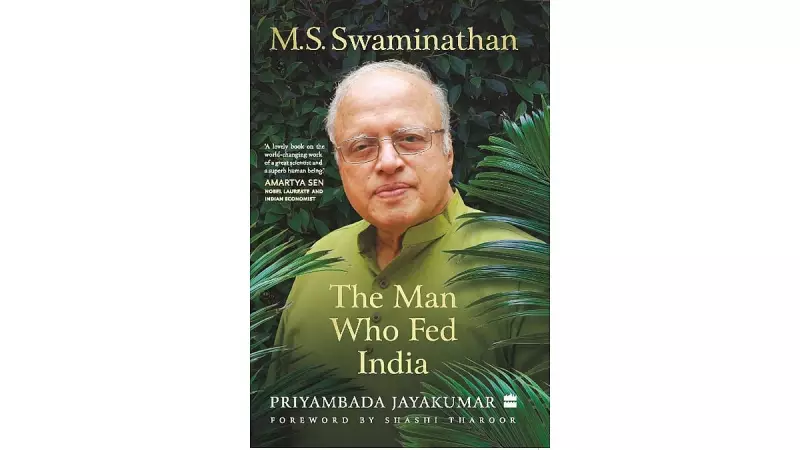
As the world grapples with recurring threats of drought, desertification, and geopolitical food shortages, a new biography revisits the life of the man who once saved India from famine. Priyambada Jayakumar's 'The Man Who Fed India' arrives in the centenary year of the legendary agricultural scientist M.S. Swaminathan. The book powerfully argues that his legacy is not a relic of the past but a vital blueprint for using science and policy with an ethical purpose to protect the most vulnerable.
A Timely Biography for a Century of Challenges
The publication of this biography is strategically timed. It marks 100 years since Swaminathan's birth, a period when global agrarian distress echoes the challenges he dedicated his life to solving. Jayakumar's work moves beyond a simple chronological account. It frames Swaminathan's contributions as urgent lessons for contemporary crises. The narrative underscores how his vision was never just about higher crop yields, but about building a resilient and equitable food system.
When large parts of the world face severe food insecurity and farmer distress, Swaminathan's integrated approach—where robust scientific research directly informed compassionate and forward-thinking government policy—feels more relevant than ever. The book suggests that the solution to modern hunger lies in reviving this synergy.

Science, Policy, and an Ethical Core
At the heart of Jayakumar's review is Swaminathan's unwavering belief that science must serve humanity. He was the central architect of India's Green Revolution, a period of dramatic agricultural transformation that made the nation self-sufficient in food grains. However, the biography highlights that his mission was always tempered with caution about ecological sustainability and farmer welfare.
The author illustrates how Swaminathan championed the cause of the smallholder farmer, advocating for policies that ensured fair remuneration and access to technology. This ethical core distinguished his work. He understood that technological advancement without social justice could create new forms of vulnerability. The book posits that this principle is the missing link in many of today's top-down solutions to hunger and climate change.
Legacy for a Vulnerable Planet
'The Man Who Fed India' concludes by connecting Swaminathan's century-old wisdom to the 21st-century challenges of desertification and geopolitical strife. His work speaks directly to the need for science and policy to collaborate with a clear moral compass. In an era of climate uncertainty, his advocacy for biodiversity conservation and sustainable practices is presented as prophetic.
The biography, reviewed by Uma Mahadevan Dasgupta and published on 03 January 2026, serves as both a tribute and a call to action. It reminds readers that the fight against hunger is ongoing. Swaminathan's life demonstrates that lasting solutions are found not in mere talk, but in actionable grain—grounded in research, implemented through sound policy, and guided by an unwavering commitment to equity. As the world navigates new food crises, his legacy offers a proven path forward.