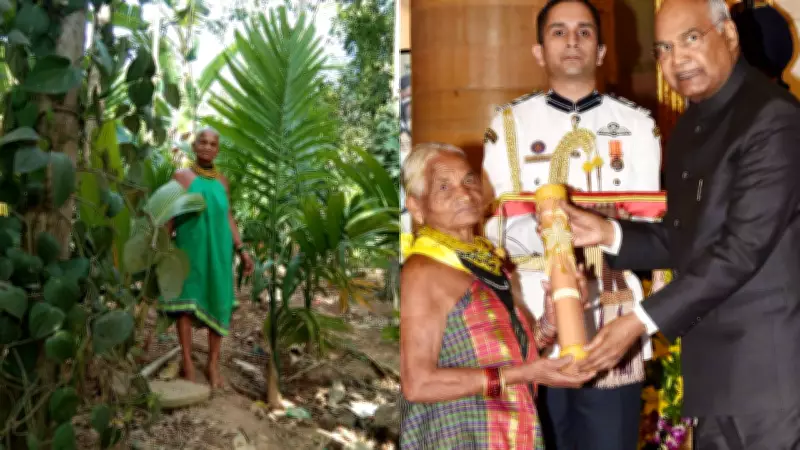
Tulsi Gowda's Extraordinary Journey: How a Tribal Woman Became India's Forest Guardian
Tulsi Gowda's life story defies conventional narratives of success. Born into a Halakki tribal family in Honnalli village, Karnataka, she grew up without privilege, formal education, or the opportunities that typically pave the way for public recognition. What she possessed instead was an innate, profound connection with nature and an unwavering determination that transformed her from a daily wage worker into one of India's most respected environmental custodians.
A Childhood Forged in Hardship and Nature's Classroom
Her early years were defined by struggle. After losing her father at a young age, Gowda began working alongside her mother at a local nursery. This experience became the foundation of her life's work. She eventually joined the Karnataka Forest Department as a daily wage laborer, spending decades tending saplings, collecting seeds, and learning forest regeneration through hands-on experience rather than academic instruction.
This distinction is crucial because Gowda's expertise wasn't certified by degrees but cultivated through direct engagement with the earth. With soil beneath her feet and trees as her mentors, she developed encyclopedic knowledge of indigenous flora. Local accounts documented her mastery of over 300 varieties of native plants and trees, earning her deep respect within her community and beyond.

Five Decades of Unseen Labor That Transformed Landscapes
For nearly fifty years, Gowda worked quietly at the Honnalli forest department nursery, performing the patient, repetitive tasks that rarely attract attention but fundamentally alter ecosystems. Reports indicate she helped regenerate indigenous plant varieties and planted hundreds of thousands of trees during her tenure.
Even after retirement, her dedication remained unwavering. She continued returning to the nursery whenever she discovered rare seeds or saplings worth preserving. Her impact extended beyond mere numbers; it resided in her profound understanding of each species. Colleagues and community members celebrated her as the "Encyclopedia of the Forest"—a title reflecting her remarkable memory and instinctual knowledge. She was also affectionately called the "tree goddess" and "Mother of Trees," honors that genuinely captured her rooted connection to both nature and people.
Late Recognition for a Lifetime of Service
Recognition arrived powerfully, though belatedly. In the 2020 Padma Awards notification published in November 2021, Tulsi Gowda was listed among the Padma Shri recipients for social work in Karnataka. By then, she had already devoted a lifetime to unglamorous yet enduring labor. The award placed her among India's most esteemed civilian honorees, yet it never altered the quiet dignity that characterized her entire life.
What makes Gowda's journey particularly compelling is the stark contrast between her humble beginnings and her monumental impact. Starting with survival rather than resources, she built a legacy that touched forests, communities, and India's broader environmental consciousness. Various reports describe her as planting and nurturing tens of thousands of saplings annually, caring for lakhs of trees over her lifetime. This scale is impressive alone, but what renders it unforgettable is the steady, uncelebrated dedication spanning decades.
A Timeless Lesson in Substance Over Visibility
Gowda's story carries a moral clarity especially relevant today. In an era often prioritizing visibility over substance, she embodied the opposite: a woman whose work mattered precisely because it was grounded, practical, and deeply beneficial. She understood that conservation isn't merely a slogan but a practice built on:
- Repetition: The consistent care required for growth
- Memory: Preserving knowledge of indigenous species
- Care: Treating nature with reverence rather than as disposable
It's perhaps unsurprising that when receiving the Padma Shri, she expressed valuing forests and trees above the honor itself.

A Legacy That Continues to Grow
Tulsi Gowda passed away in December 2024, but her legacy thrives in the forests she rejuvenated and the generations she inspired. Her life stands as powerful testament that greatness doesn't always originate in comfort. Sometimes it emerges from poverty, loss, and unnoticed labor. Sometimes it grows gradually, like a sapling, until the world realizes it has been standing in the shade of something extraordinary all along.