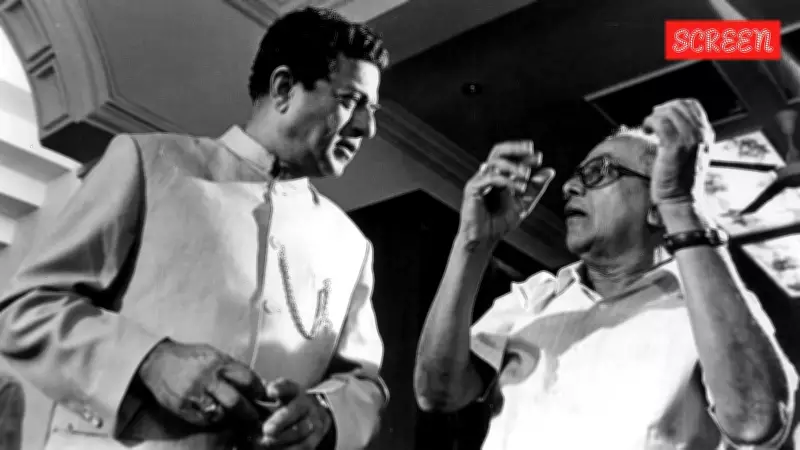
Singeetam Srinivasa Rao's Cinematic Revolution: From Time-Travel Pioneer to SSR61 Comeback
In an era when Telugu mainstream cinema frequently adhered to predictable formulas and conventional storytelling, one filmmaker boldly charted a different course. Singeetam Srinivasa Rao, a visionary director known for his intellectual rigor and creative fearlessness, pursued experimentation and risk-taking that would leave an indelible mark on Indian cinema. Now, at the remarkable age of 94, his announcement of SSR61, produced by Nag Ashwin, has redirected the spotlight to this legendary figure, marking one of the most extraordinary comebacks in the history of Indian filmmaking.
A Legacy of Innovation and Versatility
Singeetam Srinivasa Rao distinguished himself by steadfastly refusing to confine his work to single genres or industry conventions. His career is a testament to versatility, with each project showcasing a unique blend of creativity and craftsmanship. During a time when many filmmakers played it safe, Singeetam embraced challenges that expanded the horizons of Telugu cinema, normalizing experimentation decades before the term content-driven cinema became commonplace in industry discourse.
Groundbreaking Works That Redefined Genres
Among his most celebrated achievements is Aditya 369 (1991), widely recognized as India's first mainstream time-travel film. This Telugu masterpiece ingeniously merged science fiction with historical narratives, introducing audiences to speculative concepts while maintaining emotional depth and narrative coherence. Its enduring cult following demonstrates how Singeetam respected audience intelligence long before such approaches gained widespread acceptance.

In 1994, Bhairava Dweepam revealed another dimension of his artistry: fantasy deeply rooted in Indian folklore. Despite the technological limitations of its time, the film succeeded through imaginative production design, visual creativity, and solid storytelling rather than relying solely on spectacle. It has since influenced numerous filmmakers working within mythological and fantasy genres, proving that ambitious scale can be achieved through vision as much as through budget.
International Acclaim and Universal Storytelling
Perhaps Singeetam's most internationally recognized achievement is Pushpaka Vimana (1987). This nearly dialogue-free film transcended language barriers by relying entirely on visual storytelling, performance, and cinematic rhythm. It stands as a rare example of Indian cinema that communicated universally without verbal exposition, garnering acclaim both domestically and internationally. The film won the National Film Award for Best Popular Film Providing Wholesome Entertainment and enjoyed a successful 35-week theatrical run in Bengaluru, a testament to its broad appeal.
Meticulous Craftsmanship in Comedy
Singeetam also brought his meticulous craftsmanship to the comedy genre, which is sometimes undervalued in cinematic discussions. Films like Mayuri and Apoorva Sagodharargal (Tamil) showcased his precision-driven approach, where structure and timing were as crucial as performance. These successes reinforced his conviction that comedy requires the same artistic rigour as any other genre, further solidifying his reputation as a master storyteller.
The Anticipation for SSR61 and Lasting Influence
With the announcement of SSR61, anticipation runs high across the film industry and among audiences. This project is not merely a comeback; it is a reflection of Singeetam Srinivasa Rao's enduring legacy. His return prompts thoughtful consideration of how far Indian cinema has evolved and how much of that evolution was quietly influenced by his pioneering work. As a director whose innovative filmmaking continues to inspire contemporary filmmakers, Singeetam's contribution extends beyond individual achievements to shaping the creative DNA of Telugu and Indian cinema at large.