Anil Ravipudi's Revolutionary Approach to Veteran Stars in Telugu Cinema
In an industry obsessed with youth metrics, Friday openings, and constantly evolving audience preferences, few filmmakers successfully bridge generational divides. Telugu cinema's Anil Ravipudi stands out as a remarkable exception. Over recent years, this writer-director has emerged as an unexpected facilitator for the industry's senior male stars, guiding them toward remarkable box-office success without forcing them into token nostalgia or stiff legacy roles that typically plague older actors in mainstream cinema.
The Organic Evolution of a Unique Formula
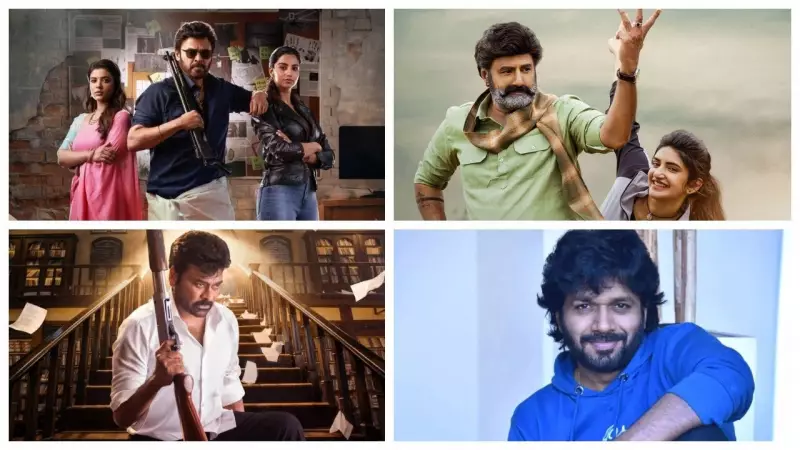
For Ravipudi, this transformative approach didn't emerge through deliberate design. Instead, it developed organically as one collaboration naturally led to another, building momentum and trust along the way. What followed was a remarkable trio of films featuring Telugu cinema's most enduring names: Nandamuri Balakrishna (65 years), Venkatesh Daggubati (65), and Chiranjeevi (70). This trifecta created a streak of box-office hits that fundamentally reshaped how the industry perceives the commercial potential of veteran male leads.
The First Breakthrough: Bhagavanth Kesari
Before his subsequent successes with Venkatesh and Chiranjeevi, Ravipudi's 2023 film Bhagavanth Kesari marked the initial major turning point. Starring Nandamuri Balakrishna, the film presented the actor in a role that balanced action-driven gravitas with a distinct emotional arc, particularly through its father-daughter narrative core. While Balakrishna's mass persona remained intact—Ravipudi being too savvy a commercial filmmaker to ignore star expectations—the emotional calibration was notably different.

Bhagavanth Kesari collected nearly Rs 85 crore during its theatrical run, signaling that the director had discovered a formula that made veteran stars feel both larger-than-life and relevant within contemporary storytelling frameworks. This was neither an old-man action reel nor a forced attempt at relevance. Instead, it was simply a film that allowed Balakrishna to be both familiar and surprisingly tender, striking a chord with audiences across generations.
Sankranthiki Vasthunam: Venkatesh in Festival Mode
If Bhagavanth Kesari proved the viability of Ravipudi's formula, Sankranthiki Vasthunam cemented it. Starring Venkatesh—an actor long successful in family entertainers—the film arrived at the perfect time, capitalizing on the lucrative Sankranti release window while positioning itself as a multigenerational crowd-pleaser. Ravipudi demonstrated deep understanding of Venkatesh's tonal sweet spot: emotional humor, clean family drama, and relatable middle-aged vulnerabilities.
Rather than attempting to age-reverse the star, the film leaned into maturity and transformed it into cinematic currency. Audiences rewarded this honesty with overwhelming enthusiasm. The film ran to packed cinema halls and collected approximately Rs 187 crores in India. Its success has even prompted a Hindi remake featuring Akshay Kumar, Vidya Balan, and Rashi Khanna, demonstrating the formula's potential for cross-regional appeal.
Mana Shankaar Varu Prasad Garu: The Dual-Legacy Achievement
Ravipudi's most recent release, Mana Shankaar Varu Prasad Garu, represents perhaps his most ambitious senior-star project to date. Featuring not one but two veterans—Chiranjeevi and Venkatesh—the casting alone generated significant fascination. Very few mainstream commercial filmmakers attempt dual-legacies within the same narrative, partly because managing tone, screen-time equity, and fan expectations presents considerable challenges.
Yet Ravipudi approached the film with surprising simplicity: he crafted roles that didn't compete with each other but rather complemented the narrative. Chiranjeevi's comedic rhythms and Venkatesh's performance became parallel tracks within the same cinematic vehicle. The result felt both familiar and refreshing—a celebration of two actors whose decades-long careers had rarely intersected in this manner.

The film proved to be the biggest success of Ravipudi's three-film streak. In its first nine days alone, Mana Shankaar Varu Prasad Garu earned over Rs 171 crore, demonstrating robust theatrical interest and strong word-of-mouth across demographic segments. For a film led by two stars well past the conventional "commercial hero age," this achievement represented not merely a hit but a significant affirmation of Ravipudi's approach.
Why Senior Stars Thrive Under Ravipudi's Direction
1. Authentic Age Representation
Ravipudi doesn't pretend his veteran stars are twenty-five. There's no digital de-aging through tone or forced romantic subplots. He writes middle-aged men as middle-aged men—complete with responsibilities, regrets, social roles, and humor stemming from self-awareness rather than denial.
2. Strategic Understanding of Star Equity
Mass audiences still crave the clap-worthy moments: the impactful dialogues, the hero shots, the payoff scenes. Ravipudi delivers these elements but disperses them strategically throughout the narrative instead of stuffing them into the first act as identity crutches.
3. Clean, Situational Humor
His humor remains clean and situational, keeping his films accessible to older audiences—an increasingly influential demographic in theatrical exhibition—while avoiding the cringe politics of hero validation that sometimes plague contemporary cinema.
The Larger Industry Implications
While commercial cinema has traditionally chased youth demographics, Andhra-Telangana markets have historically embraced longevity for male stars. The Ravipudi streak adds a crucial new layer to this phenomenon: it demonstrates that longevity can be commercially potent without relying solely on nostalgia. This represents a significant shift in industry thinking about veteran actors' market viability.
Ravipudi's success suggests that audiences respond positively to authentic storytelling that respects both star legacy and contemporary narrative sensibilities. His films have created a blueprint for how veteran actors can remain commercially relevant while staying true to their age and experience, potentially influencing how other filmmakers approach senior talent across Indian cinema.