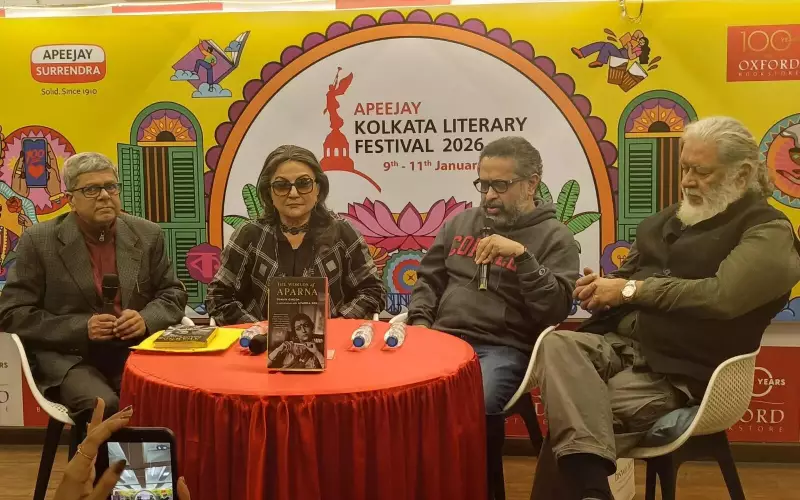
Veteran filmmaker and actor Aparna Sen, a towering figure in Indian cinema, recently engaged in a candid and intimate conversation about her life, art, and the creative impulses that have driven her remarkable career. The event, held at the Oxford Bookstore, featured Sen in dialogue with fellow filmmaker Suman Ghosh, author Kalyan Ray, and moderator Raju Raman.
The Artist, Not The Preacher: The Core of Sen's Filmmaking
Reflecting on her five-decade-long journey from a celebrated actor to an acclaimed director, Aparna Sen offered profound insights into her creative philosophy. She firmly stated that she has never made films to preach or deliver sermons. Instead, she described herself as an artist driven by a need to share a personal 'disturbance'. "I make films because something disturbs me," Sen explained. "I need to share that disturbance. I'm not a preacher, I'm an artist."
This core principle of transforming personal unease into cinematic narrative has been the seed for many of her celebrated works. She provided a powerful example, revealing that her film Ghare Baire Aaj was born directly from the profound shock and grief she experienced following the assassination of journalist Gauri Lankesh. "It was as if my idea of India was changing before my eyes," Sen recalled. This seismic personal and political moment led her back to Rabindranath Tagore's novel Ghare Baire (The Home and the World), which echoed her own contemporary anxieties.

From Intimate Shadows to Political Urgency
Sen's cinematic gaze is known for its unique blend of the intimately personal and the expansively political. Speaking about her directorial debut, the iconic 36 Chowringhee Lane, she reminisced about her deep, sensory connection to Kolkata. "Cinema isn't just dialogue or plot," she asserted, highlighting her visual storytelling. "It can be a hand lying in a shaft of light — and that alone can speak volumes."
Her husband and creative partner, Kalyan Ray, reflected on this duality in her work, noting the fine balance she maintains between the "inner eye where creation begins" and a sharp, critical awareness of the external world. When questioned on whether filmmakers bear a responsibility to take explicit political stands, Sen responded with her trademark nuance. She acknowledged that certain films, such as Arshinagar or Ghare Baire Aaj, emerge from a place of moral urgency. However, her primary goal remains not to provide easy answers, but to ask penetrating, uncomfortable questions through her art.
The Eternal First-Timer: A Commitment to Search
Despite her decades of experience and a formidable body of work, Aparna Sen confessed that she approaches every new project with the trepidation and freshness of a novice. She views each film as if she is a 'first-timer', unburdened by past formulas or successes. This mindset, she suggested, is what keeps her creative spirit alive and her cinema relevant. It is a conscious refusal to settle into a comfortable style, embodying instead a perpetual commitment to exploration and questioning.
The evening at the Oxford Bookstore painted a portrait of an artist who remains, at her core, a restless seeker. Aparna Sen's journey illustrates a path where personal disturbance fuels artistic expression, where the shadows of a Kolkata lane hold as much meaning as a nation's political turmoil, and where the only constant is the courage to keep searching.