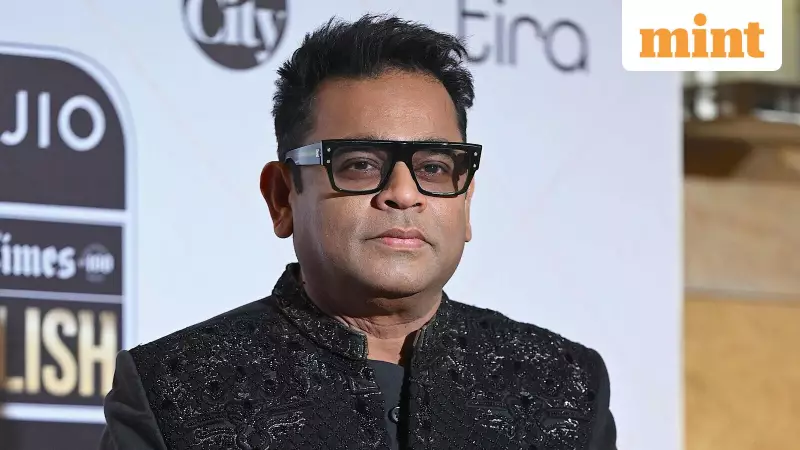
Oscar-winning music composer AR Rahman has ignited a major controversy with recent comments about his career. In an interview with BBC Asian Network, Rahman suggested that a "communal thing" might explain why he receives less work in the Hindi film industry now.
Rahman's Controversial Remarks
The celebrated composer, famous for his work on "Slumdog Millionaire," spoke openly about his career slowdown. He pointed to a perceived "power shift" within Bollywood over the past eight years. Rahman described hearing about projects through what he called "Chinese whispers."
He specifically stated that non-creative people now hold decision-making power. "This might have been a communal thing also but not in my face," Rahman remarked during the interview. The musician emphasized that he prefers work to come to him based on his artistic merit rather than actively seeking opportunities.

Political Reactions Pour In
Union Minister G Kishan Reddy quickly dismissed Rahman's suggestions. Reddy asserted that the claim about Rahman facing discrimination for being Muslim is completely false. The Minister of Mines described the statement as both incorrect and unfortunate.
"The people of the country have never seen Rahman through the lens of religion," Reddy stated firmly. He highlighted that India has consistently supported Rahman as the nation's top music director throughout his career.
VHP's Strong Criticism
Vinod Bansal, the national spokesperson for Vishwa Hindu Parishad, launched a sharp attack on the composer. Bansal criticized Rahman for blaming the system instead of examining his own professional standing. He accused the musician of defaming the entire film industry with his remarks.
Bansal made particularly personal comments during his response. He referenced Rahman's religious conversion and suggested the composer consider returning to Hinduism. The VHP spokesperson argued that such statements might suit politicians but not respected artists.
Kangana Ranaut's Personal Attack
BJP MP Kangana Ranaut delivered perhaps the most personal response through Instagram. The actress-politician claimed she faced significant prejudice in the film industry for supporting a saffron party. Yet she described Rahman as more prejudiced and hateful than anyone she had encountered.
Ranaut revealed that Rahman refused to even meet her when she wanted to discuss her directorial project "Emergency." She said she was told Rahman didn't want to participate in what he considered a "propaganda film." The actress expressed disappointment, noting that critics and opposition leaders had praised the film's balanced approach.
Industry Implications
This controversy highlights ongoing tensions within India's entertainment industry. Rahman's comments have opened discussions about potential biases in Bollywood's power structures. The strong reactions from political figures demonstrate how quickly artistic statements can become political flashpoints.
The music composer's career includes numerous national and international awards. His work has earned him widespread admiration across India. This makes his comments about career challenges particularly noteworthy within industry circles.
Observers note that Rahman's remarks come at a time when discussions about representation and opportunity in Indian cinema continue to evolve. The composer's perspective adds another dimension to conversations about who controls creative decisions in Bollywood.