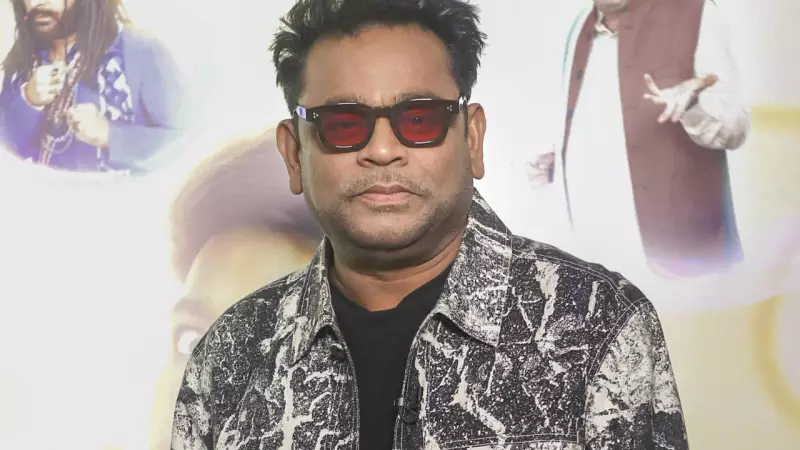
AR Rahman suggests possible communal bias in Bollywood
Music composer AR Rahman sparked a major controversy on Saturday. He hinted that he might have faced instances of communal discrimination within the Bollywood film industry over the last eight years. His comments during an interview with the BBC Asian Network caused an immediate outcry.
The interview that started the firestorm
During the conversation, the interviewer began to ask about discrimination against the Tamil community in Bollywood today compared to the 1990s. Rahman interrupted before the question finished. He initially said he never felt such discrimination personally, attributing this to divine protection.
However, he then made a significant shift. "Past eight years, maybe," Rahman stated, "because the power shift has happened... people who are not creative have the power now to decide things."

He went further, suggesting a communal element. "And this might have been a communal thing also, but not in my face," he explained. The composer described hearing rumors or "Chinese whispers" about producers booking him, only for music companies to fund films and hire five other composers instead. His reaction to such situations was reportedly one of acceptance, seeing it as a chance to rest.
Discussion on the film 'Chhaava'
The interview also touched upon his work for the 2025 hit film 'Chhaava', directed by Laxman Utekar. The interviewer noted the film's soundtrack was excellent but called the movie itself "divisive."
Rahman agreed with that characterization. "It is... I think it cashed on divisiveness," he said. "But I think the core of it is to show bravery." Interestingly, he revealed that the director insisted on having only him compose the music, despite Rahman's own reservations about why he was needed for the project.
Industry veterans rush to downplay the claims
Following Rahman's explosive comments, prominent figures in the Indian film industry quickly responded to calm the waters.
Writer and lyricist Javed Akhtar spoke to IANS to address the controversy. He sought to minimize the suggestion of bias. "People in Mumbai have great respect for him," Akhtar asserted. He offered alternative explanations for why Rahman might not be getting certain projects.
"Maybe they think he has got busy with the West (producers). Or they think he is busier with his big shows. Small producers are also scared to approach him," Akhtar suggested. He concluded firmly, "I don't think there is any communal element."
Bollywood playback singer Shaan also weighed in, supporting Akhtar's view. Speaking to IANS, Shaan shared his own experiences of fluctuating work. "I have sung so much over the years, yet even I don't get work at times," he said, framing it as a normal part of the business driven by personal preferences.
He heaped praise on Rahman's unparalleled talent and enduring popularity. "Rahman saab has a signature style and he is a great composer. His number of fans hasn't gone down, but are increasing," Shaan stated. He dismissed the idea of communal bias in music selection. "I don't think there is any communal or minority angle in music. Music doesn't work that way."
A legacy of national acclaim
AR Rahman's comments come from a position of immense respect and achievement. The maestro is a recipient of multiple National Awards for Best Music. His recent wins include scores for the Tamil film 'Kaatru Veliyidai' (2017), the Hindi film 'Mom' (2017), and the epic Tamil film 'Ponniyin Selvan 1' (2022). His stature makes his observations about industry dynamics particularly noteworthy.
The debate he ignited touches on deeper questions about power, creativity, and inclusion in one of the world's largest film industries. While veterans like Akhtar and Shaan advocate for a non-communal reading of professional choices, Rahman's hint at underlying biases has opened a significant conversation.