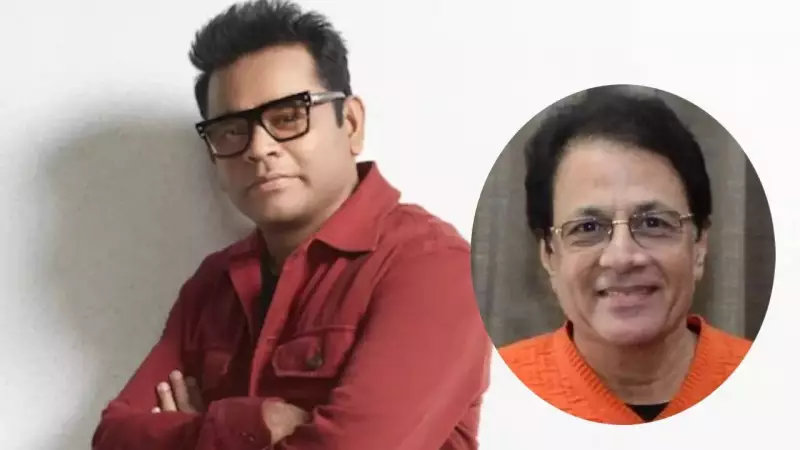
AR Rahman's Bollywood Work Decline Sparks Industry Debate on Communal Bias
Oscar-winning composer AR Rahman has recently found himself at the center of a heated industry debate following remarks he made during a recent interview. The celebrated musician revealed that he has been receiving significantly less work in Hindi cinema over the past eight years, suggesting that the reason behind this decline could be attributed to decision-making increasingly controlled by 'people who are not creative'.
The Controversial Comments and Their Implications
During his conversation with BBC Asian Network, Rahman was specifically asked whether he ever felt sidelined in Bollywood for being a Tamil composer. He responded by stating that he did not experience such feelings when he began his illustrious career in the 1990s, saying, 'Maybe I never got to know of this, maybe it was concealed by God, but I didn't feel any of this.'
However, he went on to add a more concerning observation about recent years: 'The past eight years, maybe, because a power shift has happened, and people who are not creative have the power now. It might be a communal thing also… but it is not in my face.' These comments immediately sparked widespread discussion and debate within the entertainment industry, with many celebrities weighing in on the matter.

Arun Govil's Counter-Argument and Industry Perspective
Now, veteran actor Arun Govil, best known for his iconic portrayal of Lord Ram in Ramanand Sagar's legendary television series 'Ramayan,' has entered the conversation with a contrasting viewpoint. Speaking at an event organized by the Federation of Western India Cine Employees (FWICE) and the Cine Artiste Welfare Trust (CAWT), Govil told PTI: 'In our industry, it has never happened where people have not got work due to communal bias. There are examples of this in our industry. In our industry, people of every religion have worked. Even today, there is no such thing. In fact, the film industry is the only industry where there is no communal bias.'
To further support his argument, Govil pointed to the long and illustrious history of Muslim actors dominating mainstream Indian cinema. He elaborated: 'Earlier, we've had actors like Dilip Kumar, he was the king of the industry in his time. Even today, Shah Rukh, Salman, Aamir, they are all stars. If there were communal bias, how would they have become stars?'
Rahman's Additional Criticism and Subsequent Clarification
During the same BBC interview that started the controversy, AR Rahman also offered criticism of the film 'Chhaava,' suggesting it was capitalizing on 'divisiveness.' This additional comment added another layer to the ongoing discussion about representation and creative freedom in contemporary Indian cinema.
Following the significant backlash and heated debate that ensued after his initial remarks, Rahman later released a video statement to clarify his comments. While the exact content of this clarification wasn't detailed in the original report, it represents an attempt by the composer to address the concerns and interpretations that emerged from his interview.
The Broader Context of Creative Freedom in Bollywood
This controversy highlights several important issues facing the Indian film industry today:
- The changing dynamics of creative decision-making in major film productions
- Questions about representation and opportunity for artists from different backgrounds
- The ongoing debate about whether communal considerations affect casting and hiring
- The tension between commercial interests and artistic integrity in contemporary cinema
The discussion has opened up important conversations about the evolving nature of Bollywood, where traditional creative processes intersect with modern business practices and where questions of identity and representation continue to be relevant topics of discussion among industry insiders and observers alike.