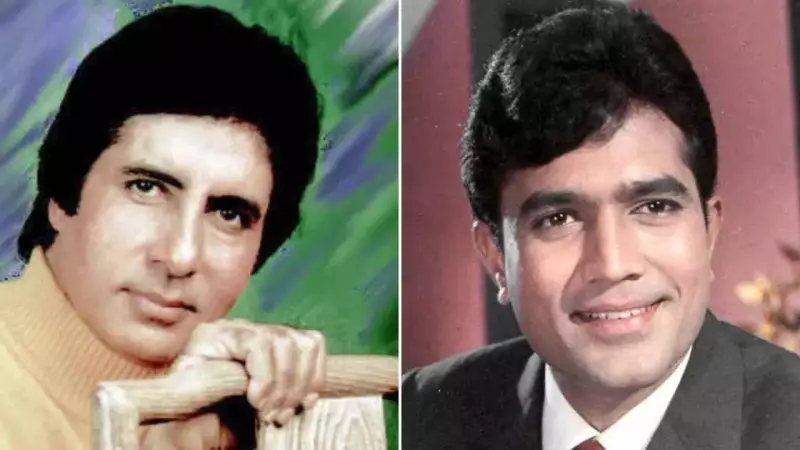
The legend of Rajesh Khanna, Hindi cinema's first true superstar, is a tapestry woven with threads of unparalleled fame, frenzied fandom, and whispered tales of difficult behaviour. While his tragic passing in 2012 marked the end of an era, a recent revelation has cast a new light on the complex dynamics he shared with his contemporary, the legendary Amitabh Bachchan. The anecdote, shared by a prominent film industry figure, underscores a professional rift rooted in one persistent issue: chronic lateness.
The Funeral Anecdote: A Poignant Final Wait
In a recent interview, veteran theatre owner and film producer Manoj Desai recalled a striking moment during the final rites of Rajesh Khanna. Desai disclosed that he was seated next to Amitabh Bachchan at the funeral held at Khanna's bungalow, Aashirwad. There was an unexpected delay as the family awaited the arrival of someone before the body could be taken for cremation.
It was in this solemn pause that Bachchan, reflecting on the situation, turned to Desai and remarked, "I had waited for 2 hours for this man on set, now look at the same man." Desai's response was philosophical, stating he told Bachchan that everyone ultimately meets the same fate. This brief exchange, shared decades after their iconic collaboration in the 1971 film 'Anand', poignantly encapsulates the professional friction that existed between the two icons.

The Cost of Stardom: Projects Shut and Careers Impacted
The issue of Rajesh Khanna's punctuality was not a minor inconvenience; it had serious financial and professional repercussions. The ripple effects of his reported starry tantrums and habitual delays are illustrated by the experience of filmmaker Narendra Bedi, as revealed by his son, actor Rajat Bedi.
Rajat Bedi explained that his father had initiated two to three films with Rajesh Khanna. However, Khanna apparently took offence that Narendra Bedi was also working with Amitabh Bachchan on other projects. The situation escalated when Bedi Sr. moved his film unit to Pune for a shoot, only for Rajesh Khanna to not arrive for 10 to 15 days. With no sign of the star, the filmmaker was forced to abandon the projects entirely, incurring significant financial losses. Rajat Bedi summed up the era by suggesting that heroes at that time could be "problematic."
The Shift in an Era and Personal Turmoil
This pattern of behaviour coincided with a seismic shift in Bollywood. As the 1970s progressed, the disciplined and intense persona of Amitabh Bachchan began resonating more with audiences and filmmakers alike. Many directors started opting for Bachchan, who was known for his professionalism, over the unpredictable Khanna. This transition is widely seen as a key factor in the eventual decline of Rajesh Khanna's career in the following decades, even as Bachchan's star ascended to new heights.
Parallel to his professional challenges, Khanna's personal life was also under strain. He had married actress Dimple Kapadia in 1973, just before the release of her debut film. The couple had two daughters, Twinkle and Rinkle Khanna. Although they never officially divorced, Dimple Kapadia and Rajesh Khanna began living separately after only a few years of marriage, a separation that lasted until his death.
The story of Rajesh Khanna's stardom remains incomplete without acknowledging these contrasting facets. He was a phenomenon who defined an era with his charm and style, yet his legacy is also intertwined with tales of rivalry and unreliability that ultimately shaped the trajectories of his own career and those who worked with him.