The Backstage Incident That Forged an Iconic Hollywood Look
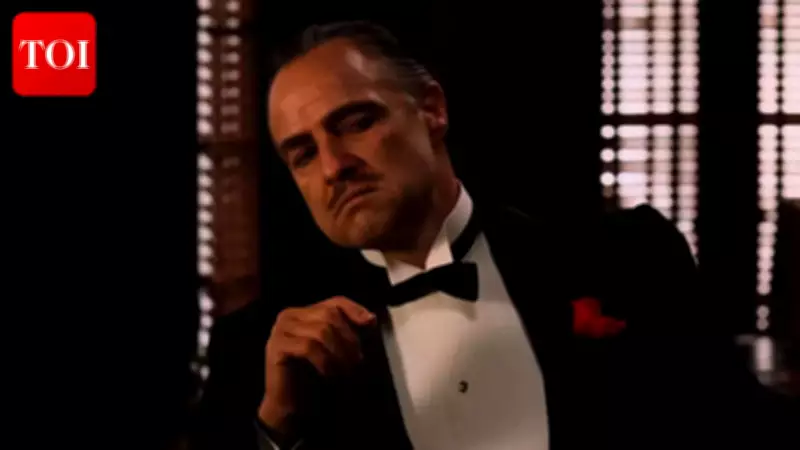
Marlon Brando's towering legacy in Hollywood extends far beyond his revolutionary acting techniques. While he fundamentally transformed performance art with his intense, naturalistic method acting, there's a lesser-known physical characteristic that became synonymous with his rugged on-screen presence: his distinctly crooked nose.
The Fateful Night That Changed Everything
Contrary to popular assumption, Brando's nose wasn't naturally crooked. The actor himself revealed in later interviews that the distinctive feature resulted from a backstage altercation during the Broadway run of 'A Streetcar Named Desire' in the late 1940s. According to detailed accounts, including those published in The New Yorker, the young, electrifying actor who was captivating audiences as Stanley Kowalski engaged in what began as playful roughhousing with a stagehand.
What started as boxing practice in the boiler room escalated unexpectedly when the stagehand—who had some boxing experience—landed a solid punch that fractured Brando's nose. "My nose was really busted," Brando would later recall about the incident that would permanently alter his appearance.

The Unconventional Recovery and Deliberate Choice
In true Brando fashion, the actor demonstrated remarkable dedication to his craft immediately following the injury. He walked himself to the hospital, underwent anesthesia to have his nose reset, and remarkably returned to complete his performance before seeking proper medical attention. This incident alone speaks volumes about his legendary commitment to acting.
More intriguingly, when producers and colleagues—including show producer Irene Selznick—urged him to have his nose properly fixed afterward, Brando made a conscious decision to leave it as it was. This wasn't mere negligence but a calculated choice about his professional image.
Transforming Pretty into Powerful
According to sources including FandomWire and The New Yorker, Brando's decision proved remarkably prescient. Before the nasal fracture, some industry observers considered him almost too handsome for the gritty, intense roles he was drawn to portraying. The newly crooked nose provided exactly the edge he needed.
Irene Selznick, who knew Brando intimately during this formative period, observed that the altered appearance made him look more dangerous and authentically masculine. She reportedly suggested that this accidental modification might have been precisely what transformed Brando from merely handsome into something far more compelling—a magnetic screen presence with undeniable raw power.
Brando's Meteoric Rise and Enduring Influence
Born in Omaha, Nebraska, Marlon Brando moved to New York to pursue acting with determination that would soon reshape Hollywood. His breakthrough role as Stanley Kowalski in 'A Streetcar Named Desire' catapulted him to stardom, first on Broadway and then in the acclaimed 1951 film adaptation.
Redefining Acting for Generations
Brando's subsequent performances established new benchmarks for cinematic excellence. His Oscar-winning role in 'On the Waterfront' showcased his emotional depth, while 'The Wild One' cemented his status as the definitive face of rebellious youth culture. The controversial 'Last Tango in Paris' further demonstrated his fearless approach to challenging material.
His commitment to method acting—emphasizing emotional truth, psychological realism, and improvisation—left an indelible mark on the craft. This revolutionary approach influenced countless actors who followed, from Robert De Niro to Al Pacino, creating a lineage of performers dedicated to authentic character portrayal.
The Godfather and Political Protest
By the early 1970s, Brando was already considered a living legend, but his portrayal of Don Vito Corleone in 'The Godfather' elevated him to mythic status. His deliberate choices—the gravelly voice, measured speech patterns, and even the cotton balls in his cheeks—created one of cinema's most unforgettable characters.

This performance earned him the Academy Award for Best Actor, but Brando made history by refusing to accept the award in person. Instead, he sent Native American activist Sacheen Littlefeather to decline the Oscar as a powerful protest against Hollywood's misrepresentation and mistreatment of Indigenous peoples—a bold political statement that demonstrated his principles extended beyond his craft.
The Lasting Legacy of an Imperfect Perfection
Marlon Brando's crooked nose became more than just a physical characteristic—it evolved into an integral component of his artistic identity. That single backstage incident during his formative years contributed significantly to creating the rugged, dangerous, and compelling screen presence that defined his most memorable roles.
From Stanley Kowalski to Don Vito Corleone, Brando's performances demonstrated how perceived imperfections could enhance artistic authenticity. His broken nose served as a visible reminder that true charisma often emerges from unexpected places, and that sometimes, accidents of fate can become defining features of greatness.
Brando's legacy continues to influence actors and filmmakers worldwide, reminding us that revolutionary artistry often embraces the unconventional—whether in performance technique or personal appearance. His story illustrates how the intersection of chance, choice, and talent can create icons whose impact endures for generations.