Bad Bunny Transforms Grammy Victory into Political Platform on Immigration
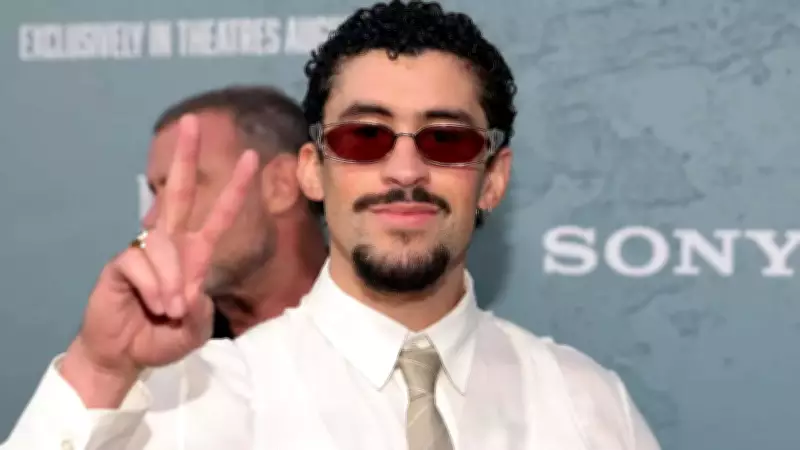
At the 68th Annual Grammy Awards held in Los Angeles on Sunday night, global music sensation Bad Bunny secured the prestigious award for Best Música Urbana Album. However, the Puerto Rican artist utilized his moment in the spotlight for far more than conventional expressions of gratitude. As detailed by media reports from The Spun and OutKick, Bad Bunny delivered a powerful, politically charged acceptance speech that immediately ignited discussions across social and political spheres.
"ICE Out" Message and Call for Empathy
Bad Bunny commenced his address with a bold declaration that resonated deeply with immigration advocates and critics alike. "Before I say thanks to God, I'm going to say ICE out," he announced to the audience, directly referencing U.S. Immigration and Customs Enforcement. This opening statement set the tone for a broader commentary on the treatment and perception of immigrants in contemporary society.
The artist passionately articulated, "We're not savage. We're not animals. We're not aliens. We are humans and we are Americans." He further delved into the emotional dynamics of public discourse, acknowledging the pervasive nature of animosity. "I was thinking sometime we get contaminados. I don't know how to say that in English. The hate get more powerful with more hate. The only thing that is more powerful than hate is love," he reflected, urging a transformative approach to conflict resolution.

Bad Bunny concluded this segment with an earnest appeal: "So, please we need to be different. If we fight, we have to do it with love. We don't hate them. We love our people, we love our family. And that's the way to do it, with love. Don't forget that, please." In a single speech, he masterfully celebrated his artistic achievement, advocated for compassion, and issued a direct challenge to a federal agency, creating a defining moment as he prepares for the world's largest football spectacle.
NFL and Apple Music Publicly Endorse Bad Bunny Amid Controversy
Rather than distancing themselves from the politically sensitive remarks, the National Football League and its halftime show partner Apple Music chose to amplify Bad Bunny's presence. This strategic decision came despite existing criticism surrounding his selection as the Super Bowl 60 halftime performer, scheduled just days after the Grammy ceremony.
Coordinated Social Media Support
Apple Music, which collaborates with the NFL on the Super Bowl halftime production, posted a congratulatory message on social media platform X: "Congratulations @sanbenito, you’ve made history ? See you next week on the big stage for the #SBLX #AppleMusicHalftime Show." The NFL promptly quoted this post, adding a trophy emoji to reinforce their endorsement.
This coordinated digital campaign reached substantial audiences:
- Apple Music's post was visible to approximately 9.5 million followers
- The NFL's amplification extended the message to roughly 35 million additional followers on X
- Further dissemination occurred through Instagram, reaching another significant viewer base
This public display of support was clearly a deliberate organizational decision rather than an isolated social media activity, occurring precisely as Bad Bunny's "ICE out" statement circulated through political commentary channels.
Growing Backlash and Defensive Posture
The NFL's endorsement arrives amidst escalating criticism from various quarters. As noted by commentators, conservative groups including Turning Point USA have already organized plans for an alternative halftime presentation in protest. NFL Commissioner Roger Goodell has previously defended the league's decision to feature Bad Bunny, anticipating the contentious response.

Critics from right-leaning perspectives interpret the Grammy incident as evidence that the Super Bowl halftime show now carries explicit political connotations regarding immigration enforcement. They contend that by promoting Bad Bunny immediately after his televised critique of ICE, the league implicitly aligns with a message that contradicts their values. Some analysts characterize this as an unnecessary misstep for an organization that typically emphasizes sports entertainment over political engagement.
Supportive Perspectives and Strategic Considerations
Conversely, advocates argue that Bad Bunny represents a substantial segment of the NFL's viewership, particularly within Latino communities. From this viewpoint, the league's supportive posts constitute logical backing for their chosen performer. Ignoring his Grammy achievement and subsequent statements might appear more peculiar than issuing standard congratulatory communications.
Regardless of interpretation, the NFL has unequivocally committed to its position. The organization is not merely hosting Bad Bunny for the halftime performance in Santa Clara; it is actively promoting his platform days before the New England Patriots and Seattle Seahawks commence Super Bowl 60 at Levi's Stadium at 6 p.m. Eastern Time on Sunday.
This intersection of entertainment, sports, and political discourse underscores the evolving nature of major cultural events, where artistic expression increasingly converges with social commentary, compelling organizations to navigate complex public relations landscapes.