Bad Bunny's Super Bowl Halftime Show Features Powerful Grammy Trophy Gesture
Puerto Rican superstar Bad Bunny delivered a culturally charged performance during the Apple Music Super Bowl 60 halftime show on February 8 at Levi's Stadium in Santa Clara, California. The artist strategically built his set around a message of unity and hope, culminating in a viral moment that captured global attention.
The Viral Grammy Hand-Off That Sparked Online Speculation
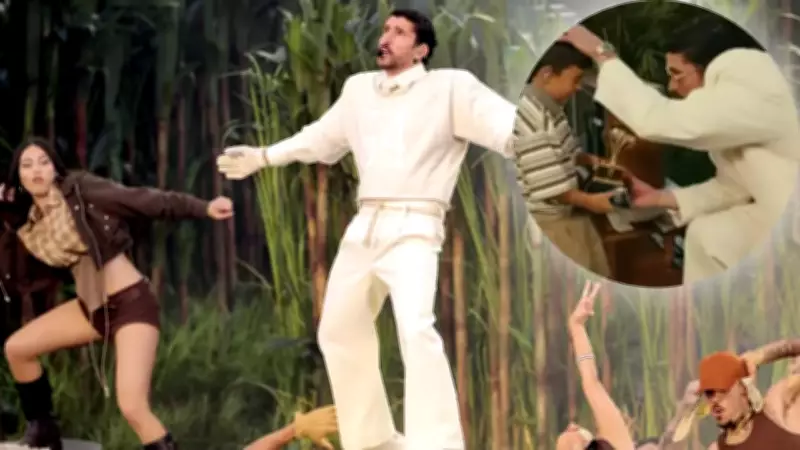
During his performance, Bad Bunny entered a living-room set and handed a Grammy trophy to a young boy on camera. The clip spread rapidly across social media platforms, generating numerous theories about the child's identity and the gesture's significance. Initial speculation suggested the boy might be Liam Conejo Ramos, a 5-year-old who was detained by Immigration and Customs Enforcement agents in Minnesota.
This theory gained traction because Bad Bunny's performance referenced his Grammy Awards speech from February 2, where he stated: "Before I say thanks to God, I'm going to say, ICE out," followed by: "The only thing that is more powerful than hate is love."

Official Identification Clarifies The Moment's True Meaning
ABC News reported that the moment was designed to symbolize that anyone can pursue big dreams, according to a source familiar with the performance's intent. The same reporting identified the child as Lincoln Fox, a 5-year-old actor of half-Argentinian descent.
Fox's talent agency confirmed his participation in the segment, and the young actor posted the clip on his Instagram account with the caption: "I'll remember this day forever! @badbunnypr - it was my truest honor."
A Performance Rich With Cultural And Political Significance
Bad Bunny's 13-minute set was packed with Puerto Rican imagery, including the artist carrying a Puerto Rican flag throughout portions of the performance. He performed hits like "Tití Me Preguntó" and brought out high-profile cameos including Ricky Martin, Jessica Alba, Karol G, and Cardi B.
Variety described the show as unity-themed and filled with political nods, particularly the on-screen message: "The only thing more powerful than hate is love," which directly echoed his Grammy Awards statement.
The Lasting Impact Of A Carefully Crafted Statement
Whether viewers interpreted the performance as hopeful, protest-oriented, or both, the consensus remained clear: Bad Bunny transformed a brief halftime show into a powerful cultural statement. The Grammy trophy hand-off to young Lincoln Fox became the defining image that audiences couldn't stop discussing and replaying across digital platforms.
The moment demonstrated how carefully orchestrated performances can generate meaningful conversations beyond entertainment, blending artistry with social commentary in ways that resonate with global audiences.