Attention: This article contains detailed plot information and spoilers for the upcoming film 'Border 2'. If you have not watched the movie yet and prefer to avoid spoilers, we recommend you stop reading at this point.
The Legacy of Border and the Arrival of Its Sequel
In 1997, legendary filmmaker JP Dutta created 'Border', a cinematic masterpiece that quickly established itself as one of Bollywood's most cherished war epics. Featuring powerhouse performances from Sunny Deol, Suniel Shetty, and Akshaye Khanna, the film captured the nation's imagination and remained embedded in collective memory for decades. Now, nearly three decades later, the much-anticipated sequel 'Border 2' is scheduled for release in 2026, promising to continue this monumental cinematic legacy.
From Longewala to Operation Chengiz Khan
While the original film dramatized the heroic Battle of Longewala during the 1971 conflict, the sequel shifts its focus to a different pivotal moment in military history. 'Border 2' is based on Operation Chengiz Khan, the strategic military operation that formally initiated the Indo-Pak war of 1971. This represents a significant expansion of the franchise's historical scope, exploring the events that precipitated the full-scale conflict between the two neighboring nations.

Understanding Operation Chengiz Khan
On December 3, 1971, Pakistan launched Operation Chengiz Khan, named after the formidable Mongol conqueror Genghis Khan. This operation constituted a coordinated surprise aerial assault by the Pakistan Air Force targeting multiple Indian airbases and critical radar installations across northern and western India.
The primary strategic objective was to cripple the Indian Air Force's operational capabilities and establish aerial dominance during the initial phase of hostilities. Military historians note that this preemptive strike drew tactical inspiration from Israel's successful 1967 air campaign against Egypt and Syria, demonstrating evolving warfare strategies of the era.
A total of eleven Indian military installations were targeted in this ambitious operation, including strategically significant bases at Amritsar, Pathankot, Ambala, and Jodhpur. The broader geopolitical context involved Pakistan's attempt to disrupt India's support for the Bangladesh Liberation War, which was gaining momentum in what was then East Pakistan.
India's Immediate and Decisive Response
Prime Minister Indira Gandhi interpreted these coordinated attacks as an unequivocal declaration of war and immediately authorized comprehensive retaliatory measures. The Indian Air Force demonstrated remarkable operational readiness by launching counterattacks within hours of the initial strikes, followed by extensive air operations commencing the following morning. This swift response marked the beginning of full-scale military engagements that would ultimately reshape South Asian geopolitics.
The Cinematic Vision of Border 2
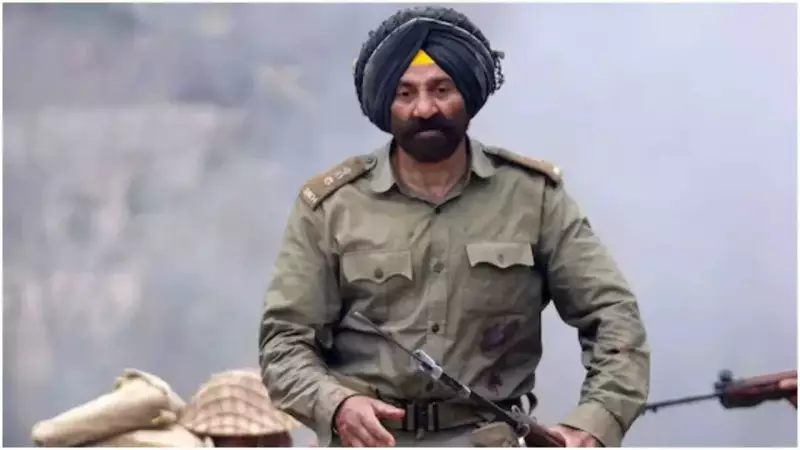
Under the direction of Anurag Singh, 'Border 2' promises to deliver a gripping narrative that explores both the strategic dimensions of Operation Chengiz Khan and the human stories within the broader 1971 conflict. The film brings back Sunny Deol from the original cast, though interestingly, he portrays an entirely new character this time.
Deol assumes the role of commanding officer Lt. Col. Fateh Singh Kaler, while Varun Dhawan steps into the pivotal character of Major Hoshiar Singh Dahiya. The ensemble cast further includes Diljit Dosanjh portraying officer Nirmal Jit Singh Sekhon and Ahan Shetty appearing as Lt. M. S. Rawat.
The film also features significant female representation with Mona Singh, Sonam Bajwa, Anya Singh, and Medha Sharma occupying key roles, suggesting a more comprehensive portrayal of wartime experiences beyond frontline combat.
This production represents a significant moment in Indian cinematic history, combining historical authenticity with dramatic storytelling to illuminate a crucial chapter in the nation's military heritage. The film's approach to depicting Operation Chengiz Khan and its aftermath offers audiences both educational insight and emotional engagement with this defining period.