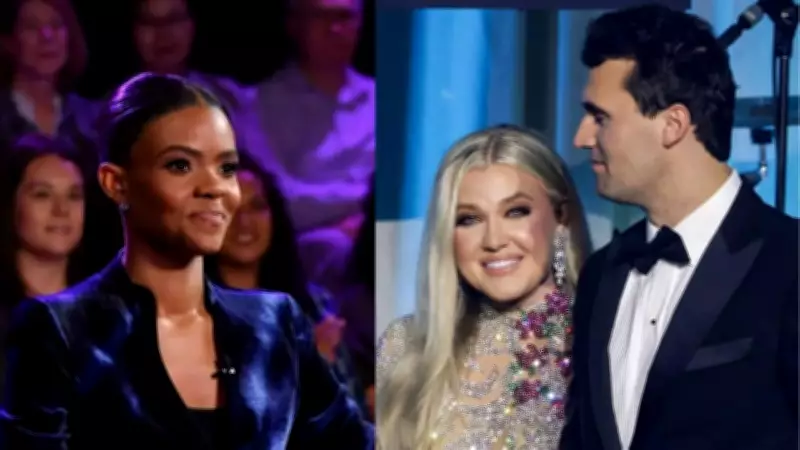
Candace Owens' Commentary on Erika Kirk Ignites Safety Debate
The controversy surrounding Candace Owens' remarks about Erika Kirk has escalated dramatically, with critics now voicing urgent warnings about potential real-world dangers. What originated as pointed inquiries during a podcast discussion has transformed into a heated public dispute, shifting focus from mere political disagreement to serious concerns about personal safety and accountability in digital discourse.
Frank McCormick's Blunt Warning on Social Media
Frank McCormick intensified the situation with a stark message posted on X, formerly known as Twitter. He expressed grave concerns that Owens' rhetoric could have dangerous consequences, framing the matter as both urgent and deeply troubling. McCormick's intervention highlights how inflammatory language in today's charged climate can potentially inspire harmful actions from unstable individuals.
"Candace Owens is going to get Erika Kirk murdered when one of her insane cult members decides to exact 'justice' for Charlie. I'm not kidding. This must stop now," McCormick wrote emphatically. His post included a screenshot of Owens' own social media statement, which read: "We received a shocking confirmation regarding Erika Kirk's inner circle on September 10th. If we had any semblance of a justice system, Erika would at this point be taken in for questioning by the police."

The Core of the Controversy
These statements form the epicenter of the growing storm. Owens has consistently questioned events surrounding Charlie Kirk's assassination, suggesting there are inconsistencies that warrant thorough investigation. However, her critics argue that publicly calling for Erika Kirk to be detained for police questioning crosses a significant boundary, particularly when law enforcement authorities have not indicated any such action is necessary.
The timing of Owens' remarks adds another layer to the controversy. She shared her comments after claiming to have obtained new information about Erika Kirk's "inner circle." McCormick responded shortly afterward, expressing genuine fear that such heated language could motivate unstable supporters to take matters into their own hands. His concern transcends political disagreement, focusing instead on the risk of escalation in an already emotionally charged situation.
The Broader Implications for Public Discourse
Public discourse has grown increasingly sharp, personal, and volatile in recent times. In high-profile cases like this, speculation often spreads more rapidly than verified facts. For many observers, this represents the crux of the issue. They believe that when influential voices present allegations with near-certainty, the ripple effects can become unpredictable and potentially dangerous.
Owens has maintained her position, refusing to back down from questioning what she perceives as unresolved issues. Critics like McCormick counter that the tone and implications of such statements are equally important as the questions themselves. This conflict reflects a larger battle over responsibility in digital media, where words can spread instantaneously and reactions can follow just as quickly.
The debate now centers on whether public figures should exercise greater caution when discussing sensitive matters that could potentially endanger individuals. As the situation continues to develop, many are calling for more measured dialogue that prioritizes safety while still allowing for legitimate inquiry.