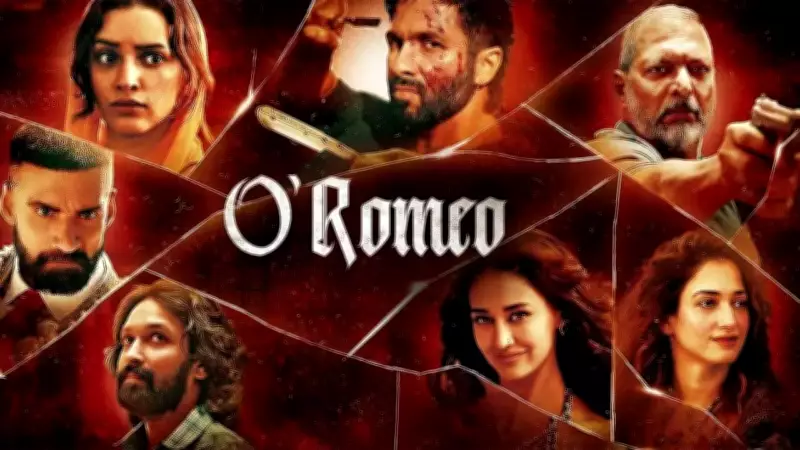
Vishal Bhardwaj's 'O Romeo' Secures Legal Victory Ahead of Theatrical Release
In a significant legal development for Bollywood, director Vishal Bhardwaj's highly anticipated gangster drama 'O Romeo' has cleared a major hurdle just weeks before its scheduled theatrical debut. A Mumbai civil court has firmly rejected an attempt to block the film's release, delivering a decisive victory for the production team.
Court Denies Injunction Against Shahid Kapoor-Starrer
The legal challenge was initiated by Sanober Shaikh, daughter of the late gangster Hussain Shaikh (also known as Hussain Ustara), who claimed the filmmakers had based their project on her father's life without obtaining proper consent from the family. She filed a civil suit against producer Sajid Nadiadwala, director Vishal Bhardwaj, and author Hussain Zaidi, seeking an immediate stay on the film's release.
However, in an order passed on Saturday, Civil Court Judge H C Shende ruled that Sanober Shaikh had failed to establish sufficient grounds for an injunction. The court noted that the plaintiff had previously sought monetary compensation from the filmmakers, making her request for an emergency stay "impermissible in the eye of law."

Defense Maintains Film is "Pure Work of Fiction"
The legal team representing the filmmakers, advocates Ashwin Bhalekar and Rishi Bhuta, presented a robust defense during proceedings. They emphasized that 'O Romeo' is a "pure work of fiction" that carries clear disclaimers to that effect. The defense lawyers revealed that Sanober Shaikh had sent multiple legal notices to the production team before filing the suit, demanding compensation ranging between ₹1 crore and ₹5 crore.
"This clearly demonstrates that the grievance is purely monetary in nature," argued the defense counsel, highlighting what they characterized as a financial motivation behind the legal challenge rather than genuine concerns about portrayal or consent.
Court Cites Delay and Judicial Overreach Concerns
Judge Shende's ruling also pointed to significant procedural issues with the plaintiff's case. The court observed that Sanober Shaikh was well aware of the proposed film long before approaching the court, yet only filed her suit as the release date became imminent. This delay was noted as a factor in the decision.
Furthermore, the court declined the plaintiff's request for a pre-release screening, stating that such judicial intervention would amount to "judicial censorship" that is not permissible under established legal principles. The ruling emphasized the importance of artistic freedom and the proper boundaries of judicial oversight in creative expression.
Film Details and Cast Ensemble
'O Romeo' marks the third collaboration between director Vishal Bhardwaj and leading man Shahid Kapoor, following their critically acclaimed work in 'Kaminey' and 'Haider'. The film features Kapoor in what appears to be a gritty role as a gunman, based on teaser footage that suggests an action-driven narrative blending violence and romance.
The project boasts an impressive ensemble cast that includes:
- Triptii Dimri in a lead role alongside Shahid Kapoor
- Avinash Tiwary in a significant supporting character
- Veteran actress Farida Jalal
- Vikrant Massey in a yet-to-be-revealed role
- Nana Patekar adding his distinctive presence
- Tamannaah Bhatia in a special appearance
- Disha Patani completing the star-studded lineup
Future Legal Proceedings and Release Plans
Despite the current ruling, Sanober Shaikh's legal representative has indicated that the verdict will be challenged before the Bombay High Court, suggesting the legal saga may continue even after the film's release. However, with the immediate threat of an injunction removed, the production team can proceed with their marketing and distribution plans.

'O Romeo' remains scheduled for a theatrical release on February 13, positioning it as one of the most anticipated Bollywood releases of the season. The legal victory represents not just a win for this particular production but reinforces important principles regarding artistic freedom and the burden of proof in cases alleging unauthorized biographical adaptation.
The ruling serves as a reminder of the complex intersection between creative expression, personal rights, and legal protections in India's vibrant film industry, where stories inspired by real events must navigate careful legal and ethical considerations while maintaining their artistic integrity.