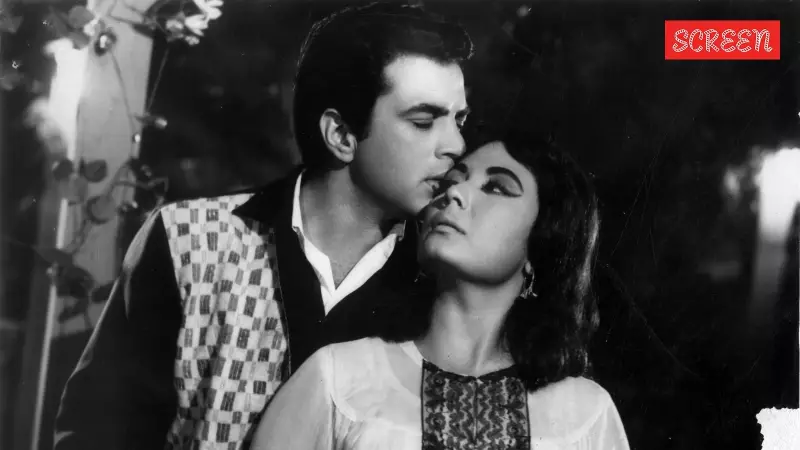
The golden era of Hindi cinema witnessed countless on-screen romances, but few off-screen bonds were as poignant and complex as the one shared between the legendary Meena Kumari and the emerging star, Dharmendra. In the late 1950s and early 1960s, their paths crossed at a critical juncture in both their lives, weaving a tale of mutual admiration, mentorship, and a deep, unspoken connection that provided solace to the 'Tragedy Queen' during her most turbulent times.
A Novice's Awe Meets a Star's Loneliness
When Dharmendra first arrived in Mumbai with dreams of stardom, he was a novice, unsure of how to navigate the film industry. His early work with directors like Bimal Roy in Bandini (1963) and Chetan Anand in Haqeeqat (1964) had been praised, but he was yet to become a household name. In stark contrast, Meena Kumari was at the pinnacle of her career, having redefined Hindi cinema heroines with seminal works like Sahib Bibi Aur Ghulam (1962).
However, her glittering professional life masked profound personal despair. Her marriage to filmmaker Kamal Amrohi was crumbling, leading to a separation. She moved out of her marital home, eventually settling into her new house, Janki Kutir, where loneliness and a growing dependence on alcohol began to take a severe toll on her health. It was into this void that the young, earnest Dharmendra stepped.

From Petrified Co-Star to Trusted Confidant
Their first meeting was on the sets of the film Purnima in 1965. According to Vinod Mehta's biography, 'Meena Kumari – The Classic Biography', Dharmendra was "petrified" at the prospect of working with the iconic actress. He was reportedly advised to touch her feet as a mark of respect for her seniority. While it's unknown if he did, Meena Kumari saw something special in him, reportedly remarking, "This boy will rise. He is not the routine entry."
Over the next four years, they worked together in seven films, including Main Bhi Ladki Hoon, Kaajal (1965), Phool Aur Patthar (1966), and Majhli Didi (1967). While most of these films failed to make a mark at the box office, they served as a conduit for their growing friendship. For Meena, Dharmendra became a trusted confidant—a refreshingly genuine presence in a world where she felt treated as a "meal ticket" by many.
A Guardian Against the Storm: Curbing the Drink, Offering Safety
Contrary to popular speculation, Dharmendra did not enable Meena Kumari's alcoholism; he actively tried to combat it. He would frequently visit her at Janki Kutir, and his presence had a calming influence. Her biography notes that she would drink less when he was around, only to succumb to her habit after he left. Decades later, on the show Aap Ki Adalat, Dharmendra firmly stated his stance: "I don't like women drinking."
Their closeness inevitably became tabloid fodder. Meena, unlike many contemporaries, was open about her affections. The rumours swirled—of her reciting poetry for him, of her impatience in his absence. Dharmendra, for most of his life, remained largely silent on the nature of their relationship. When pressed by host Rajat Sharma on the same show, he framed his feelings as devoted fandom: "It wasn't love, I was her fan. As a fan, I would just keep looking at her."
Fortunes Reverse and a Painful Parting
The year 1966 proved to be a turning point. Phool Aur Patthar was a major hit, catapulting Dharmendra to bona fide stardom. Tragically, as his fortunes rose, Meena Kumari's declined. Her health deteriorated rapidly due to alcoholism. Their professional collaboration ended after 1968's Baharon Ki Manzil.
A poignant symbol of their severed bond was the casting for Kamal Amrohi's magnum opus, Pakeezah. Amrohi, who had temporarily reconciled with Meena, flatly refused to cast Dharmendra as the male lead, unwilling to feature a man so close to his wife. Dharmendra later shrugged it off, saying, "People were jealous."

As Meena's health failed in her final years, Dharmendra was no longer by her side. She passed away in March 1972. At her funeral, a respectful Dharmendra paid his last respects. The most powerful testament to their bond came from actress Nargis, who wrote an open letter declaring, "If Meena has ever loved anyone passionately, the person is Dharmendra. If Meena ever turned crazy in love for someone, it was Dharmendra." Nargis described this period as the "most beautiful" phase of Meena's life, affirming that Dharmendra's influence had been entirely positive.
Dharmendra moved on, marrying Hema Malini in 1979. Yet, the chapter with Meena Kumari remains a hauntingly beautiful footnote in Bollywood history—a story where a worshipped star found genuine care, and a young fan provided a fleeting sanctuary from tragedy.