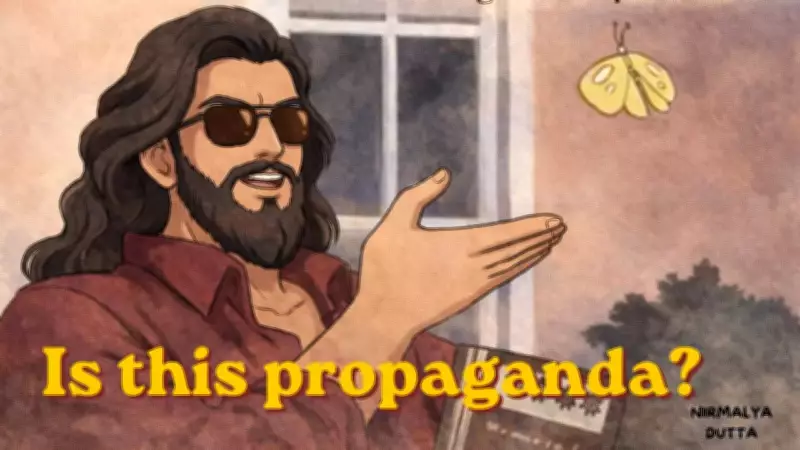
The Subtle Power of Propaganda in Modern Cinema
In a classic Cold War anecdote, a KGB agent and a CIA operative share a drink in a bar. The American compliments the Russian, saying, "I have to hand it to you – your propaganda is very impressive." The Soviet agent smiles and replies, "It's nothing compared to American propaganda." When the American protests, "But we don't have propaganda," the Soviet winks and says, "Exactly." This exchange highlights a profound truth: the most effective propaganda often convinces people it doesn't exist.
From Baudelaire to Bollywood: The Evolution of Narrative Control
The famous line, "The greatest trick the Devil ever pulled was convincing the world he doesn't exist," is widely known from the film The Usual Suspects, yet its origins trace back to French poet Charles Baudelaire's The Generous Gambler. Similarly, American propaganda has masterfully embedded itself in cultural fabrics, wrapped in morality, economics, and the illusion of free will. While Nazis had Leni Riefenstahl and communists had agitprop, Americans have Hollywood blockbusters and a so-called "free press."
Dhurandhar: A Case Study in Contemporary Myth-Making
Recently, the term "agitprop" has been applied to Aditya Dhar's Dhurandhar duology, alongside labels like 'majoritarian' and 'Islamophobic'. Critics have dismissed it as propaganda, but this raises a broader question: what constitutes propaganda in cinema? If one stretches logic, films like Rang De Basanti could be seen as anarcho-pacifist propaganda, Chak De India as anti-cooperative federalism, or Three Idiots as anti-engineering school rhetoric.

However, Dhurandhar stands out not for its political leanings but for its role in civilisational myth-making. Every nation requires foundational myths to unite its people. For the United States, it was 'Manifest Destiny', glorified in novels and Western films that obscured indigenous genocide. In India, the myth of ahimsa (non-violence) has long dominated, shaping foreign policy and cultural narratives, despite ignoring the martial epics of the Mahabharata and Ramayana.
Bollywood's Shift from Pacifism to Patriotic Pride
For decades, Bollywood perpetuated the ahimsa myth, portraying India and Pakistan as brothers bonded by biryani and shared culture. Movies often featured spies dancing together against faceless threats, reflecting a pacifist worldview that persisted until repeated terror attacks shifted public sentiment. Films that deviated from this were often poorly made, seen as exploitative cash-grabs.
Dhurandhar breaks this mold with competent storytelling and meticulous detail, akin to Frederick Forsyth's thrillers. It blends real-life events into a revenge fantasy, reminiscent of Quentin Tarantino's works like Inglourious Basterds. The soundtrack is a fusion of golden-era Bollywood, qawwalis, Punjabi pop, and Western rock, supported by a Hans Zimmer-esque score. Scenes vividly push the phantasmagoria of revenge, a technique Hollywood has long perfected.
Civilisational Wounds and Audience Readiness
Unlike the fantastical settings of Baahubali or RRR, Dhurandhar is set in a near-future contemporary world, resonating with audiences who have lived through events like the 26/11 attacks. As actor Arjun Rampal noted, "This is my revenge." The film serves as balm for civilisational wounds, sparking what some call "Dhurandhar Derangement Syndrome"—a backlash from those accustomed to controlling cultural narratives.
The democratisation of art challenges old elites, and Dhurandhar represents a clean break from genteel worldviews. While Bollywood still has ground to cover to match Hollywood's myth-making prowess in films like Top Gun or American Sniper, this duology marks a significant start. Its title track declares, "You are not ready for this," and the sequel adds, "You are still not ready for this." Yet, for new India's audience, readiness is unmistakable.

Conclusion: The Future of Indian Cinema
Dhurandhar's success lies in its ability to tap into the availability heuristic of viewers, blending myth-making with modern relevance. Whether seen as propaganda or art, it underscores cinema's power to shape national identity. As debates rage, one thing is clear: Bollywood is evolving, and audiences are eager for stories that reflect their realities and aspirations.