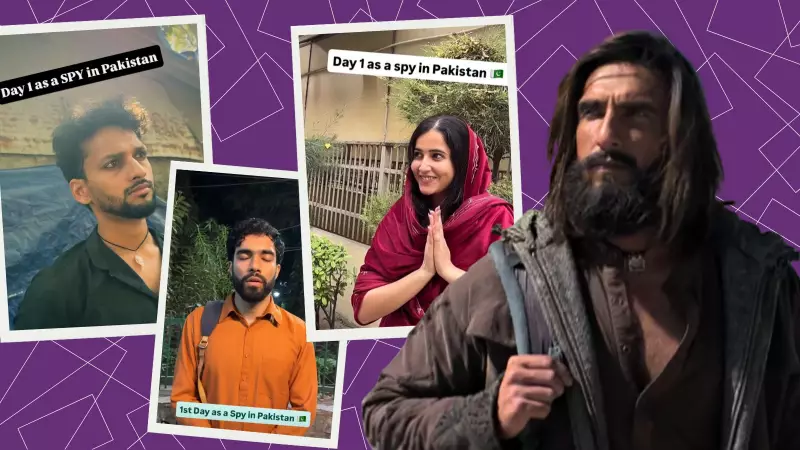
The explosive release of Aditya Dhar's blockbuster Dhurandhar has sparked more than just box office records and heated debate. It has inadvertently birthed a cross-border internet phenomenon: a flood of hilarious "spy" memes that are being created and consumed with equal fervour in both India and Pakistan. This wave of satire, using the film's own espionage tropes, reveals a shared public fatigue with repetitive nationalist storytelling and a clever, humorous pushback against being told how to feel.
The Meme Format: Cultural Quirks and Blown Covers
The meme template is simple yet effective. Short reels, often set to the film's haunting qawwali "Na Toh Karwaan Ki Talaash Hai," show a "spy" from one country awkwardly navigating the other. The humour lies in the exaggerated, stereotypical disguises and the inevitable moment their cover is blown. Indian "spies" in Pakistan are depicted with kajal-lined eyes, wearing a burqa or skullcap, and awkwardly sprinkling Urdu terms like "janaab" into conversation. Conversely, Pakistani "spies" in India are shown with a vermillion tika, dhoti, or turban.
The comedy peaks when a local asks a suspiciously simple question, leading to a culturally inappropriate response that instantly gives the spy away. An Indian spy, upon hearing he will meet "bade sahab," instinctively plans to fetch alcohol from Gurugram and order chakhna via Blinkit. A girl in a hijab automatically touches a thrown book to her forehead—a common Hindu gesture. A namaste in reply to an "As-Salaam-Alaikum" or an urge to touch feet seals their fate.

On the other side, Pakistani spies give themselves up by suddenly referencing Pakistan's rare win over India in the 2021 T20 World Cup or passionately praising former Prime Minister Imran Khan's "tabdeeli" (change) agenda. These specific, relatable cultural touchpoints make the content resonate deeply with audiences on both sides of the border.
More Than Just Jokes: A Response to Hyper-Nationalist Cinema
This meme trend is not occurring in a vacuum. Dhurandhar, starring Ranveer Singh, is the latest and most technically proficient entry in a growing genre of hyper-nationalist Indian cinema, following films like Uri: The Surgical Strike, Fighter, The Kashmir Files, and Article 370. The film has been praised by some as a masterpiece that stokes patriotic fervour and criticized by others for escalating cross-border antagonism.
The memes function as a form of public critique. They use satire and irony to neutralise the volatile discourse the film generates. Instead of engaging with anger or aggressive nationalism, audiences are choosing to laugh at the absurdity of the espionage clichés and the chest-thumping messaging. As one observer noted, there are no rebuttals or protests here—only ridicule to tame the narrative.
This reflects a broader weariness with the "done-to-death 'enemy' plot" and the persistent feeling of being instructed, repeatedly, to feel a specific way about geopolitical rivals. The laughter betrays a public response that resists being uniformly shaped by top-down nationalist narratives.
The Limits of Viral Humour and the Road Ahead
While the meme trend is a significant cultural moment, it has its limits. It is perhaps too optimistic to call it a "unifying factor." The jokes do not erase deep-seated hostility or promise future peace. Furthermore, the trend may lose steam as internet fads do, but the underlying India-Pakistan rhetoric in politics and cinema is unlikely to fade.
The industry is already looking forward: Dhurandhar's sequel is slated for March 2026, and JP Dutta's Border 2 is set for release on January 23, 2026, just days before Republic Day. This proximity may further cement themes of nationalism and masculinity in mainstream cinema.
Ultimately, the viral "spy" memes highlight a crucial, telling development. Audiences in both nations are demonstrating they are not passive recipients of aggressive messaging. They are capable of reading such content critically and deciding how—or whether—to engage with it, using humour as both a shield and a subtle tool of subversion in a media ecosystem often thriving on outrage.