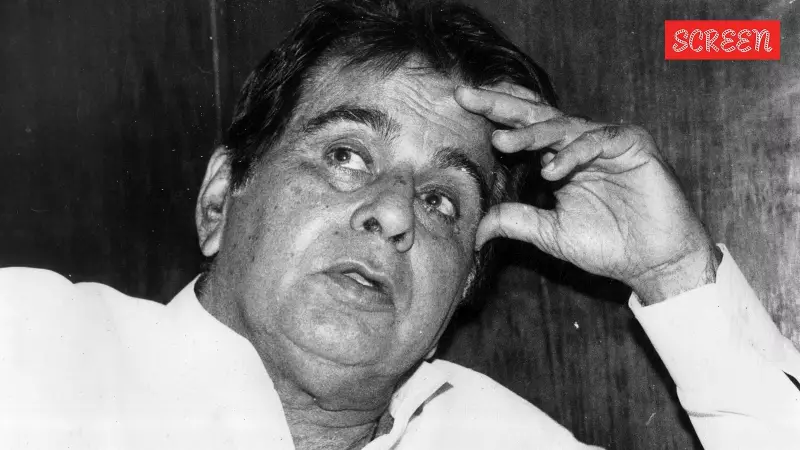
The legendary Bollywood actor Dilip Kumar made a bold attempt to mediate peace between India and Pakistan during the intense Kargil War in 1999. This remarkable episode recently came to light through historical accounts and reveals the complex position of Indian Muslims during times of conflict.
Dilip Kumar's Direct Appeal to Pakistan's Prime Minister
In May 1999, as tensions escalated in Kargil, then Indian Prime Minister Atal Bihari Vajpayee placed an urgent call to his Pakistani counterpart Nawaz Sharif. During this conversation, Vajpayee expressed deep disappointment about Pakistan's actions in Kargil following his recent peace visit to Pakistan.
Before concluding the call, Vajpayee asked Sharif to speak with someone sitting beside him. Dilip Kumar then took the phone and made a heartfelt appeal to the Pakistani leader.

The Emotional Plea for Peace
"Mian Sahib, we did not expect this from you since you have always claimed to be a great supporter of peace between Pakistan and India," Dilip Kumar reportedly told Sharif. "Let me tell you as an Indian Muslim that in case of tension between Pakistan and India, Indian Muslims become very insecure and they find it difficult to even leave their homes. Please do something to control this situation."
This conversation, documented in former Pakistani foreign minister Khurshid Kasuri's book 'Neither a Hawk Nor a Dove', temporarily stabilized the situation before hostilities resumed for another three months.
Bal Thackeray's Controversial Reaction
Dilip Kumar's peace efforts and his connection to Pakistan created significant controversy in India. The situation intensified when Pakistan announced it would honor the actor with its highest civilian award, Nishan-e-Imtiaz, in 1998.
Shiv Sena supremo Balasaheb Thackeray strongly opposed this honor. He publicly criticized Dilip Kumar, suggesting the actor's loyalties had shifted. "Abhi chana bhi hain, beer bhi hain, lekin Dilip Kumar ke raaste badal gaye," Thackeray remarked, implying the actor had changed his path.
The 'Leave India' Ultimatum
Thackeray went further, demanding that Dilip Kumar return the Pakistani award or leave India entirely. "Shiv Sena and their leader said that I should return the award and if I don't return the award then I should leave this country, get back to Pakistan and live there," Dilip Kumar recalled in an interview with NDTV.
The actor responded with visible hurt and frustration. "After 65 years of being here, I have to prove my loyalty to Thackeray," he told India Today. He described Thackeray's pronouncement as "abominable" and "hurtful," emphasizing that it offended his personal dignity.
Dilip Kumar's Roots and Identity
Born in Peshawar, Pakistan, Dilip Kumar moved to Bombay (now Mumbai) with his family in the late 1930s. During the Partition, when his father was encouraged to return to Peshawar, he firmly declared, "We will remain in India and die in India."
Despite this strong Indian identity, Dilip Kumar maintained emotional connections to his birthplace. His 1988 visit to Peshawar for the inauguration of the city's first blood bank turned into a state visit when Pakistani President Zia-ul-Haq decided to host him officially.
Vajpayee's Support and Wisdom
When controversy erupted over the Nishan-e-Imtiaz award, Dilip Kumar sought guidance from Prime Minister Atal Bihari Vajpayee. The Prime Minister encouraged him to retain the honor, offering a perspective that transcended political boundaries.
"You are an artiste and as such you are not restrained by political or geographical barriers," Vajpayee told him. "You have been chosen for the humanitarian work you have."
The Lasting Legacy of a Peacemaker
Dilip Kumar's attempt at peacemaking during the Kargil War highlights the unique position of Indian Muslims during India-Pakistan conflicts. His story reveals how cultural figures sometimes operate in diplomatic spaces, even when their efforts generate domestic controversy.
The actor, who passed away in 2021 at age 98, left behind a complex legacy as both a cinematic icon and an unofficial peace ambassador. His childhood home in Peshawar still stands today, declared a protected monument that may become a museum, symbolizing the enduring connections between the two nations despite their political differences.

This episode from 1999 continues to resonate today, reminding us of the personal dimensions of international conflicts and the challenging positions public figures sometimes occupy between national loyalty and humanitarian concern.