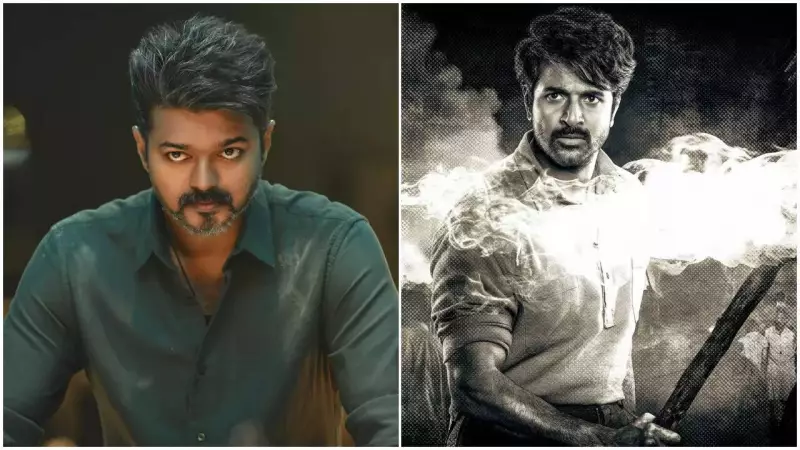
A rare and unified wave of protest is sweeping through India's film industries. The catalyst is a contentious standoff with the Central Board of Film Certification (CBFC) over recent films, most notably Jana Nayagan and the cuts imposed on Parasakthi. This has ignited a public and forceful debate about the board's role, relevance, and power in the digital age, with prominent voices from across the cinematic spectrum demanding urgent reform.
A Chorus of Criticism: Voices from the Industry
Leading filmmakers are no longer mincing words. Director Ram Gopal Varma argues that the very concept of censorship is obsolete. He states that the CBFC was a product of an era of media scarcity and state control. Today, with unrestricted access to graphic content online, he calls the board's actions hypocritical. "Age classification makes sense. Warnings of the content makes sense. Censorship does not," he asserts, emphasizing that protection cannot come from the "blunt scissors wielded by committees."
Veteran actor and filmmaker Kamal Haasan calls for a systematic overhaul. He demands a principled relook at the certification process with clear timelines, transparent evaluation, and written justifications for any suggested edits. He sees this moment as a critical opportunity for the entire industry to unite and engage in constructive dialogue with government institutions.

The sentiment is echoed by others who see a deeper threat. Director Pa Ranjith condemns what he calls the "rigorous suppression of dissenting voices," as seen in the Jana Nayagan case. He vows to raise his voice to protect creative freedom and ensure the CBFC operates independently. Filmmaker Mari Selvaraj labels the board's action on the film as "blatant injustice" and calls for a collective voice to dispel the fear surrounding democratic and creative expression.
Systemic Failures and Missed Opportunities
The current crisis is also seen as a consequence of past inaction. Filmmaker Leena Manimekalai points out that when the Film Certification Appellate Tribunal (FCAT) was dissolved in 2021, it was largely independent filmmakers who protested. She notes that mainstream creators chose to look the other way, and are now facing the consequences as they find themselves navigating legal battles after announcing release dates.
This highlights a fundamental clash between commercial interests and artistic integrity. Manimekalai observes that while business-oriented producers may celebrate obtaining a censor certificate, true creators must never permit state censorship. Director Hemanth M Rao simplifies the solution: "Censor the film, give a rating and let the audience decide the fate of the film." He argues that defending only agreeable expression is not upholding a right, but merely curating a playlist.
The Road Ahead: Unity and Demand for Change
The collective outcry represents a significant moment for Indian cinema. The key demands emerging from this unified pushback are clear:
- A move away from subjective censorship towards a robust age-classification system.
- Complete transparency and defined timelines in the certification process.
- Written, reasoned justifications for any demanded cuts or edits.
- An independent CBFC that protects creative freedom, not suppresses dissent.
This rare convergence of voices from different film industries signals a growing intolerance for what is perceived as an archaic and arbitrary system. The controversy surrounding Jana Nayagan and Parasakthi has become a flashpoint, galvanizing the community to renew its long-standing demand for a certification body that reflects the realities of a modern, democratic India where the audience, not a committee, is the ultimate judge of content.