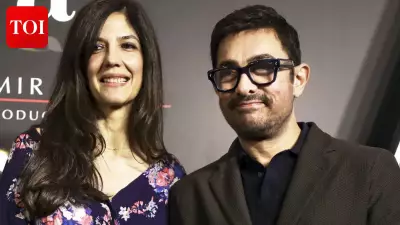
A powerful and raw conversation unfolded at the Ami Arts Festival, where four prominent voices from Indian cinema shed their public personas. Filmmakers Anurag Kashyap and Alankrita Shrivastava, actor Swastika Mukherjee, and writer Anjum Rajabali engaged in a session that felt less like a panel discussion and more like a collective release of long-held truths.
The dialogue moved beyond theoretical debates to confront the lived realities of working within the industry. Issues like deep-rooted patriarchy, pervasive censorship, dwindling budgets, and the climate of fear that influences creative decisions were laid bare, not as abstract concepts, but as daily experiences.
Hyper-Masculinity is the Old Normal, Not a New Trend
Alankrita Shrivastava set the tone by challenging the idea that hyper-masculinity in cinema is a recent phenomenon. She argued that mainstream Indian film history has always been centered on male power. "The 70s, 80s, 90s - our entire mainstream cinematic history has always centered male stars, male fantasies, male power," she stated.

Shrivastava pointed out that men from dominant castes wrote the scripts and dominated the screen. She described misogyny as the default setting, not a disruption, citing how stalking was romanticized and women were punished for agency in older films. For her, today's on-screen misogyny is a natural continuation of this tradition. However, she emphasized the need for balance, advocating for equal space for women's stories and narratives from the margins.
She also highlighted a systemic issue in audience consumption. "The audience has been trained over decades to pay for certain kinds of films," she said, noting the disparity between the reception of big star vehicles like Pathaan and smaller films like Sabar Bonda.
The Professional Cost of Calling Out Patriarchy
Swastika Mukherjee shared her personal journey from being an unquestioning consumer of hero-worship films to recognizing patriarchy in scripts. This awareness came at a professional cost. "Once I started saying things out loud, those scripts stopped coming to me," she revealed.
She recounted direct battles with the censor board, now known as the Central Board of Film Certification. For the film Aami Aar Amaar Girlfriends, the board wanted her character, who gets pregnant by a younger man due to her husband's erectile dysfunction, to cry and apologize. Mukherjee refused, stating she wouldn't do the film if forced to apologize.
A similar clash occurred with Family Album, where she played a lesbian character. The board questioned how a mother could be accepting, demanding a reshoot where the mother rejects her child. Mukherjee fought this, grounding her argument in the reality of accepting families. She extended her critique to a broader cultural erosion where even Booker Prize winners go unacknowledged, and highlighted how high ticket prices in North India make cinema a luxury, stifling specialty films.
Acting for Survival in a Climate of Fear
Anurag Kashyap spoke with stark honesty about the shrinking space for creative freedom. He admitted that his recent foray into acting is driven by necessity. "I hate acting. I act for survival and for money, because I can’t make the films I want to anymore," he confessed.
The primary hurdle, according to Kashyap, is a legal paranoia that forces every script through lawyers, diluting the original voice. He believes many of his iconic films, including Sacred Games, Gangs of Wasseypur, and Dev.D, would be impossible to make today. He highlighted the stark difference between OTT and theatrical censorship, citing how Nishaanchi Part 2 faced no cuts on streaming, while the theatrical Part 1 was heavily restricted.
He offered a cynical insight into how misogyny is leveraged for marketing, revealing that some filmmakers deliberately add misogynistic scenes because "outrage sells." He shared the heartbreak of his film Bad Girl, which won international audience awards but failed in Indian theatres after its trailer was banned. He recalled filmmaker Vetrimaaran's grim suggestion that adding misogyny might have drawn an outraged audience.

The Internalized Architecture of Censorship
Anjum Rajabali outlined the multi-layered structure of modern censorship, which extends far beyond government boards. He spoke of "clear signals" and "extra non-governmental mobs" that dictate portrayals, particularly around historical, religious, and identity themes.
The most damaging effect, he argued, is self-censorship. "The worst thing a society can do is force an artist to self-censor. When that happens, art dies. The first draft on the writer’s laptop is where the curtailment starts," Rajabali stated. He criticized the indemnity clauses in writers' contracts that make them personally liable for any public objection, calling the practice absurd.
Economics further cripple storytelling, with stars consuming up to 70% of a film's budget, leaving little for the script. He lamented that vanity vans and hairdressers often earn more than writers. The corporate takeover of filmmaking has replaced passion with data-driven formulas, where executives without creative passion act as gatekeepers. Despite the grim picture, Rajabali ended on a note of defiance, urging creators to "keep kicking against the stone wall" until it weakens.
The session at the Ami Arts Festival served as a rare, unfiltered diagnosis of the deep systemic issues within Indian cinema, moving from confession to a call for persistent resistance.