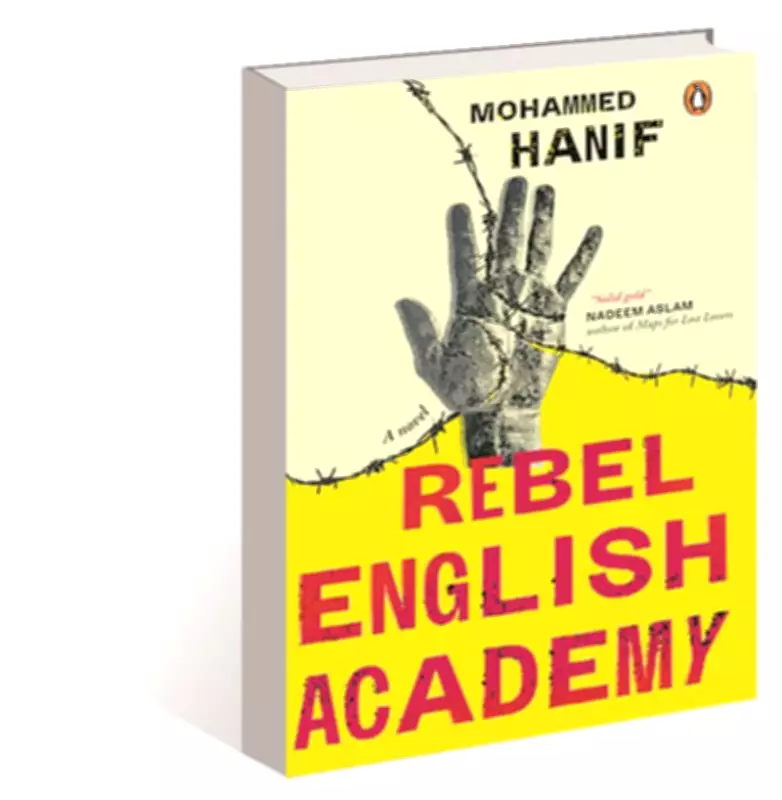
Mohammed Hanif's 'Rebel English Academy': A Darkly Comic Tale of Resistance and Survival
Mohammed Hanif's latest novel, Rebel English Academy, published by Penguin Random House, is a 306-page work that masterfully combines irreverent wit with political commentary. Priced at approximately 799 rupees, this book is poised to be a standout hit of the season, showcasing Hanif's signature deadpan expression and crackling prose.
A World of Absurdity and Political Turmoil
The narrative delves into the aftermath of the 1979 hanging of Zulfikar Bhutto, a pivotal event in Pakistan's political landscape. Hanif paints a vivid picture of a country under martial law, where even juice stalls are shut in a gesture of forced mourning. He writes with a sharp eye for the absurd, noting that "elite stay elite even in their death," as military convoys escort a corpse with excessive protection.
Set in the fictional OK Town, where nothing is alright, the story unfolds in a universe far from monochrome, filled with grim shades of grey. It is a world where life in Punjab is depicted as inherently absurd, yet deeply political, littered with punchlines and a memorable cast of characters.

Unforgettable Characters and Their Struggles
At the heart of the novel is Baghi, a gay man using a pen name, whose revolutionary dreams have turned to dust. He finds purpose in running the Rebel English Academy, teaching English from a mosque. Baghi's skills are such that he can transform a man who "couldn't call his cow a cow in English" into someone capable of writing essays that secure clerical or police jobs, even becoming an "official torturer."
Sabiha, a woman on the run with a sports bag, a pistol, and a secret from her potion-making husband, arrives at the academy, setting off a chain of events. Baghi fears she will bring ruin, and she does, but not without leaving an indelible mark. Sabiha is instructed to write essays as if she is "witness to history," and she chronicles her own life in poignant pieces titled Cow, Mother, and others, making her an achingly sad yet unforgettable character.
Other key figures include Gul, a man desperate to quash rumors about Bhutto's supporters to avoid an unwanted marriage, and Molly, a maulvi friend in the mosque who sells "eternal salvation" much like a dream peddler. Their worlds collide in an inevitable, non-rainbow-tinted ending.
Bold Critiques and Feminist Undertones
Hanif fearlessly takes on two of Pakistan's most powerful institutions: the military and religion. In a telling exchange, Sabiha questions Baghi about his atheism, to which he responds, "Why don't you go ask Him if He exists? I am here to teach you the Queen's English. I hate her but at least I know that she exists." This dialogue encapsulates Hanif's rebellious, non-performative spirit.
The novel is also noted as Hanif's most fiercely feminist work to date. Through Sabiha's essays, he critiques patriarchal norms, with lines like, "From time immemorial, men have endeavoured to entice women with the promise of sweet... They have historic and unshakeable faith that if a woman accepts a gift of sweetmeats from them, she is accepting their whole persona, even the parts that are most undesirable."
Humour as a Tool for Survival
Despite the dark themes, humour serves as a resilient, defiant weapon and balm in the story. Hanif's wit shines through the bleakness, offering a refuge in times of turmoil. The book shares a vein with the rage-filled dark television satire Chudails, starring Hanif's wife, Nimra Barucha, highlighting its satirical roots.
Written in English with the earthy essence of Punjabi, Rebel English Academy is irreverent, irrepressible, and brave. It explores what it means to be alive in bleakness, with Sabiha emerging not just as a victim, but as a survivor and storyteller who leaves OK Town behind.
In an era dominated by news of drones, blasts, and bombardment, this novel proves that humour can be a sanctuary and a guiding light, refusing to accept defeat even in the darkest of times.