The name Harivansh Rai Bachchan resonates as a towering pillar in the landscape of modern Hindi literature. His poetry, celebrated for its raw relatability and profound depth, captured the very soul of a nation navigating its modern identity. More than just verses, his words became a mirror to the common man's journey, weaving magic with a lyrical mastery that few could emulate.
The Immortal Trio: Madhushala, Madhubala, Madhukalash
For any connoisseur of Hindi verse, the magic of Bachchan's craft is immortalized in his iconic trilogy – Madhushala, Madhubala, and Madhukalash. Published in 1935, 'Madhushala' catapulted him to global fame, its intoxicating metaphors of wine and philosophy continuing to enchant readers across generations. These works beautifully depicted the 'aam aadmi's' voyage through life's ecstasies and despairs, written with a fluidity that moved seamlessly between joy, sorrow, spirit, and existential inquiry.
His genius was not confined to this famous trilogy. Collections like Nisha Nimantran and Satrangini further showcased his unique ability to transform personal anguish into universal truths. These works are still read, recited, and revered today, actively shaping the minds of writers and dreamers.

A Father's Poetic Response to a Son's Anguish
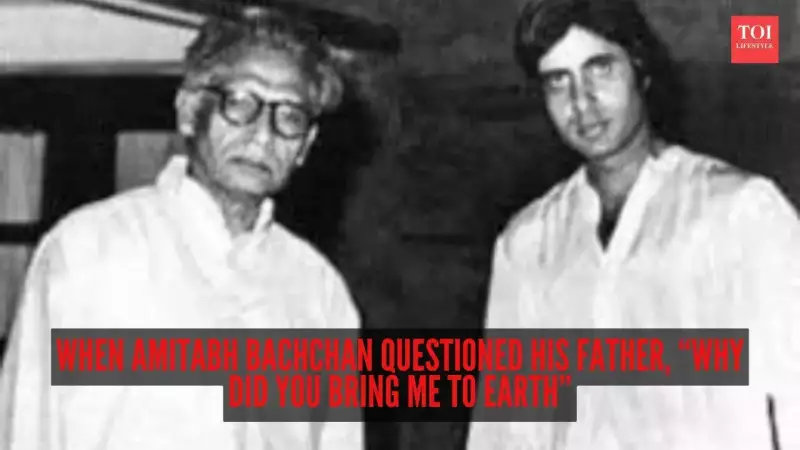
The profound humanity of Harivansh Rai Bachchan was perhaps most intimately revealed in his relationship with his son, the legendary actor Amitabh Bachchan. In a recent heartfelt revelation on a television show, Amitabh shared a poignant chapter from his youth, pulling back the curtain on their unique bond.
The story recounts a period of struggle and simmering frustration for a young Amitabh. Overwhelmed by life's challenges, his anger one day boiled over towards his father. He confronted Harivansh Rai with a piercing, existential question: "Aapne paida kyun kiya tha mujhe?" (Why did you even bring me into this world?).
The poet's response was not one of anger or lengthy lecture. He met his son's rage with silence. The next morning, Amitabh discovered a note slipped under his pillow. It was a poem – a piece of pure, quiet wisdom born from reflection, not retaliation. This was art serving as an answer, mirroring not just his son's personal struggle, but the universal human wrestle with purpose.
The Poem: Nayi Leek (A New Line)
This poem, known as 'Nayi Leek' or sometimes referenced by its central question 'Kyon Paida Kiya Tha?', lays bare a profound chain of existence. In his characteristic conversational tone, Bachchan writes:
"My son asks me, afraid of life and the world's strife,
'Why did you bring me into this world?'
And I have no answer except this:
My father too brought me into this world without asking me,
And his father did the same to him, without asking,
And his father before him…"
The poem acknowledges the weary, unbroken cycle where no generation seeks consent from the next for the "wild ride called life." Yet, it concludes not in despair, but with a gentle, hopeful resolution. The poet urges his son to "draw a new line" – to break this ancient cycle by asking his own children before bringing them into existence.
Written in a style that sits between modern free verse (Mukta Chhanda) and classical philosophical depth, the poem uses simple, intimate language like "mere ladke mujhse puchte hain" (my son asks me). This turns an abstract existential dilemma into a palpable, lived experience, reminiscent of poets like Nirala and Dushyant Kumar who explored ordinary life with deep sensitivity.
A Legacy of Healing Through Words
This extraordinary exchange between father and son is a testament to the superpower of poetry. Harivansh Rai Bachchan transformed a moment of familial tension and personal pain into an opportunity for deep reflection and healing. He spun struggle into something beautiful and enduring.
It is moments like these that cement why Bachchan's legacy continues to linger and inspire – passed not just from father to son, but from poet to reader, directly to the heart. His work remains a guiding light, proving that poetry can be the most profound answer to life's hardest questions.