Ikkis Earns Rare Praise from Army Veterans as Powerful Anti-War Drama
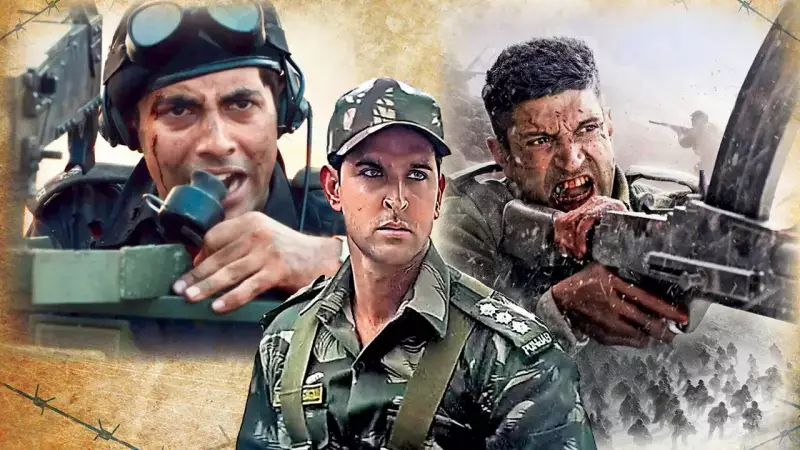
Sriram Raghavan's latest film Ikkis is receiving exceptional praise from Indian Army veterans. They describe it as a well-crafted war drama that also functions as a powerful anti-war statement. The film tells the story of Second Lieutenant Arun Khetarpal, portrayed by Agastya Nanda. Khetarpal served as a tank commander and was martyred at just twenty-one years old during the Battle of Basantar in the 1971 Indo-Pak War.
He received the Param Vir Chakra posthumously. This award represents India's highest wartime gallantry honor. Veterans specifically commend the film's meticulous battle sequences and its humane depiction of soldiers.
Veterans Applaud Maturity in Modern War Cinema
Major General Yash Mor, who is now retired, observes a new maturity in Indian war cinema. He points to recent films like Ikkis and 120 Bahadur as examples. "In the genre of war films, 120 Bahadur and Ikkis show a maturity of Indian cinema," Mor states. "These films pick strong themes devoid of rhetoric and jingoism. There is no excessive, over-the-top patriotism like we saw in Border and many other films."

Mor emphasizes the importance of showing the human aspect of conflict. "Ikkis, in particular, is wonderful. It shows the human side of war, emotional depth, and that humanity often exists beyond conflict. History shows that even after terrible wars, people eventually reach out to one another and peace is restored."
Technical Accuracy and Realistic Portrayals
Retired Major Sandeep Sangwan highlights the technical challenges of depicting armored warfare. "Creating a story around infantry life is easier than portraying armoured warfare," he explains. "Tank battle scenes require real tanks, accurate movement, correct command structures, and proper communication between tanks and soldiers. In terms of armoured warfare technicalities, Ikkis does full justice."
Sangwan also praises other military films. "Films like L.O.C. Kargil, Lakshya, and Pippa were absolutely to the point in their treatment of the military. Sam Bahadur was particularly well made, even though it was a biographical film. Now Ikkis has arrived, and 120 Bahadur is another important film."
He adds specific praise for Ikkis. "The battle scenes are immersive and powerful. The acting is excellent and true to the era, and the 1962 war scenes are recreated very accurately."
Evolution of War Films in India
Major General Mor reflects on the changing landscape of war cinema in India. "Some of the best war films were made in the 1960s and 1970s like Haqeeqat. Later films like Prahaar, Lakshya and LOC: Kargil also came close to depicting war realistically. Then we entered a phase of over-the-top jingoism."
He believes films should have lasting educational value. "War films should be made in a way that people can watch them even 30 to 40 years later, and students of history can learn from them much like Hollywood's World War II films. I believe we are finally catching up. Ikkis is a film I would recommend to everyone."
Mor describes the film's core message. "It shows how a very young officer, with limited experience, goes into battle and reveals the human side of war. Ultimately, it underlines that war is futile – even if some hardliners dismiss it as 'Aman ki Asha' thinking."
Humanizing Soldiers and Remembering Heroes
The film portrays Second Lieutenant Khetarpal's personal journey. He starts excited about going to war. Later, a reporter's question makes him confront war's harsh reality. Veterans say this transition is portrayed beautifully.
Major Sangwan explains the soldier's perspective. "Soldiers are trained to feel an internal call to fight if war breaks out. But war is never good – it destroys economies and takes countless lives. Still, when war happens, a soldier will always step forward to defend the nation."
He highlights the importance of such films for public memory. "Films like Ikkis and 120 Bahadur help bring forgotten heroes like Arun Khetarpal and Major Shaitan Singh Bhati into public memory."

Major General Mor hopes for more such films. "Perhaps someday a film will also be made on Captain Bana Singh, the hero of Siachen."
The Essence of Realistic War Cinema
Santosh Singh, director of Ranneeti: Balakot & Beyond, shares insights on realism. "I think the most realistic war films are the ones that don't try too hard to look heroic. Real battles are messy, tense, and often quiet for long hours and that's something cinema sometimes forgets."
He identifies what makes war films work. "What works for me in films like Border, Uri, Sam Bahadur, even some of the recent attempts is when they get the basics right, procedure, hierarchy, the uncertainty of war."
Singh emphasizes that realism comes from behavior, not spectacle. "While directing Ranneeti: Balakot & Beyond, I realised realism doesn't come from explosions or scale. It comes from behaviour, how soldiers speak, how they receive orders, how pressure is handled. These are trained professionals, not characters constantly delivering punchlines or dramatic speeches."
He concludes with a fundamental truth about war depiction. "To make battle feel real, as a filmmaker we have to respect the subject. War isn't just about bravado, it is about responsibility, precision and the human cost behind every decision."
Other Notable War Films
120 Bahadur recounts the story of Param Vir Chakra awardee Major Shaitan Singh Bhati. He and 120 soldiers held off Chinese forces for 48 hours without support during the Battle of Rezang La in 1962. Army veterans appreciate its battle scenes and historical accuracy.
Lakshya received praise for its authentic portrayal of uniformed life and the Kargil War of 1999.
Many Army officers who watched Ikkis recalled hearing Second Lieutenant Arun Khetarpal's name with reverence during their training. They note the film's meticulously staged scenes from the Battle of Basantar and its focus on soldiers' inner conflicts. This approach humanizes the men in uniform, a quality found in the finest war films.