Ikkis Writers Reflect on Trolls, Dharmendra's Zeal, and Artistic Coexistence
Screenwriter and editor Pooja Ladha Surti reveals an inspiring moment from the making of Ikkis. In an exclusive conversation with SCREEN, she shares that veteran actor Dharmendra urged director Sriram Raghavan to make the film at any cost. Dharmendra believed this was a story that absolutely needed telling in today's times. Ikkis, currently playing in theatres, serves as Dharmendra's cinematic swan song.
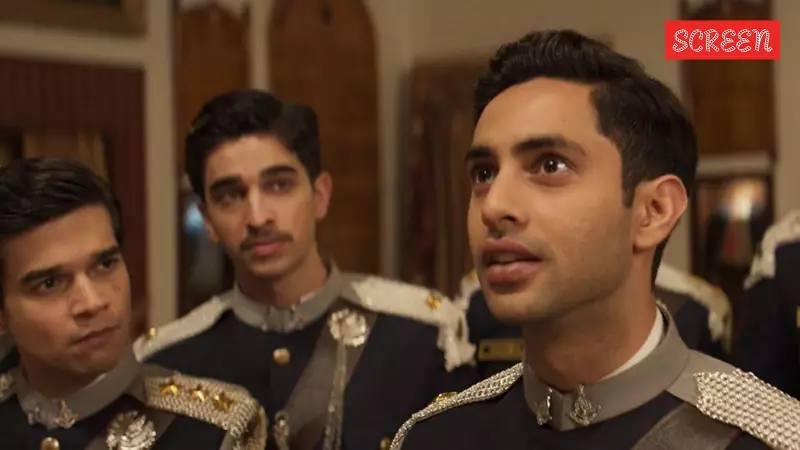
The film chronicles the life of Arun Khetarpal, the youngest recipient of the Param Vir Chakra. It is set against the intense backdrop of the Battle of Basantar during the 1971 India-Pakistan War. Despite receiving glowing word of mouth, Ikkis and its creative team have faced sustained online trolling. The trolling stems from the film's brave narrative that uses the language of war to argue for peace and empathy.
The Creative Process and Facing Comparisons
In their candid discussion, Surti and co-writer Arijit Biswas delve into the film's creative journey. They choose not to comment directly on the controversial disclaimer that appears at the film's end. This disclaimer states that Pakistan is not trustworthy and that its armies have acted cruelly, while noting that the humane behavior of a Pakistani Brigadier in the film is an exception.

Instead, they focus on their writing process, Dharmendra's instinctive improvisations, and the inevitable comparisons with another recent film, Dhurandhar. The online discourse often pits the two films against each other, with some arguing Dhurandhar is more "of the hour."
"Dhurandhar exists in a very different ecosystem," says Arijit Biswas. "It's about mafia and gangsters, with its own rules. You cannot expect the moral code of a gangster film to align with a war film, which follows a warrior's code."
Pooja Ladha Surti adds a broader perspective. "I wouldn't want to pit one against the other. Both films are wildly different and inhabit complex worlds. In a democracy, there should be room for both Dhurandhar and Ikkis to coexist."
Dharmendra's Profound Influence and Instincts
The writers highlight Dharmendra's deep personal connection to the project. Surti recalls that when they narrated the script to him, he immediately claimed the role. "This is me. How can anyone else do this?" he reportedly said. His passion was so immense that he told Sriram Raghavan that even if he couldn't do it, the story must still be made because of its importance.
Dharmendra's contributions went beyond acting. He brought personal memories to the script. In one poignant scene, his character Madan Lal visits his ancestral home in Pakistan and sees a tree. The lines about the tree reminding him of his late father were Dharmendra's own words, drawn from his real-life experience with his father, a school headmaster in Punjab.
Perhaps the most powerful moment born from his instinct is the climactic hug. In the scene, Deepak Dobriyal's Pakistani officer character confronts and abuses Madan Lal. Instead of retaliating, Madan Lal responds with a hug. "That was entirely Dharam Ji's idea," Biswas reveals. "Sriram called me and said, 'Dharam Ji has this idea, he wants to hug this Pakistani soldier.' I thought it was superb. The core—the hug breaking the hatred—was his."
Writing a War Film with Humanity at its Core
The writing duo explains the unique challenges of Ikkis. The film intertwines two narratives: young Arun fighting a war and his grandfather revisiting the battlefield decades later. "It's a true story, both the father's and the son's versions," Surti notes. "For me, it's both their battles. The son fights at Basantar; the father confronts someone claiming to have killed his son. Both are battles, different in nature, but no less intense."

They aimed to balance Arun's brief but heroic life with the emotional journey of his father. A key scene illustrates this delicate approach. When Arun tells his mother he is going to war, she simply tells him to eat first. The writers avoided melodrama to show a different kind of strength. "She isn't celebrating her son going to war," Surti explains. "She knows he may never return, yet she puts on a brave face for him. Telling him to eat first is such a trivial, motherly thing, yet so deep and heartbreakingly intimate."
Biswas adds that they filmed another powerful scene they ultimately didn't use. It showed the mother receiving the telegram announcing Arun's death amidst public celebrations of India's victory. "The idea was to contrast public joy with individual sorrow, highlighting that the nation's triumph comes at the cost of personal tragedies," he says.
Navigating the Current Discourse
The writers address the online misinterpretation of a crucial scene where Madan Lal questions reality after experiencing hospitality in Pakistan. "People online are misinterpreting this scene," Biswas states. "They fail to understand that the father is asking a simple, logical question: what is real, the warmth he is receiving here, or the battle where his son died? Both are truths, yet they cannot coexist. Tragically, in our countries and times, both truths do coexist. Somewhere, we have to come to terms with that."
Through the trolls and comparisons, the team stands by their film's message. Ikkis, with Dharmendra's unwavering belief fueling it, attempts to present a narrative of empathy and nuanced humanity within the brutal framework of war. It asserts that in a diverse democracy, cinema has room for multiple stories, even those that seem to speak in different voices.