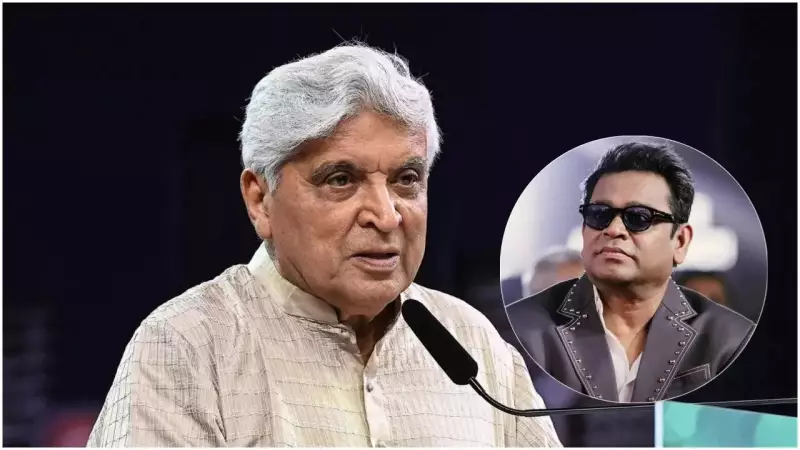
Veteran screenwriter and lyricist Javed Akhtar has recently responded to comments made by Oscar-winning composer AR Rahman. Rahman suggested that his reduced work in the Hindi film industry over the past eight years might be linked to communal factors. Akhtar, known for his candid views, addressed these remarks directly.
Javed Akhtar's Reaction to AR Rahman's Comments
In a clear statement, Javed Akhtar explained that he has never personally felt excluded from the Hindi film industry due to communal reasons in his long career. The veteran poet emphasized his openness about his beliefs throughout the years. This response comes amidst renewed attention on Akhtar's past interviews and statements.
Akhtar's Atheism and Devotional Songwriting
Javed Akhtar has consistently identified as an atheist, a fact that has sometimes led to questions about his ability to write devotional songs. He penned famous tracks like 'O Paalanhaare' from the film 'Lagaan' and 'Pal Pal Hai Bhaari' from 'Swades'. Some critics have called him a liar for this apparent contradiction.

In an old interview with O2 last year, Akhtar addressed this issue. He shared insights into his cultural background and upbringing.
The Ganga-Jamuni Tehzeeb of Lucknow
Javed Akhtar grew up in Awadh, specifically in Lucknow. He described experiencing what he called the tail end of the Ganga-Jamuni tehzeeb. This refers to the syncretic culture that historically characterized parts of North India, blending Hindu and Muslim traditions.
"I must have witnessed the tail end of what we call the Ganga-Jamuni tehzeeb in Awadh, where I grew up," Akhtar said. "That's something rare. I don't know if you'll be able to capture that world or that value system again."
Cultural Influences from Childhood
Despite coming from a Muslim family, Akhtar explained how Hindu cultural elements were integral to his growth. He recalled participating in festivals and learning about Hindu mythology naturally.
"How did we know all of this? Ramleela, Krishna Leela? I can write Rama and Krishna aartis. How am I able to? Where did I get this from? They were a part of my growth. It wasn't a big deal either. That's how people were," he stated.
Akhtar expressed nostalgia for this inclusive environment, noting its disappearance in contemporary times.
Celebrations and Shared Traditions
The screenwriter shared specific memories of communal celebrations in Lucknow. He mentioned dressing in yellow on Basant Panchmi, a Hindu festival marking the arrival of spring.
"We were dressed in yellow on Basant Panchmi. The culture of celebration existed back then. I don't see it anymore. That's how people were in Lucknow. It's a unique place. It still is," Akhtar reflected.
AR Rahman's Original Comments
AR Rahman made his remarks in a recent interview with BBC Asian Network. The composer observed that his work volume in Hindi cinema has declined over the last eight years. He hinted that this reduction could be connected to what he described as a communal thing.
Rahman also pointed to changes in the industry's power structures. He suggested that creative control has shifted away from artists and creative professionals in recent years.
Industry Context and Broader Implications
This exchange between two respected figures highlights ongoing discussions about diversity and inclusion in Bollywood. The Hindi film industry has faced scrutiny regarding representation and opportunities for artists from various backgrounds.
Javed Akhtar's personal experiences offer a contrasting perspective to Rahman's concerns. His recollections of Lucknow's syncretic culture provide historical context to current debates about communal harmony in creative fields.
The resurgence of Akhtar's old interviews demonstrates how past statements remain relevant. They continue to inform contemporary conversations about art, identity, and society in India.