Konkona Sensharma's Grounded Aesthetic: Handloom Sarees as Personal Heritage
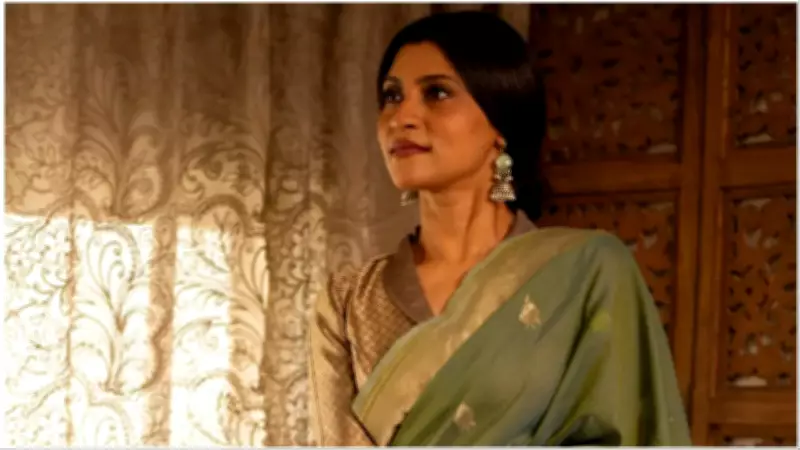
In an entertainment industry often dominated by glitz and glamour, Konkona Sensharma has consistently carved a niche defined by subtlety and authenticity. Renowned for her nuanced performances in acclaimed films such as Mr. and Mrs. Iyer, Wake Up Sid, and Lipstick Under My Burkha, she extends this same genuine approach to her personal style. Her profound affection for sarees, particularly cotton handlooms, is not a manufactured image but a true reflection of her identity, deeply rooted in memory, upbringing, and instinct.
An Organic Connection to Handloom
Speaking about her association with handloom textiles, Sensharma reveals, “I’ve never been a fan of bling, sequins, or anything too ornate. That’s just not me. Whether I’m an actor or not, that preference has always been there. Which is why this feels like such an organic fit—it doesn’t feel inauthentic.” She acknowledges that in her profession, one occasionally wears items that aren't entirely personal, but with handloom, she feels fortunate to align with her true self. “Of course, in our profession, you sometimes wear things that aren’t entirely you, but here, luckily, it is. Because in any case, I would have chosen handloom. It’s part of my upbringing, part of my everyday life.”
Childhood Immersion in Textiles and Crafts
This deep-seated connection stems from a childhood richly immersed in textile traditions and craft cultures. At an event hosted by Aadyam Handwoven, Sensharma elaborated, “It wasn’t like my mother formally taught me—she never sat me down and said this is ikat or this is a particular weave. It was simply an extension of her personality, and by default, it became mine.” She grew up surrounded by these elements, attending arts and crafts fairs with her mother, observing artisans at work, and being in spaces where culture was vibrantly alive. “So even now, I may not always know the technical names, but I instinctively gravitate towards these textiles. They remind me of her, of my childhood, of a certain warmth that I want to recreate in my own home.”

Her memories of handloom extend far beyond sarees, permeating the very fabric of her home environment. “It wasn’t just what she wore—it was everywhere around us. The curtains, the furniture, the fabrics, little objects like Dhokra pieces or leather puppets from Karnataka.” Sensharma emphasizes the incredible wealth of Indian crafts, noting their variety, vibrant colors, and strong sense of style. “You grow up with that, and it becomes a part of you without even realizing it.”
Embracing Sarees in Everyday Life
Today, Konkona Sensharma finds herself consciously returning to sarees more frequently, even in daily routines. “I’ve actually started wearing sarees much more now—simple cottons, linens, things like that. I really enjoy it.” She reflects on how a generation ago, sarees were everyday wear for many, such as school teachers, a practice that has diminished today. For her, cotton sarees offer unparalleled comfort and ease. “For me, cotton sarees are incredibly comfortable, they’re easy to wear. Sometimes silks can be a bit tricky because they slip, but cotton just feels effortless.”
Rejecting Readymade Sarees
Simultaneously, Sensharma is unequivocal about what does not appeal to her in fashion. “I really can’t bear readymade sarees—that’s my pet peeve. I feel like the beauty of a saree lies in draping it yourself.” She believes that the act of draping is an integral part of the experience and connection with the garment, a sentiment that underscores her commitment to authenticity and tradition.