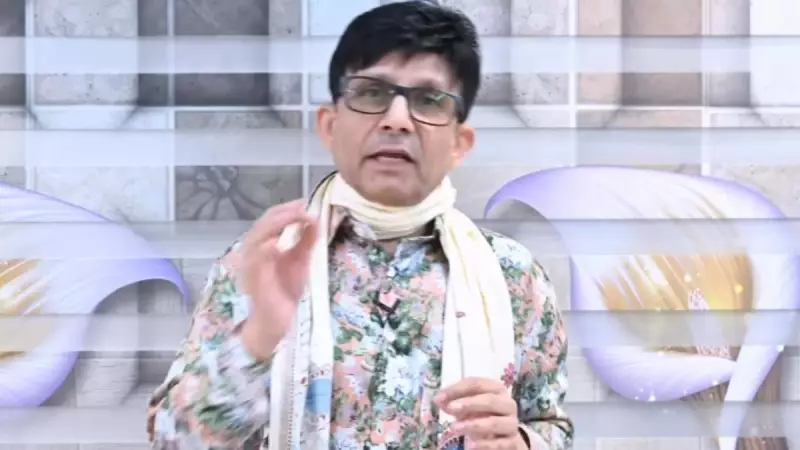
Kamaal R Khan Arrested After Drone Mapping Links Nalanda Firing to His Bungalow
In a significant development that has sent shockwaves through both the entertainment and legal circles, controversial personality Kamaal R Khan, often known as KRK, was arrested by law enforcement authorities. The arrest came after advanced drone mapping technology was employed to establish a direct link between a recent firing incident in Nalanda and his luxurious bungalow. This case highlights the growing role of technological tools in criminal investigations and underscores the serious implications for public safety.
Drone Mapping Technology Uncovers Critical Evidence
The investigation into the Nalanda firing incident took a dramatic turn when authorities utilized drone mapping to gather aerial evidence. This cutting-edge technology provided detailed imagery and spatial data that connected the location of the firing to KRK's bungalow. The drone mapping process involved capturing high-resolution photographs and creating precise 3D models of the area, which revealed patterns and connections that were not visible from ground level. This technological approach has become increasingly common in modern policing, offering a new layer of forensic analysis that can pinpoint exact locations and movements.
According to sources close to the investigation, the drone mapping data showed clear signs of activity around KRK's bungalow that correlated with the timing and nature of the Nalanda firing. This evidence was crucial in building a case against him, as it provided tangible proof that linked him to the incident. The use of such technology in this case demonstrates how law enforcement agencies are leveraging innovation to solve complex crimes, moving beyond traditional methods to incorporate digital and aerial surveillance tools.

Legal Proceedings and Public Reaction
Following the arrest, Kamaal R Khan is now facing serious legal charges related to the Nalanda firing. The authorities have emphasized that the drone mapping evidence will play a central role in the prosecution, as it offers an objective and scientifically verifiable connection to the crime scene. Legal experts suggest that this case could set a precedent for how drone technology is used in criminal trials in India, potentially influencing future investigations involving similar high-profile individuals or incidents.
The public reaction to KRK's arrest has been mixed, with many expressing concern over the security implications of such incidents, while others have commented on the controversial nature of his public persona. Social media platforms have been abuzz with discussions, with some users praising the use of technology in solving the case, and others questioning the broader implications for privacy and civil liberties. This incident has sparked a wider debate about the balance between technological advancement in law enforcement and individual rights, a topic that is increasingly relevant in today's digital age.
Broader Implications for Security and Technology
This case underscores the importance of integrating advanced technologies like drone mapping into India's security framework. As criminal activities become more sophisticated, law enforcement agencies must adapt by employing tools that can provide accurate and timely intelligence. The successful use of drone mapping in linking KRK to the Nalanda firing incident serves as a testament to the potential of such technologies in enhancing public safety and ensuring justice.
Moreover, this development raises questions about the ethical use of surveillance technologies. While drone mapping can be a powerful asset in investigations, it also necessitates clear guidelines to prevent misuse and protect citizens' privacy. Policymakers and legal authorities may need to revisit existing regulations to ensure that technological advancements are harnessed responsibly, without compromising fundamental freedoms.
In conclusion, the arrest of Kamaal R Khan following the drone mapping revelation marks a pivotal moment in the intersection of technology and law enforcement. It highlights how innovative tools are reshaping criminal investigations in India, while also prompting important conversations about security, privacy, and justice in the modern era.