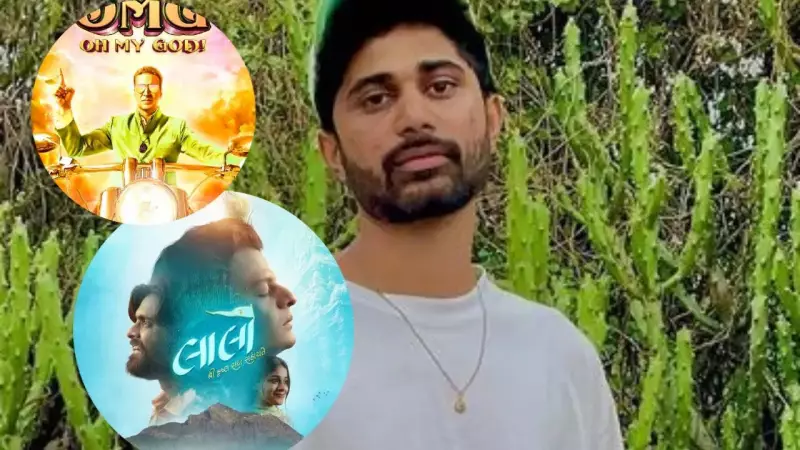
The release of the Hindi version of 'Laalo – Krishna Sada Sahaayate' has sparked a wave of comparisons from audiences and critics, who are drawing parallels with acclaimed films like 'OMG – Oh My God!' and 'Trapped'. In an exclusive conversation with India Today, the film's director, Ankit Sakhiya, opened up about these observations, the film's unique journey, and the philosophy behind its creation.
Embracing Comparisons as a Compliment
Rather than being perturbed by the comparisons, Ankit Sakhiya views them as a form of flattery. He stated that being mentioned alongside such 'legendary work' is the 'best compliment' his team could receive. However, he made a crucial distinction. "The problem is when people don't watch your film and then talk about it. If people say that after watching the film, that's an alarm for us. But that's not happening. So that is a blessing," Sakhiya explained. He emphasized that the feedback from those who have actually seen 'Laalo' has been heartfelt and genuine, which has brought the team immense satisfaction and peace.
A Conscious Decision to Forge an Original Path
Sakhiya revealed that the team was acutely aware of the need for originality during the filmmaking process. While they watched both 'Trapped' and 'OMG' during development, it was with a clear mandate to avoid imitation. "When we were making the film, we saw those films, and everyone said, 'We don't want to do this. What happened in Trapped or OMG, we don't want to do that.' That was a conscious call of everyone," he shared. The director believes that while inspiration is natural, copying is not. This simple rule became their guiding principle, ensuring 'Laalo' carved its own identity despite thematic similarities.

The Humble, No-Budget Beginnings
'Laalo' was not born from a place of lavish funding or meticulous corporate planning. Instead, it emerged from necessity, friendship, and pure passion. Sakhiya candidly admitted, "There was no budget. We were college friends, and we made this film together." He highlighted that his approach to filmmaking has always been this way, so much so that his production house was aptly named 'No Budget Films'. "If you give me a table or a chair, I will make a film on what we have," he asserted. The team built the narrative around available resources: a house, their time, and a compelling story that needed to be told.
How Spirituality Wove Itself Into the Narrative
The spiritual core of 'Laalo' was not a premeditated addition but evolved organically. The initial idea centered on a man confined to a house. During brainstorming sessions, a friend introduced the Bhagavad Gita into the discussion. This sparked a pivotal creative leap. "But we felt what if the Bhagwan enters, and not just the Bhagavad Gita. That's how the story developed. It kept happening. And then the rest is history," Sakhiya recounted. This natural integration of divine elements became the film's soul.
For Ankit Sakhiya, cinema is fundamentally an artistic pursuit, not a financial one. He delivered a clear message to aspiring filmmakers: "To be honest, filmmaking is not a money-making business... If you want to earn money, don't make a film; it's a different game." He attributes any potential box office success to divine grace rather than a commercial formula, firmly stating that filmmaking is his passion, not a business venture.