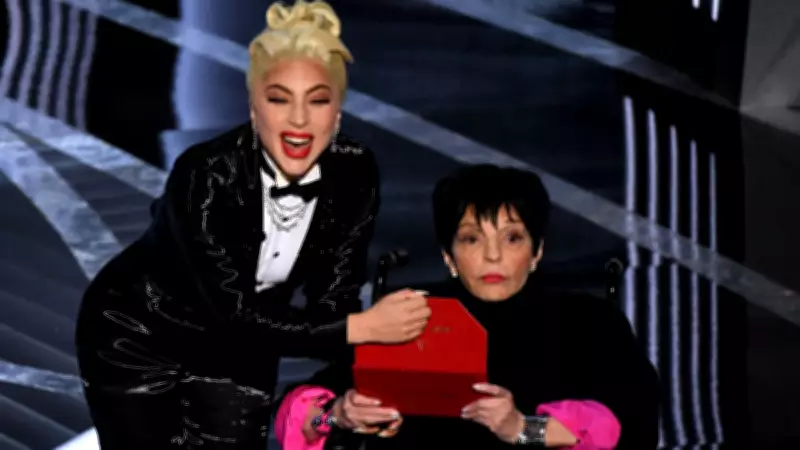
Liza Minnelli Recalls Heartbreaking Oscar 2022 Experience with Lady Gaga
Entertainment industry icon Liza Minnelli is opening up about what she describes as a heartbreaking and forced experience during her presentation at the 2022 Academy Awards with pop superstar Lady Gaga. In her upcoming memoir, the 79-year-old legend reveals she was unexpectedly required to use a wheelchair on stage, contrary to her original expectation of sitting in a director's chair.
The Wheelchair Mandate That Shattered Expectations
In Kids, Wait Til You Hear This, Minnelli writes with raw emotion about the moment she was told she must use a wheelchair or not appear at all. "I was inexplicably ordered, not even asked, to sit in a wheelchair or not appear at all," she reveals, describing the directive as both shocking and demeaning.
The justification provided to her focused on age and safety concerns, with organizers suggesting she might slip from a director's chair. Minnelli dismisses this reasoning as "bulls**t" in her memoir, expressing her firm resistance to what she perceived as unfair treatment based on assumptions about her capabilities.

Lady Gaga's Role in the Controversial Decision
The situation escalated when Minnelli's co-presenter, Lady Gaga, reportedly insisted she would not go on stage with Minnelli unless she complied with the wheelchair requirement. This ultimatum left the veteran performer feeling cornered and disrespected, despite her protests about being treated unfairly.
Minnelli describes the emotional impact of being wheeled out against her will, noting that the wheelchair's lower height created practical difficulties during the live broadcast. "How would you feel if you were wheeled out, against your will, to perform in front of a live audience, and unable to see clearly?" she questions in her writing, highlighting the humiliation she experienced.
The On-Stage Struggle and Lady Gaga's Response
During their presentation of the Best Picture award, Minnelli received a standing ovation upon arriving on stage but immediately encountered difficulties. The wheelchair's positioning made it challenging for her to see the teleprompter clearly, causing her to stumble over the introduction.
It was at this moment that Lady Gaga stepped in, leaning down over Minnelli and reassuring her with the now-famous words, "I got you." While this moment appeared as a supportive gesture to the global audience, Minnelli's memoir suggests a more complex interpretation of the interaction.
She writes that Gaga "didn't miss a beat to play the kindhearted hero for all the world to see," implying the moment may have been calculated for public perception rather than genuine concern. This revelation adds layers to what viewers witnessed during the broadcast, suggesting tensions beneath the surface of their collaborative presentation.
Broader Implications for Age and Disability Representation
Minnelli's account raises important questions about how entertainment industry events handle aging performers and assumptions about their capabilities. Her experience highlights the delicate balance between legitimate safety concerns and respecting performers' autonomy and dignity.
The memoir excerpt serves as a powerful reminder that behind the glamour of award shows lie complex human experiences, where decisions made backstage can have profound emotional impacts on the artists involved. Minnelli's willingness to share this vulnerable moment provides rare insight into the challenges faced by veteran performers in an industry that often prioritizes youth and perceived perfection.
As the entertainment world continues to evolve in its approach to inclusion and accessibility, stories like Minnelli's underscore the importance of consulting with performers about their needs and preferences rather than imposing solutions based on assumptions.