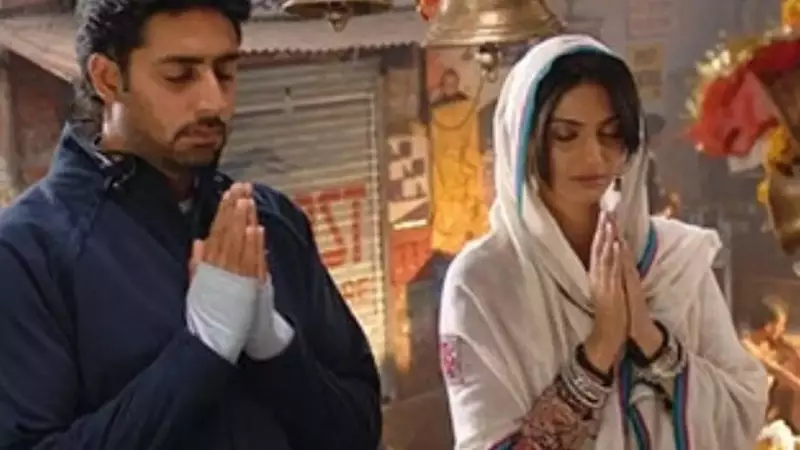
Fifteen years after its initial release, the 2009 film 'Delhi 6' is experiencing a remarkable reassessment. Initially met with box office disappointment and audience confusion, the Rakeysh Omprakash Mehra directorial is now celebrated for its honest and brave social commentary. In a recent revelation, Mehra has shared details of a never-before-seen original version of the film, which featured a shocking narrative twist that was deemed too bold for Indian audiences at the time.
The Shocking Venice Cut: A Hero's Premature End
In an exclusive interview, director Rakeysh Omprakash Mehra disclosed the existence of what he calls the 'Venice cut' or the director's cut. This original version of 'Delhi 6' contained an opening that would have fundamentally altered the audience's experience. The film began with the immersion of Abhishek Bachchan's character's ashes in the Ganges, accompanied by a voiceover in Bachchan's own voice stating, 'These are my ashes.'
This meant that from the very first frame, viewers were informed that the protagonist was dead. Mehra confirmed that this provocative version, which he still possesses, was the one screened at the Venice Film Festival in 2009. The international reception was overwhelmingly positive, with festival audiences 'freaking out' and praising the film. A popular magazine even featured it on its front page with the tagline 'unBollywood', a moment Mehra recalls as particularly special for him as a creator.

Why The Hopeful Ending Replaced The Original
Mehra spoke candidly about his decision to alter the film for its Indian theatrical release, a choice he now labels as foolish. He attributed the change to external pressure and a momentary lapse in his own conviction. Many advisors and preview audiences urged him to 'leave some hope' in the narrative. Mehra admits he succumbed to this feedback, a move he deeply regrets to this day.
He reflects that the core of 'Delhi 6' was to ask difficult questions about Indian society, its prejudices, and its complexities. The original, bleaker ending was a more authentic culmination of that vision. The commercially released version, while retaining much of the film's social critique, softened its final blow, which Mehra believes diluted its intended impact.
Is Contemporary India Ready for the Real 'Delhi 6'?
When questioned about the possibility of releasing the original cut today, Mehra expressed profound uncertainty and pessimism. He stated that he does not believe the time is right even now, suggesting that as a nation, India has not evolved to a point where it can fully embrace such a narrative. In fact, he feels that in many ways, societal attitudes have regressed, making the film's themes potentially more contentious now than in 2009.
This introspection highlights the complex journey of 'Delhi 6'. From a box office underperformer, it has grown into a cult classic, discussed for its prescient themes and artistic courage. The film, starring Abhishek Bachchan, Sonam Kapoor, Waheeda Rehman, and Rishi Kapoor, with iconic music by A.R. Rahman, is now often revisited for its 'ekdum desi' feel and its unwavering message. Mehra's revelations affirm that 'Delhi 6' was indeed a film ahead of its time, and its true, unadulterated vision remains locked away, waiting for its moment.