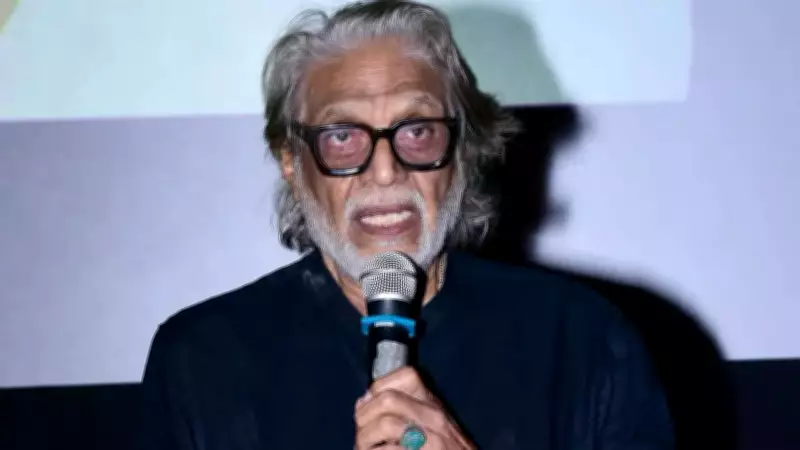
Veteran filmmaker Muzaffar Ali has expressed deep concern about the gradual disappearance of the poetic, culturally rich Bollywood he once knew, stating that the industry's current trajectory prioritizes quick impact over lasting artistic value. Speaking at the 11th edition of Expresso, Ali nostalgically reflected on an era when cinema was shaped by layered music, shared cultural traditions, and profound poetry—elements he believes are now slipping out of reach.
The Erosion of Ganga-Jamuni Tehzeeb in Mainstream Cinema
In a candid conversation with The Indian Express, Ali highlighted the fading presence of Ganga-Jamuni tehzeeb—the syncretic cultural harmony between Hindu and Muslim traditions—in contemporary Hindi films. He pointed to the rise of hyper-nationalist narratives that often overshadow this delicate balance, arguing that the solution requires collective effort rather than individual attempts.
"This is the future everyone is facing, and there needs to be a collective solution. We cannot do it alone unless every individual delves into its depth," Ali emphasized. He described beauty as a transcendent quality that defies labels, urging creators to seek and recognize it without imposing religious or cultural boundaries.

Historical Patronage and Cultural Survival
Ali cited the reign of Wajid Ali Shah as a golden period when art forms like kathak and thumri flourished, supported by patronage that transcended religious identities. He stressed that such nurturing environments are vital for art's survival and growth.
"The Ganga-Jamuni culture you are talking about cannot die because it has traditions, people, and examples," he asserted. Ali warned that Bollywood must learn from this historical lesson if it aspires to achieve genuine global recognition, rather than merely chasing commercial success.
Art Versus Manufactured Competition
For Ali, art loses its inherent power when it is forced to perform on command or manufactured for competitive purposes. He insisted that true beauty emerges from rooted emotions and immersive experiences, not from frenzied production cycles.
"It is essential to seek beauty, recognize it, and bring it before the world, forgetting where it comes from. Think of beauty as an abstract human attribute, name it, assign it a religion. It doesn't matter," he elaborated. Ali added that music, in particular, embodies this blend, as it represents a confluence of diverse influences where every element holds significance.
The Creative Process Behind Timeless Classics
Reflecting on his own work, Ali shared insights into the creative process behind iconic songs like 'Seene Mein Jalan' and 'Aapki Yaad Aati Rahi'. He described an approach that begins with dreaming of characters, understanding their souls, and immersing them in poetic concepts before any filming begins.
He credited collaborators such as poet Shahryar and composers Khayyam and Jaidev for contributing to the depth of his films. "All beauty comes from deep, immersive experiences of yourself and your team," Ali noted, contrasting this method with today's rapid output where songs are quickly produced and replaced.
Why 'Umrao Jaan' Endures Decades Later
Ali's masterpiece 'Umrao Jaan' continues to hold a revered place in Indian cinema, even as many contemporary films struggle to achieve similar longevity. He attributed this endurance to the film's artistic integrity and emotional resonance, which stand in stark contrast to the transient nature of modern productions.
"Today, songs come one after the other, each waiting to be knocked out by the next. But the songs of 'Umrao Jaan', no one can erase them," Ali remarked. He confirmed that 'Umrao Jaan', along with 'Gaman' and 'Anjuman', has been restored in 4K, ensuring their preservation for future generations.
A Quiet Metaphor for Artistic Integrity
When asked whether 'Umrao Jaan' would resonate with today's audiences, Ali responded with a poignant metaphor. "Not all horses run in a race; some are worshipped, adorned. What is the use of forcing everyone to run? Beauty must remain in the heart," he said, underscoring his belief that art should not be compelled to conform to commercial pressures.

Ali's reflections serve as a powerful reminder of Bollywood's rich heritage and the urgent need to preserve its poetic and cultural foundations amidst an era dominated by haste and hyper-competitiveness.