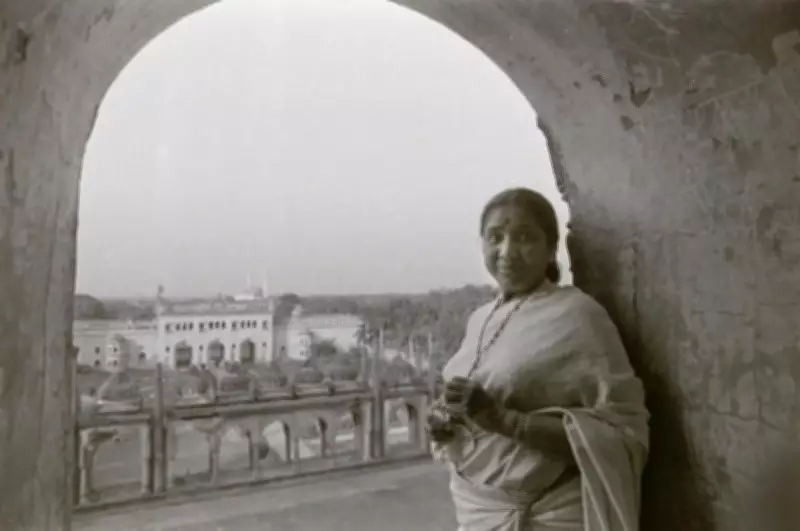
Muzaffar Ali Remembers Asha Bhosle: A Voice That Became Civilisation's Echo
For filmmaker Muzaffar Ali, the passing of legendary playback singer Asha Bhosle represents far more than a national loss. It is, in his poignant words, a silence that echoes too close to the heart. In a deeply personal reflection, Ali articulates that Asha Bhosle was not merely a voice but a profound presence—an artist who entered a moment and rendered it eternal through her unparalleled artistry.
The Alchemy of Sur and Soul
Ali observes that while many voices fade with time, Asha Bhosle's has been withdrawn into a deeper chamber of collective memory. There, it continues to resonate powerfully for generations who have experienced longing and emotion through her songs. Each time she sang, something unseen was summoned—a magical alchemy of musical notes (sur) and soul that defiantly refused to be confined by the constraints of time.
When Ali approached Asha Bhosle for the iconic film 'Umrao Jaan,' with maestro Khayyam shaping the music and poet Shahryar providing the lyrical language, he recognized immediately that this collaboration was destined to inhabit the world of actress Rekha's character in a transformative way. Asha Bhosle sensed this too—understanding that this was not merely another recording session but a profound artistic reckoning.

Becoming the Voice of a Civilisation
According to Ali, Asha Bhosle understood that she would need to travel far beyond technical craft for this role. She would have to become the living voice of an entire civilisation that once thrived in tehzeeb (refined culture), restraint, and unspoken emotional ache. Through her singing, she gave the city of Lucknow a cultural permanence that mainstream cinema had long denied it. In an industry often disconnected from specific places, Asha Bhosle created a distinct cultural and emotional space through her vocal artistry.
Bringing her into the world of Awadh was not mere direction—it was spiritual invocation. The only distant echo was that of the legendary Begum Akhtar. Yet even this connection was not imitation but rather artistic inheritance. Both artists carried that rare, unnameable gift—the extraordinary ability to dissolve themselves and become the essence of the character and emotion they were portraying. Asha Bhosle understood this intuitively, without needing explicit instruction.
The Shared Challenge and Artistic Surrender
What lay before them was a shared artistic challenge, though its ultimate solitude rested with the filmmaker. Asha Bhosle met this challenge with something that cannot be rehearsed or manufactured—complete artistic surrender. She did not simply sing the character; she yielded to it entirely, allowing the music to flow through her with authentic emotional truth.
Such profound truth is exceptionally rare in the commercial architecture of Hindi cinema. It is rarer still to receive proper recognition, which it duly did at the 29th National Film Awards where Asha Bhosle's contribution was celebrated and honored.
Later Collaborations and Unheard Masterpieces
Following this triumph, in the film 'Zooni,' where Asha Bhosle gave voice to five memorable songs, Ali found himself unable to imagine any other artist embodying those compositions. With Shahryar and Khayyam, a certain fragile, exact, and complete musical language had been discovered and perfected through their collaboration.
In 'Daaman,' for Gramco, she returned once more to that distinctive language, recording five songs that remain largely unheard by the public—like unopened letters addressed to time itself, waiting to be discovered by future generations.
An Enduring Presence in the Human Heart
Asha Bhosle may no longer step into the literal light of the silver screen, but she has certainly not departed from the human heart. That, according to Muzaffar Ali, is her true mehfil (gathering)—the space where she continues to reside, unfading and unending in her artistic impact.
In the final analysis, some voices do not truly fall silent. They simply choose to be heard from within—from the deepest chambers of memory and emotion where Asha Bhosle's legacy will continue to inspire and move listeners for generations to come.