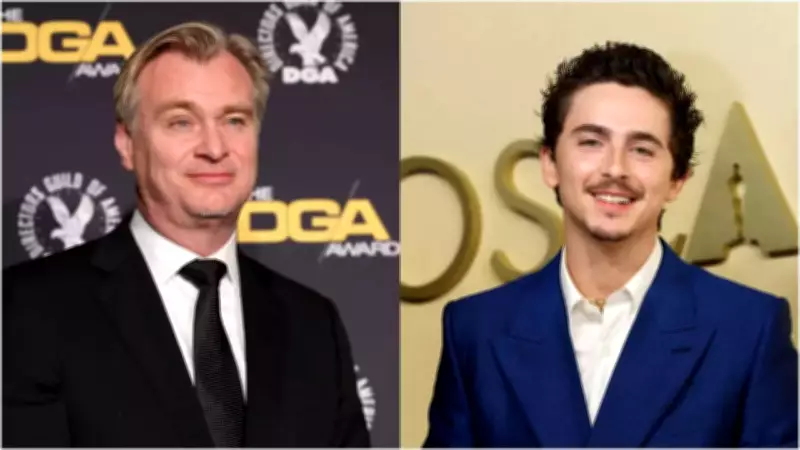
Nolan and Chalamet Reunite, Revealing Behind-the-Scenes Tension on Interstellar
In a candid revelation that has captivated film enthusiasts, Oscar-winning director Christopher Nolan has openly discussed a specific moment in his 2014 sci-fi epic Interstellar that he did not particularly like. The filmmaker disclosed that actor Timothee Chalamet, who played a supporting role in the movie, chose to perform the scene in his own distinctive way, disregarding Nolan's initial direction.
A Special Reunion and Emotional Reflections
The director and actor recently came together at the AMC Universal CityWalk in Los Angeles for a special IMAX 70mm screening of Interstellar, as reported by Variety. During this event, Chalamet interviewed Nolan ahead of the screening, describing the film as his favorite project of his entire career. "Though my role is not enormous in 'Interstellar,' I think I was number 12 on the call sheet, this film came to me at a time in life, in my career, where things were certainly not set yet," Chalamet told the audience. He added, "And it's remained my favorite project I've ever been in."
Chalamet portrayed Tom, the teenage son of Matthew McConaughey's character Cooper. The actor has previously shared that he wept for an hour after first watching the completed film, discovering that his role had been significantly reduced from earlier expectations. The script, originally written by Jonathan Nolan for Steven Spielberg, initially centered more prominently on a father-son relationship before undergoing substantial revisions.

The Origins and Evolution of Interstellar
During their discussion, Nolan reflected on the film's complex origins. He explained that Interstellar began as a pitch from renowned physicist Kip Thorne to Steven Spielberg, focusing on a science-fiction story grounded in real scientific principles. When Spielberg moved on to another project, Nolan stepped in, combining his brother's script with his own innovative ideas about time and relativity.
The director also addressed the film's mixed initial reception, despite grossing an impressive USD 681 million worldwide and winning an Oscar for Best Visual Effects. "The film was received in a slightly ambiguous way," Nolan noted, pointing out that some critics were "a bit sniffy" at the time. However, he emphasized that the film has grown in stature over the years, with audiences increasingly connecting to its deep emotional core and thematic richness.
The Controversial Scene and Creative Trust
Recalling the filming of a particularly emotional video-message sequence, Nolan told Chalamet that there was a specific take where the actor adopted a darker and more intense tone. "It felt too much for me. I didn't particularly like it," Nolan admitted candidly. He continued, "I told you about it and you went ahead and did whatever the f-- you wanted."
Nolan clarified that Chalamet's decision was not about stubbornness or defiance. Instead, the actor had carefully planned his performance choices, demonstrating a thoughtful approach to his craft. "It wasn't about being stubborn," Nolan explained, adding that he ultimately trusted the creative process during the editing phase, allowing the scene to find its natural place in the final cut.
Enduring Legacy and Emotional Impact
More than a decade after its release, Interstellar continues to resonate powerfully with viewers around the globe. As Chalamet poignantly expressed, it remains a film that "makes me weep more than anything." This reunion and revelation highlight the dynamic and sometimes challenging collaborations that shape cinematic masterpieces, underscoring the enduring appeal of Nolan's visionary storytelling.